

Good Friday Fish
As the Friday before Easter, Good Friday, still falls within Lent, in many countries, this day is usually reserved for fish, in whatever form, so let’s pair this with a dry, mineral-driven Furmint from the Tokaj Wine Region or a creamy Olaszrizling from the Balatonfüred-Csopak Wine District.
The traditional Hungarian Easter breakfast
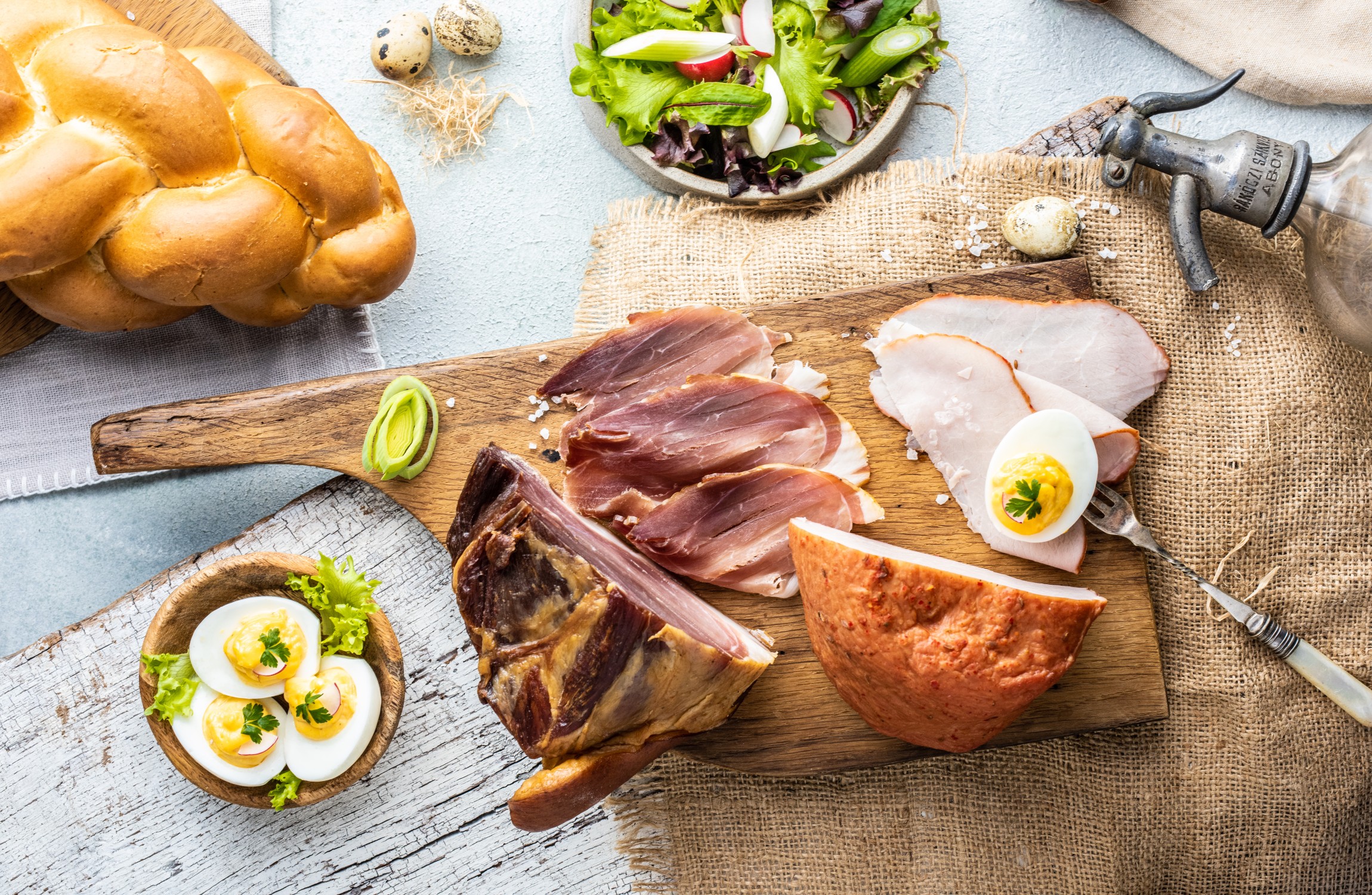
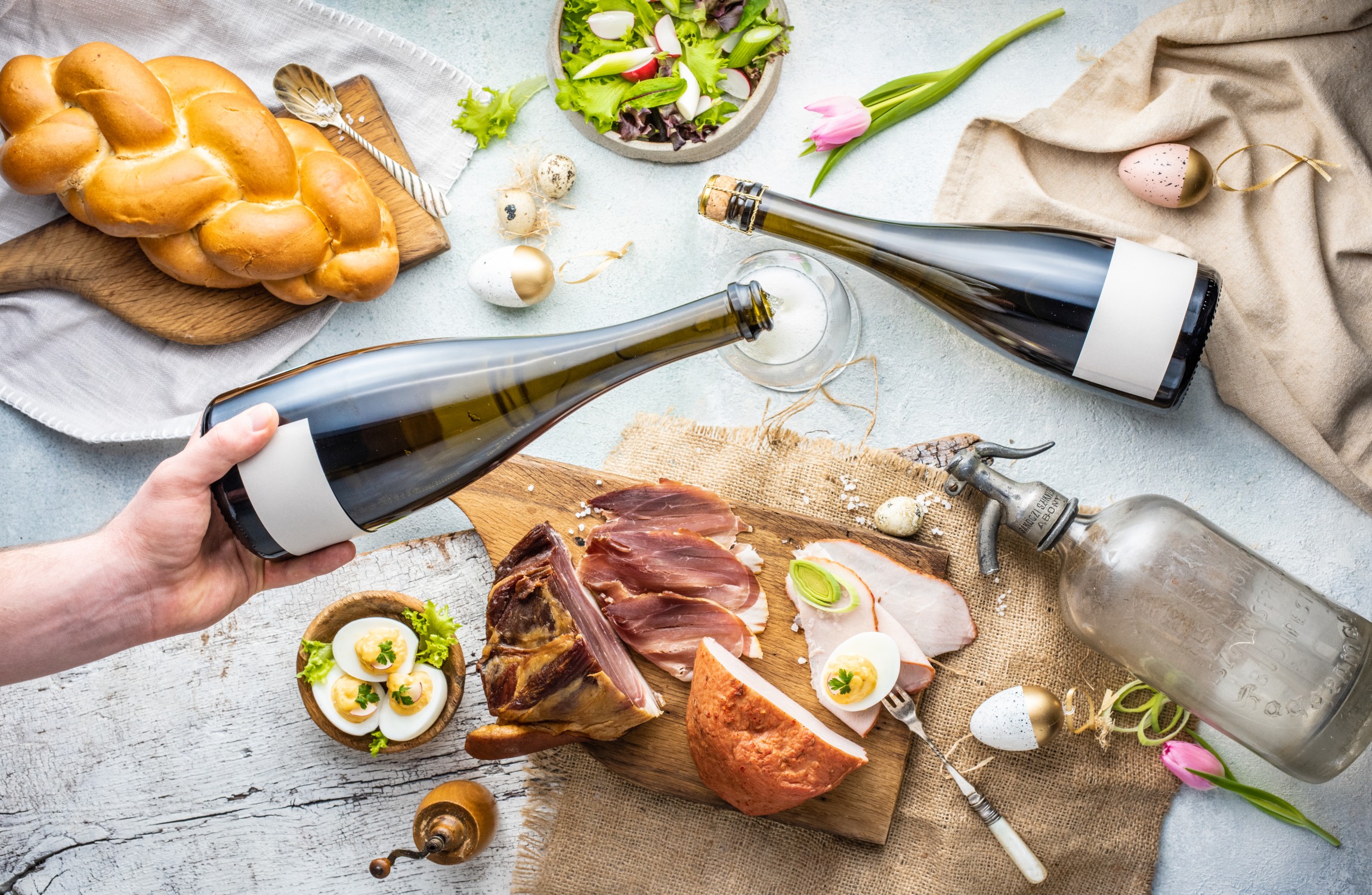
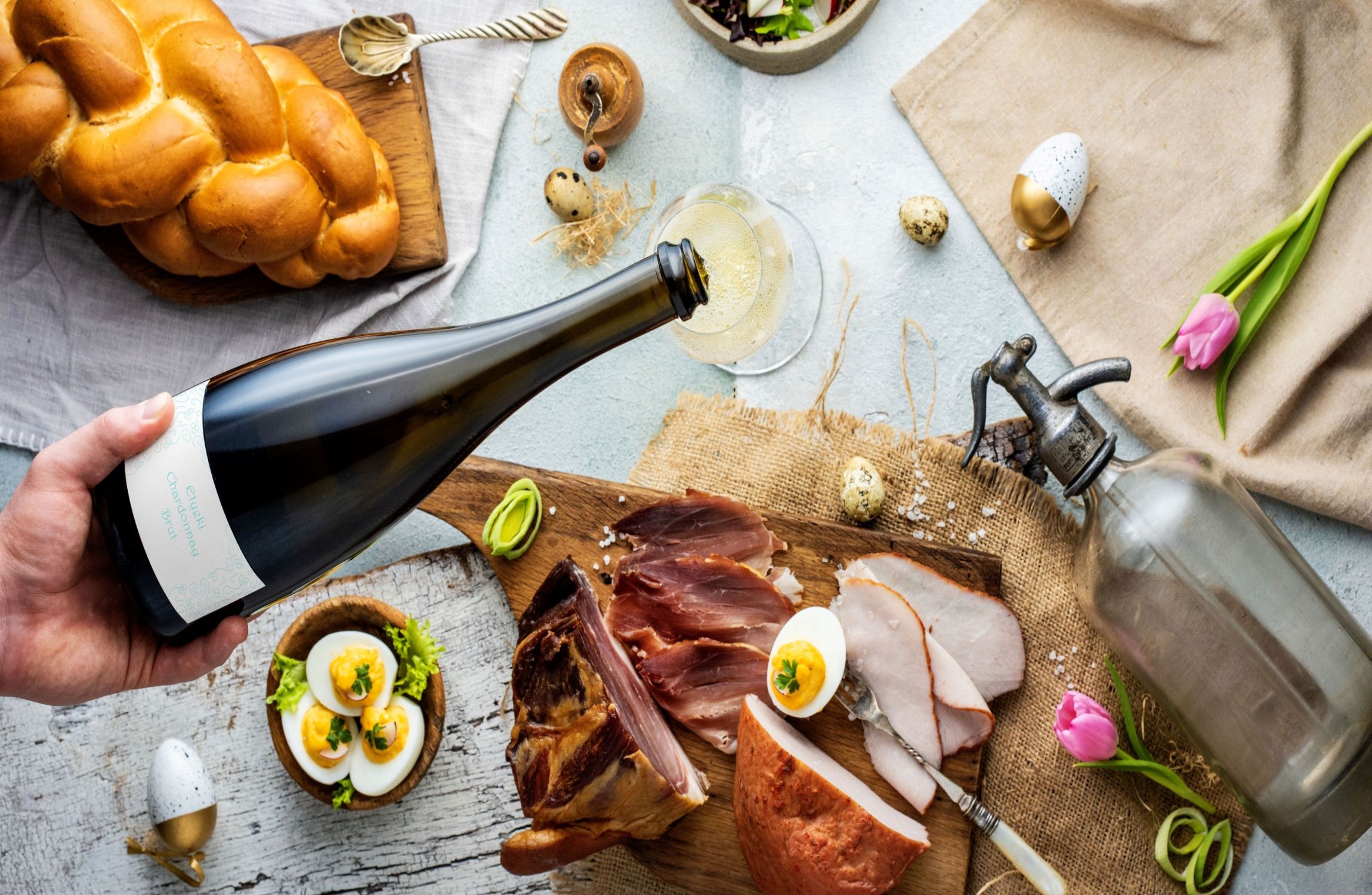
The traditional Easter breakfast in Hungary comprises ham, braided brioche (kalács) and boiled eggs, all served up with some grated horseradish. As this is breakfast, I’m not going to make a suggestion for a wine pairing. However, if you are getting up late and enjoying it rather as brunch, then perhaps you could be indulgent and pair it with a glass of pezsgő, traditional method sparkling wine from the Etyek-Buda Wine District, Nagy-Somló Wine District or even from the Tokaj Wine Region – in this case, though, you might want to forego the horseradish.
Eggs – the symbol of life and rebirth
Eggs, of course, are closely associated with Easter. They are the symbol of fertility, life and rebirth, with new life arising from the egg, just like Jesus was resurrected from his tomb. In Hungary, eggs are traditionally boiled and painted red before being eaten – there are numerous legends about why this is, but they certainly brighten up the Easter breakfast table. Various filled eggs are also popular at Easter, as, of course, are chocolate eggs, but we’ll come to them later.
Spring lamb
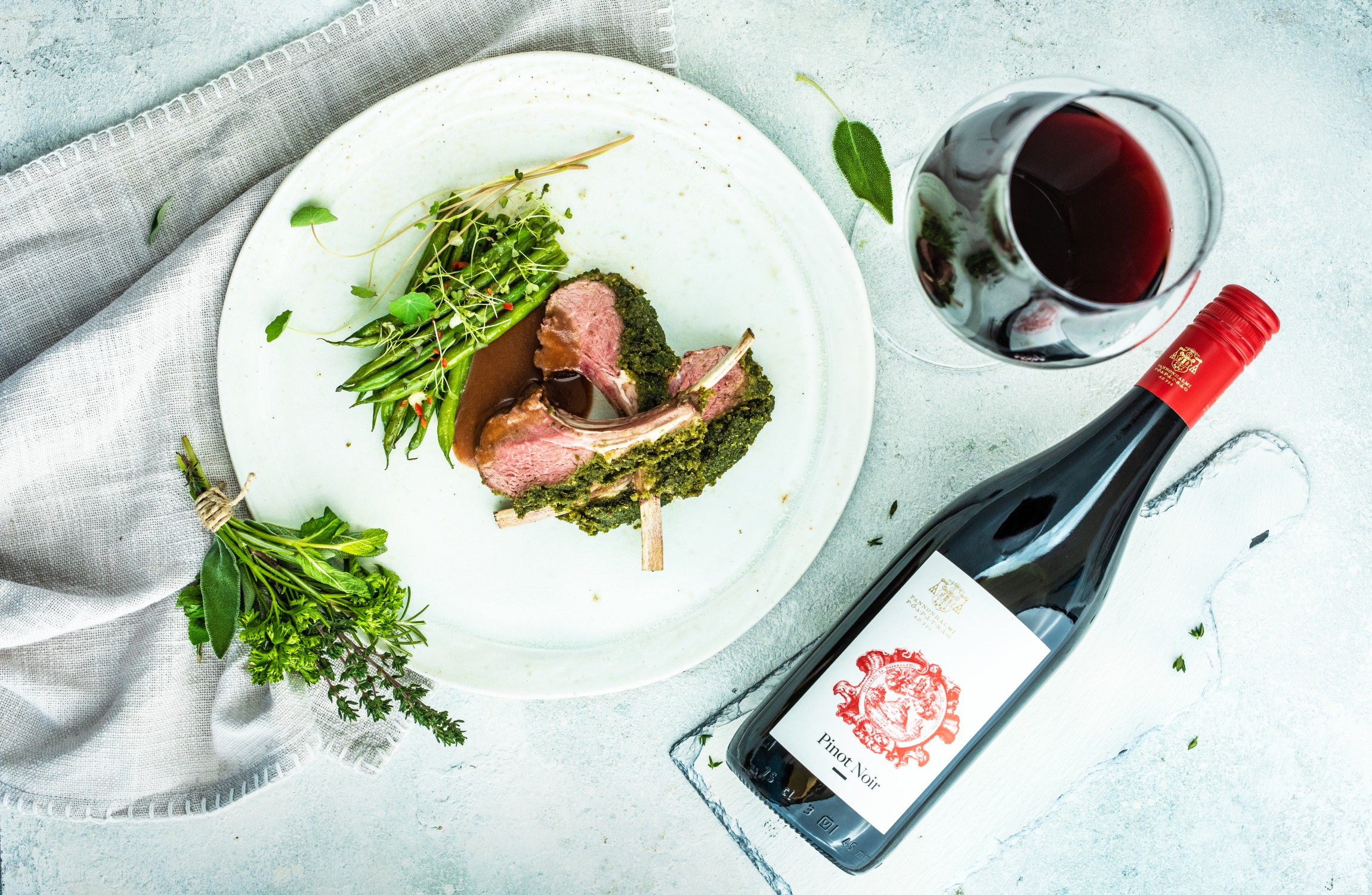
Roast lamb is a common dish in the Easter celebrations of many cultures. It actually predates Easter, as it was traditionally eaten by Jewish people at the first Passover Seder. Lamb is also highly symbolic since Jesus is called the Lamb of God. A succulent roast lamb is rich in flavour, it works well with bold, tannic, full-bodied wines such as Cabernet Sauvignon or Pinot Noir with the fatty lamb helping to soften the grip of the tannins, so maybe a Villányi Franc or a Bordeaux blend from the Villány Wine District would make an ideal match. However, Easter falls later this year, and the weather may be warmer, so if you fancy something a little lighter and more elegant, with plenty of acidity to cut through the lamb’s richness, then how about a Bikavér from either the Szekszárd Wine District or the Eger Wine District.
Easter glazed ham
If you haven’t already eaten your Easter ham at breakfast, but are rather serving it as glazed ham for lunch or dinner, then this calls for something lighter again, with lower tannins and higher acidity, so why not try it with a Pinot Noir from the Etyek-Buda Wine District or the Pannonhalma Wine District, or if you’d prefer a white, then why not pair the sweet and sour flavours of the salty ham and its sweet glaze with a mineral, aromatic Tramini from the Nagy-Somló Wine District.
Seasonal vegetables
Of course, there are no uniform Easter dishes, and some of us may be enjoying a roast chicken or duck, in this case, you could stay with the Pinot Noir, or even choose a spicy Kadarka from the Szekszárd Wine District. Not to forget anyone vegetarian of course, who might be enjoying a lovely Torta Pasquale, a traditional spinach and ricotta pie eaten in Italy at Easter, perhaps a crisp Ezerjó from the Nagy-Somló Wine District or an elegant Chardonnay from the Etyek-Buda Wine District might find its match with this treat. Or if you’re just enjoying some lovely seasonal vegetables, such as kohlrabi, fresh peas or asparagus, how about a zesty Sauvignon Blanc also from Etyek-Buda.
Now for something sweet
Naturally, Easter wouldn’t be Easter without something sweet. Besides the chocolate eggs and bunnies, some baked treats will most likely grace the table, wherever you find yourself in the world. In Italy, the Colomba Pasquale, or Easter Dove Bread, a sweet bread from Lombardy studded with candied peel citrus fruit and then sprinkled with almonds and sugar is the sweet snack of choice. Its candied citrus fruit and notes of almond would be perfect with a glass of lighter Szamorodni or an elegant late-harvest wine from Tokaj. On the other hand, the British love their hot cross buns at Easter, small spicy sweet rolls full of dried fruit and topped with a cross, which are generally toasted and served buttered. A perfect late afternoon treat when served with a glass of complex, luscious Tokaji Aszú.

And what about with the Easter eggs?
And now for the million-dollar question. What wine can you pair with your chocolate Easter eggs and bunnies. If they are milk chocolate, then how about a bubbly, fun semi-sweet frizzante style rosé gyöngyöző wine from the Balatonboglár Wine District. For more serious dark chocolate, then perhaps a full-bodied fruity red with lots of lush, ripe fruit, such a Syrah or a Cabernet Franc from a warmer wine district like Villány or Szekszárd.