


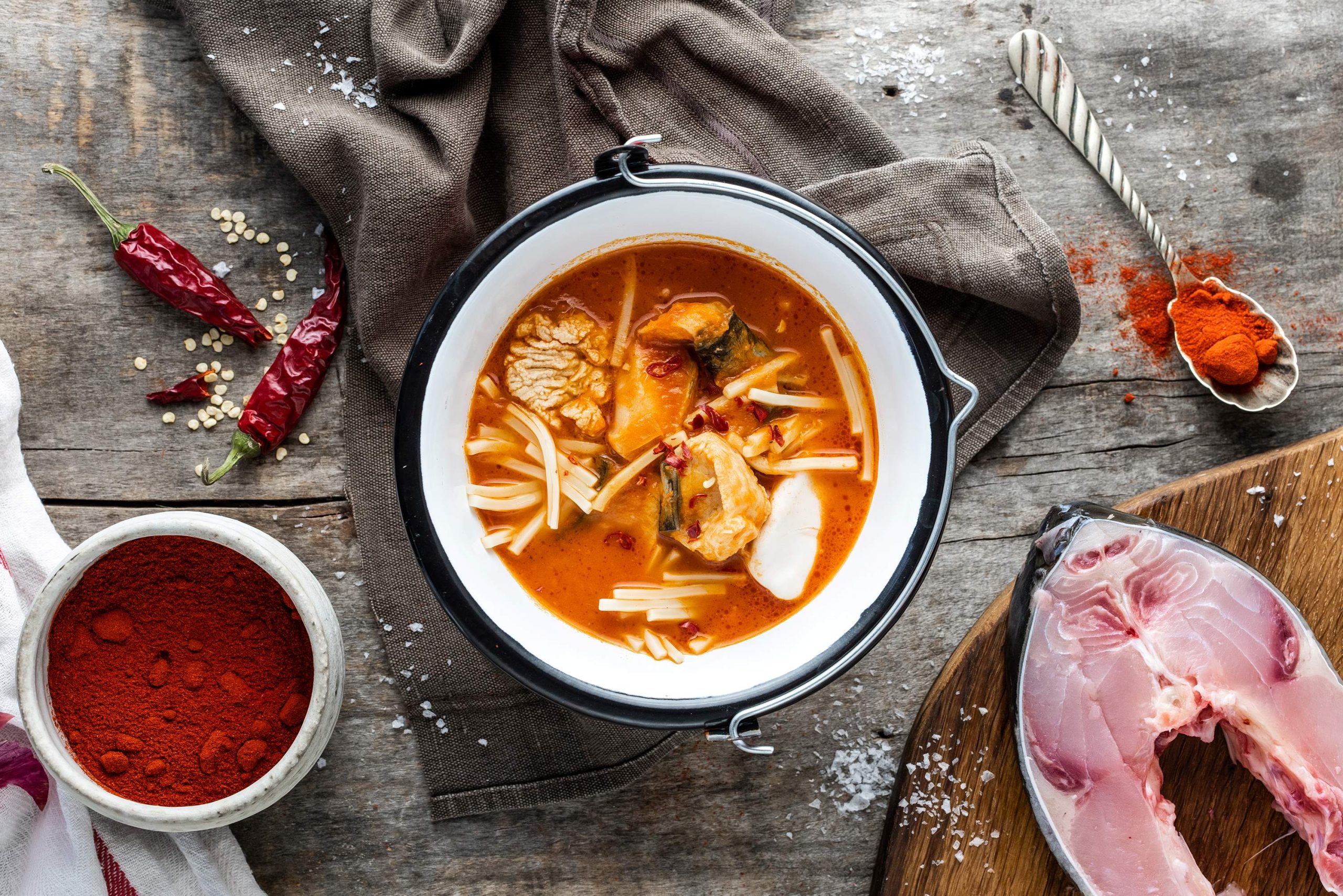


Hungarians celebrate Christmas with a festive dinner on the evening of 24 December, a day earlier than in Anglo-Saxon countries. On this night, tables are generally laden with meatless dishes, particularly fish, reflecting centuries-old religious and cultural traditions. However, the overall holiday menu is a rich tapestry of fish, pork, cabbage and sweet pastries, each carrying symbolic meaning for prosperity, health and family continuity.
The Christmas Eve feast: fish, paprika, tradition and Kadarka
Fish is usually the centrepiece of Szenteste (Christmas Eve). The fish’s scales are believed to symbolise wealth and abundance, while its swimming movement represents progress and the future, making it an auspicious choice for the festive table. The most iconic dish, especially along the Danube and Tisza rivers, is halászlé, a spicy, paprika-scented fish soup made from carp or catfish. Regional variations abound: in Baja, the soup is served with gyufatészta (matchstick pasta) while in Szeged, adding pasta would be considered sacrilegious. Another fish dish that is central to the holiday menu, highlighting Hungary’s love for paprika and freshwater fish, is catfish paprikash, in which the fish is transformed into a rich, creamy stew, also infused with paprika. This is often served with túrós csusza, a beloved savoury pasta featuring wide, flat egg noodles or homemade pasta squares tossed with melted fat and topped with crumbled túró (curd cheese), sour cream and crispy bacon pieces. The magic of the dish lies in the contrast of creamy, tangy cheese, rich sour cream and crunchy bacon, especially when accompanying the catfish paprikasch.
The perfect wine to complement these paprika-laced dishes is light-bodied, low tannin Kadarka. Its bright acidity cuts through their richness, while its spicy, peppery and subtly smoky notes echo the paprika. Historically grown along the Danube and Tisza rivers, Kadarka boasts a cultural connection with the fish dishes it complements, while its red sour cherry and raspberry fruit and herbal aromas enhance their flavours without overwhelming the delicate fish.
Fried, breaded fish fillets, typically carp (rántott ponty), are another Christmas Eve staple, often served with mayonnaise potato salad. Olaszrizling and Badacsonyi Pinot Gris (Szürkebarát) offer an ideal match. Olaszrizling’s crisp acidity cuts through the fried coating, while fuller-bodied, textured Pinot Gris, when grown on Badacsony’s volcanic soils, balances the carp’s mild, subtle sweetness. These pairings are particularly traditional around Lake Balaton where these grape varieties thrive.

Bejgli
Sweet conclusions: poppy seeds, walnuts, Aszú and Szamorodni
No Hungarian Christmas is complete without something sweet. The legendary Gerbeaud cake (zserbó), layered with walnuts, apricot jam and chocolate, reflects Austro-Hungarian café culture and indulgence. Rich Tokaji Aszú wines pair beautifully with it, offering sweetness, acidity and finesse, while their flavours of apricot, dried citrus, honey and subtle spice echo the fillings of Gerbeaud and other traditional cakes.
One non-negotiable sweet treat is bejgli, a rolled pastry filled with poppy seeds (mákos) or ground walnuts (diós), which you can see piled in patisseries’ windows from the end of November. Poppy seeds symbolise wealth, while walnuts symbolise protection and health. A cracked bejgli used to be considered bad luck, something still taken half-seriously today when baking the festive treat at home. Bejgli finds its perfect companion in slightly less sweet Szamorodni.
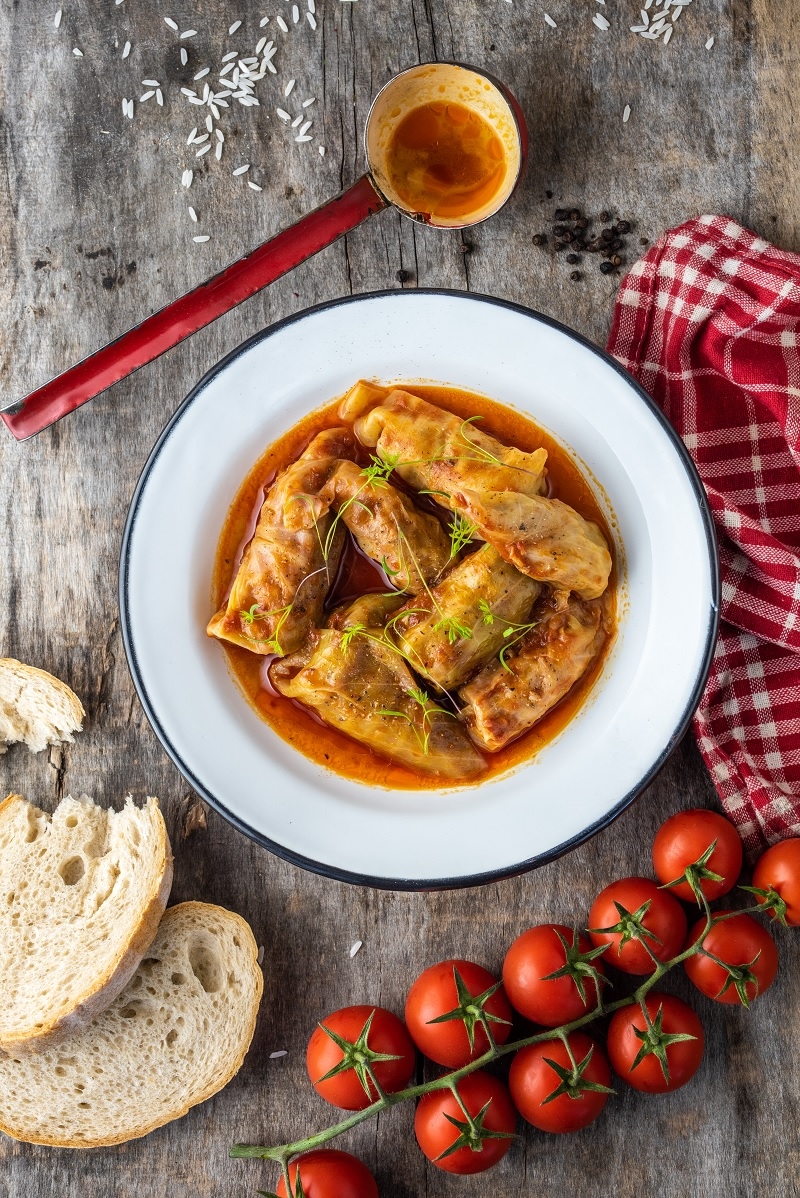
Töltött káposzta (Stuffed cabbage)
Christmas Day classic: stuffed cabbage and Somlói wine
On Christmas Day, stuffed cabbage (töltött káposzta) is a compulsory dish and a true Hungarian classic. Recipes, often passed down through the generations, vary from family to family, but always feature pickled cabbage leaves stuffed with minced and smoked meat and rice, served with a dollop of sour cream. Many people insist it tastes better reheated the next day, so it’s often cooked in advance.
Cabbage-based dishes like stuffed cabbage or Székelykáposzta (pork and sauerkraut stew) pair beautifully with wines from basalt Somló Hill, such as Furmint, Hárslevelű, Juhfark or blends thereof. Somló wines boast bright acidity, minerality and aromatic complexity, lifting the tang of the fermented cabbage while balancing the richness of pork. Their smoky, flinty notes mirror the cabbage’s subtle flavours, creating a harmony that richer reds could easily overwhelm.
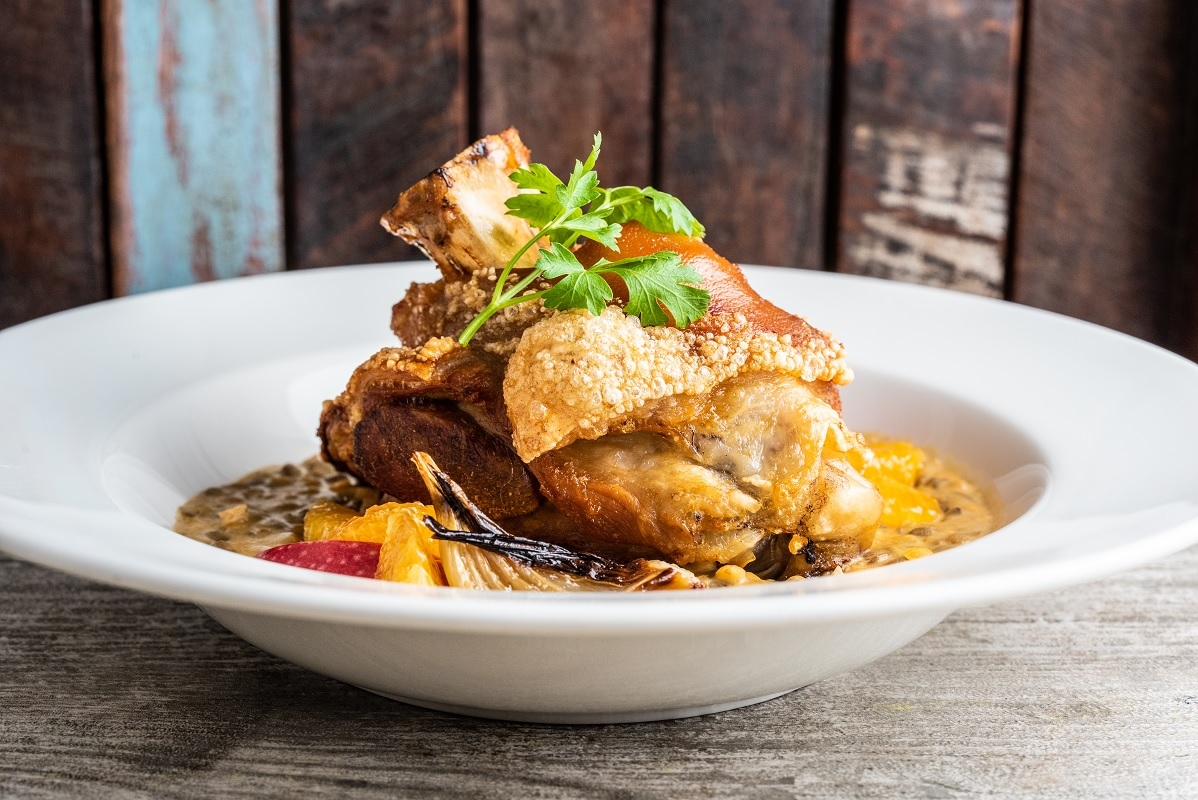
Lencsefőzelék csülökkel (Lentil stew with knuckle)
New Year traditions: lentils, stews and renewal
Hungarians’ festive dining continues into New Year’s Eve (Szilveszter) and Day, with stuffed cabbage sometimes served again. A key New Year’s dish is lentil stew (lencsefőzelék), eaten to ensure good luck and financial prosperity. Lentils resemble coins, and their swelling during cooking symbolises growth and increase. Beyond symbolism, lentil stew is also practical, as it is simple, hearty and easy to prepare after the holiday feasting.
Another New Year staple is Szekélykáposzta, a savoury, mildly sour, smoky, creamy stew of pork and sauerkraut. For an indulgent restorative following Szilveszter revelries, Hungarians enjoy korhelyleves, literally “drunkard’s soup”. Made from sauerkraut or sauerkraut juice, smoked pork or sausage, onion, garlic, paprika and finished with sour cream, korhelyleves is both filling and designed to cleanse and awaken the palate after festive excesses. Its warming paprika backbone and creamy texture make it perfect for New Year’s Day recovery.
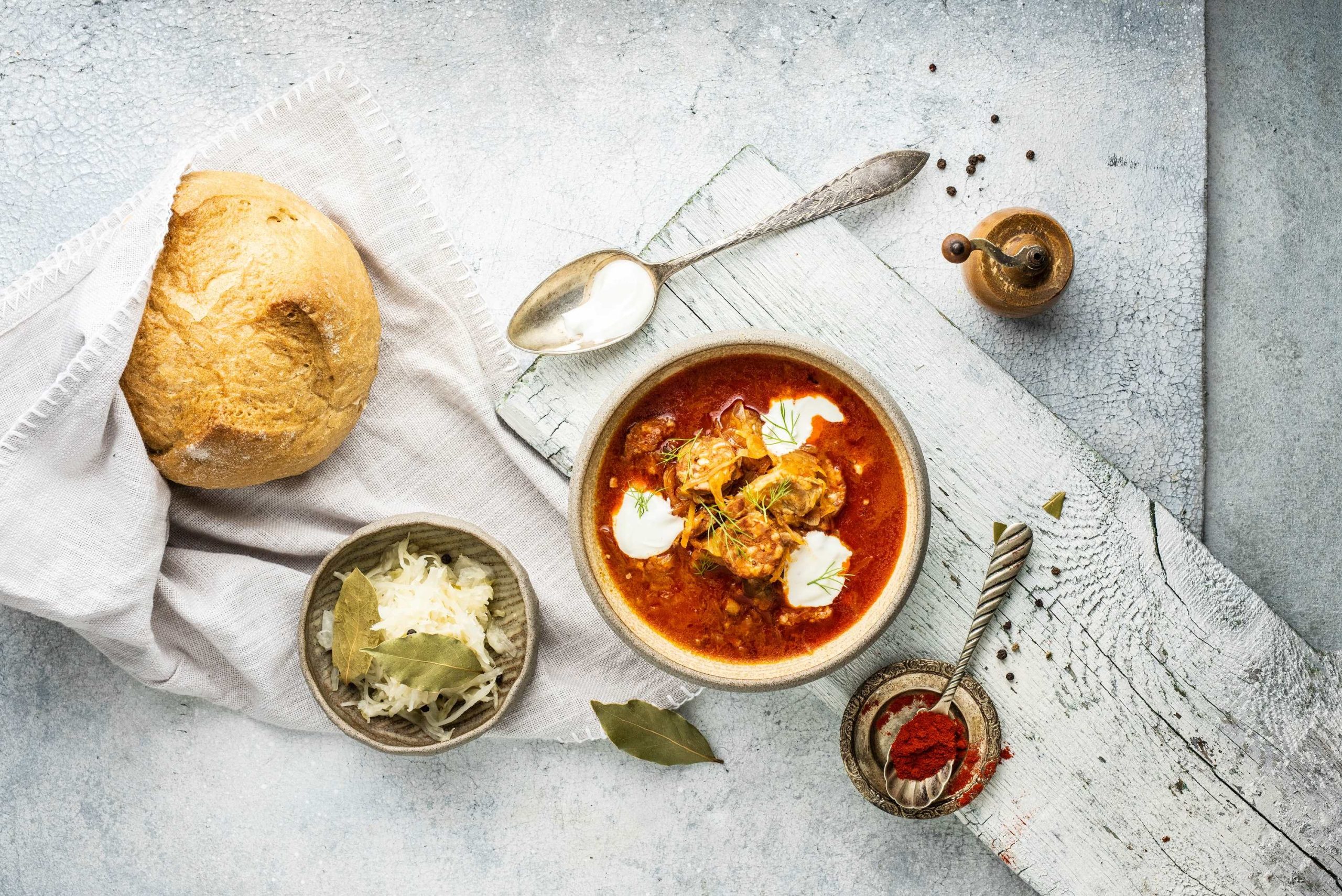
Korhely leves ( “Drunkard’s soup”)
Harmony of food, wine and culture
From Christmas Eve to New Year’s Day, Hungarian gastronomic traditions demonstrate a careful balance of flavour and symbolism. Fish and paprika, rich meats and fermented cabbage, walnut and poppy seed rich pastries and sweet Tokaji wines are all interwoven with cultural meaning. Complementing these traditional dishes with local wines like Kadarka, Olaszrizling, Badacsonyi Szürkebarát, Somlói wines and Tokaji Aszú or Szamorodni not only creates sensory harmony but also a deep connection to Hungarian culinary heritage, making the Christmas and New Year’s tables not only delicious but also meaningful.
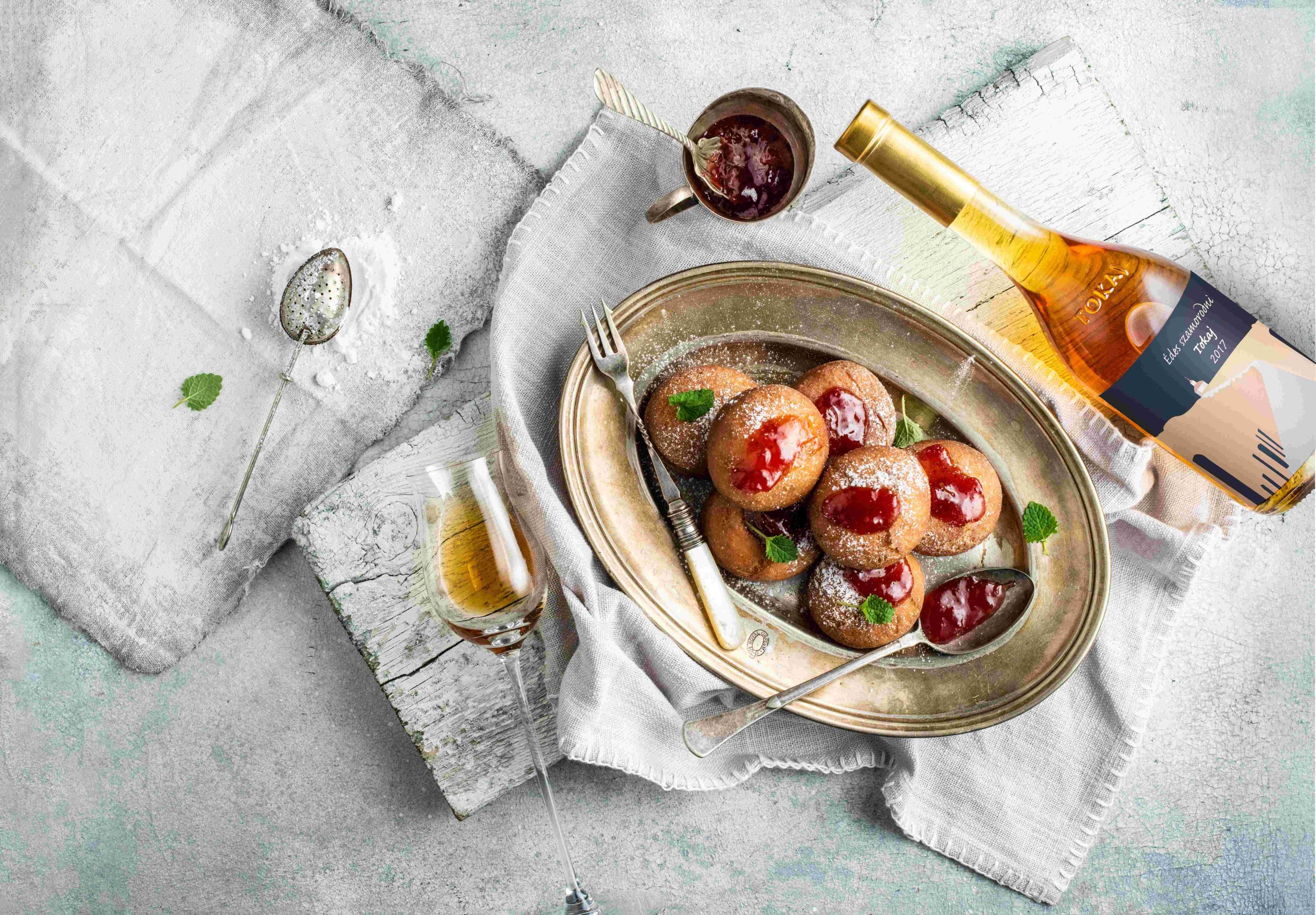
Photos: Hungarian Wine Marketing Agency (Magyar Bormarketing Ügynökség)