
 English
  Magyar
Pannonhalmi Wine district

History | National Geography

Vineyards | Origin protection

History
The town of Győr, known as Arrabona, was an important bastion of the limes (the border of the Roman Empire), and there are finds from this period that refer to Roman winegrowers (Villa Rustica found in the Packalló vineyard). The conquering Hungarians found flourishing vineyards in the area, which they preserved even after the founding of the state, which is why the founding charter of the Pannonhalma Abbey (1001-1002) mentions the vineyards belonging to the abbey’s estate. The land register of St László from 1093 mentions 88 winegrowers, while Master Albeus’s census from 1239 mentions 173 winegrowing families living in the villages in the hills. In 1324, Abbot Miklós granted the nobles and serfs of the surrounding area the right to cultivate vineyards on St Martin’s Hill, home to the abbey, in exchange for a tithe. The Abbot of Pannonhalma encouraged vine planting with tax breaks, so a 1395 border survey already mentioned numerous newly planted vineyards. The cool weather conditions of the 15th and 16th centuries also took their toll on the abbey’s vineyards, as evidenced by the reduction in tax burdens. Settlement began on the vineyard hills during the Turkish occupation, which, together with tax exemptions, ensured that viticulture continued despite increasing Turkish raids. After the expulsion of the Turks, the customary laws of the vineyards were put into writing, and thus the local wine laws were born.
The laws of 1848 also brought about a huge economic change in agriculture. The loss of manorial revenues was a serious blow to the abbey, and traditional was transformed, with the Benedictines starting to employ qualified winemaking experts.
Phylloxera appeared in the wine district in October 1887, prompting the abbot (Kolos Vaszary) to immediately hire a qualified viticulture inspector to manage the vineyards. The abbey’s innovative nature was clearly demonstrated in these difficult circumstances, when the establishment of the vine nurseries in Tényő and Tallián turned it into a centre for supplying propagating material for the surrounding area.
Viticulture and winemaking underwent enormous technological advances in the following period. Sophisticated labels appeared on bottled wines (Château Pannonhalma) to improve marketability, and exports also began. The order’s leading wine at that time was an Aszú wine called Bársonyos Gyöngye, but the names Tényői Rizling, Tényői Vörös, Kőhegyi Rizling and Siller, as well as Pannonhalma Gyöngye, also survived.
The abbey’s recent history is also very important. The one-party state era severely damaged the previously flourishing region, although it began to develop again after 1956. Following the regime change, 2002 marked a turning point that saw the renewal of the abbey winery, at the suggestion of Zoltán Heimann and under the professional leadership of Tibor Gál. The first plantings began in 2001 in the Széldomb, Cseresznyés, Packalló (all three in Pannonhalma), Babszökő (Écs) and Tavaszó (Ravazd) vineyards.
Natural Geography
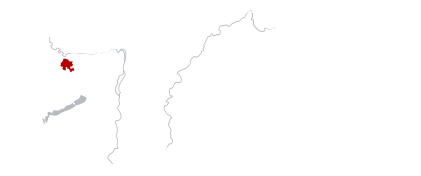
The wine district, which currently covers 560 hectares, is located in the Sokoró Hills, which form a transition between the Small Hungarian Plain (Kisalföld) and the Transdanubian Mountains. More specifically, it was long considered part of the Bakonyalja region; however, it is clearly separated from it by the tectonic valley of the Bernát Stream. The triple ridge of the hills (Pannonhalma, Ménfőcsanak, Szemere) extends deep into the Kisalföld region in a northwest-southeast direction, with two main valleys (Pannonhalma Valley, Tényő Valley) between them. The valleys and ridges formed along the faults are composed of limestone and, in places, crystalline rocks. Various Pannonian sediments, mainly clay, sandstone and loess, settled here. The surface topography is defined by the three long ridges running northwest-southeast mentioned above. The western part is called Szemerei or Szemere, and is also known as Sokoró, which gave its name to the entire foothill area. It boasts relatively uniform elevation. Its last foothills are found in Koroncó, with its highest points being Kopasz Hill in Kispéc, Mogyorós Hill near Tényő and Harangozó Hill in Kajárpéc.
The vineyards were planted on the western and southwestern sides of the wooded ridge. Crossing the Tényő or Pátka-Tényő Valley, you reach the central Ménfőcsanak, also known as Ravazd-Ménfő or Csanakdombság. Csanak is not uniform, but consists of small and large groups of hills running parallel to each other. Its highest point (and also the highest point in the entire foothills region) is Szent Pál-tető (317 metres).
The Pannonhalma Hills, also known as the St Martin Hills, where the Benedictine Monastery is located, lie to the east, visible across the Pannonhalma Valley, also known as the St Martin or Pándzsa Valley. This range of hills is not uniform either, ending in a north-westerly direction at Sághalom, with its highest points being Saint Martin Hill (280 metres) and Rézhegy (268 metres). The area has a relatively sparse surface water network, with ravines carved out by seasonal watercourses draining into the nearby Marcal River.
The bedrock is calcareous subsoil consisting of a mixture of Upper Pliocene clay, lake sand, sandstone and Quaternary gravel, as well as Pannonian sedimentary layers, covered with medium-grained loess and brown forest soil with patches of sand. The loess gulleys here in the Sokoróaljai Hills look exactly like the loess gulleys in Szekszárd.
It boasts moderate light, heat and precipitation: the average annual temperature is 10°C, the number of sunshine hours is 1,950 and the average annual precipitation is 550-600 mm. Climate change must be addressed: the significant increase in heat is beginning to devalue south and west-facing vineyards, and there is a need to review grape varieties and their clones, as well as transform cultivation methods.
Vineyards
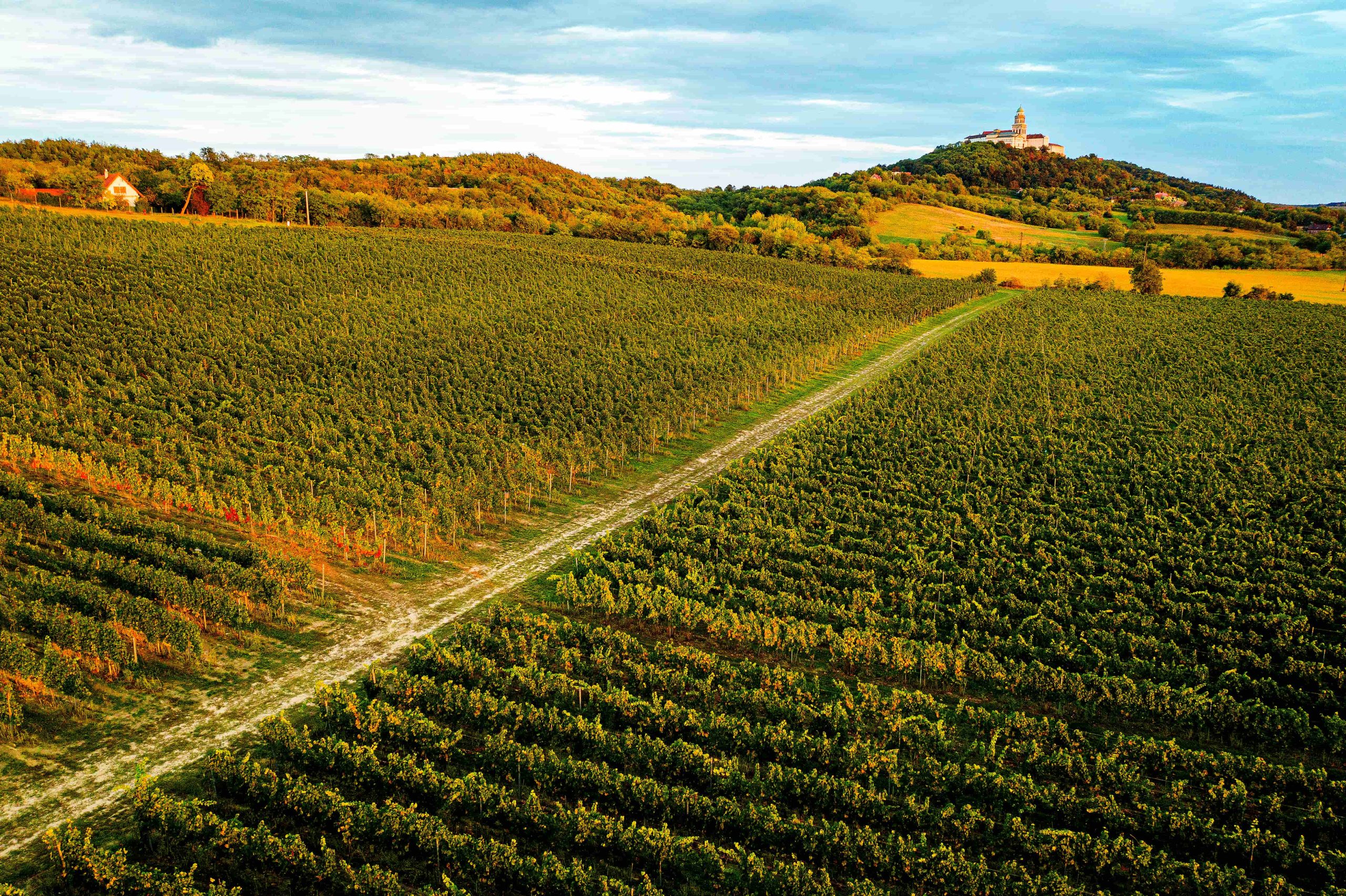
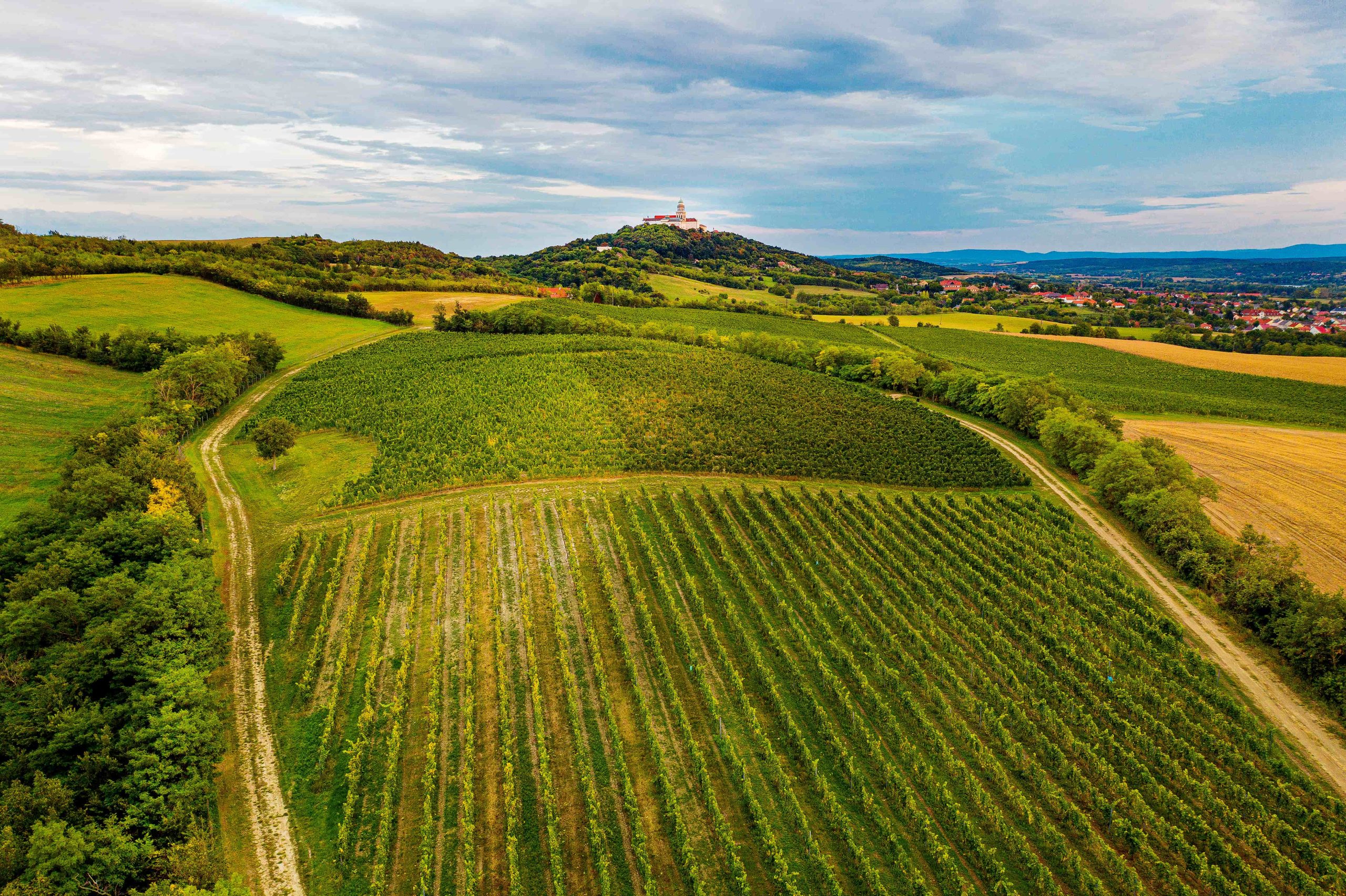
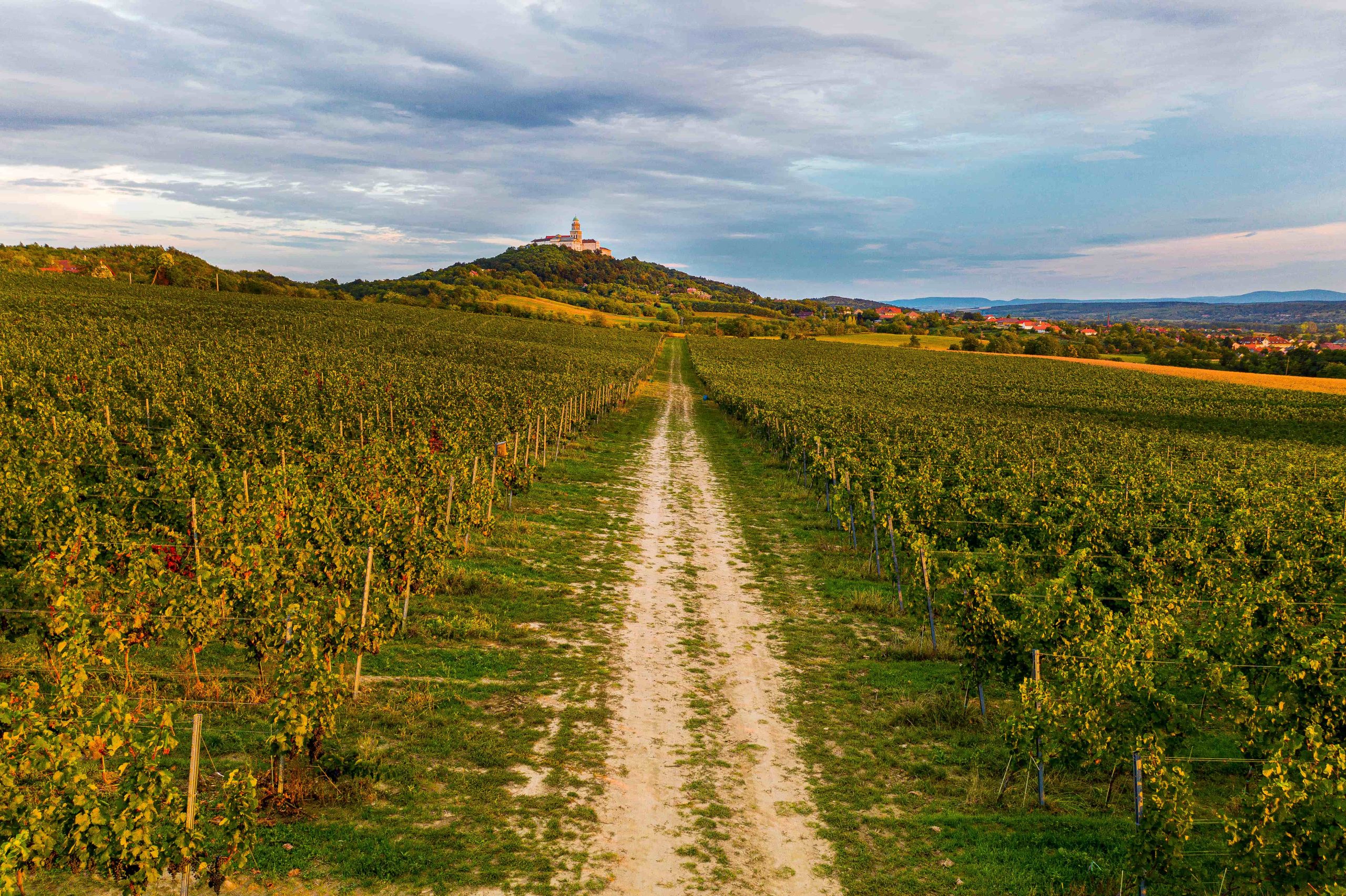
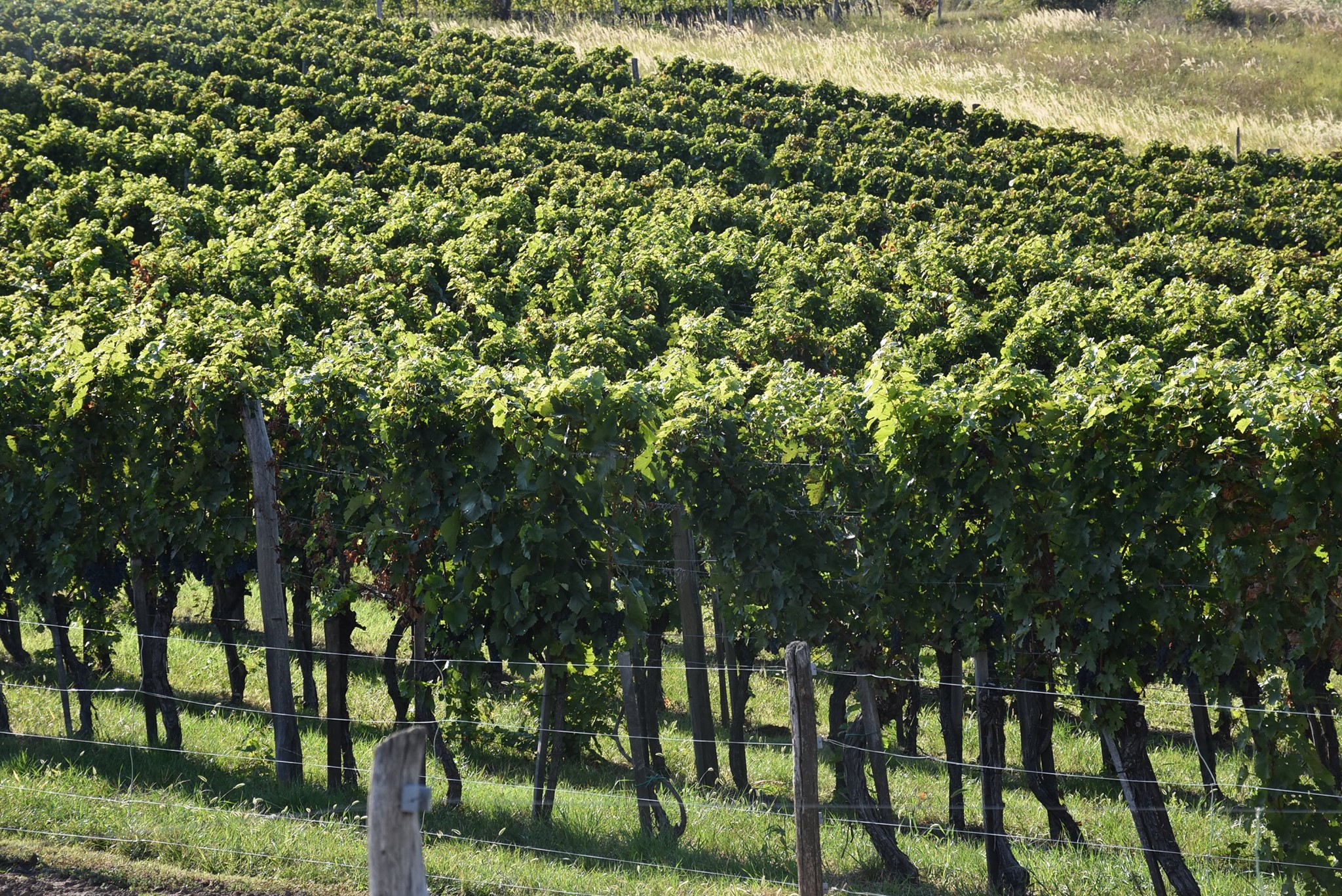
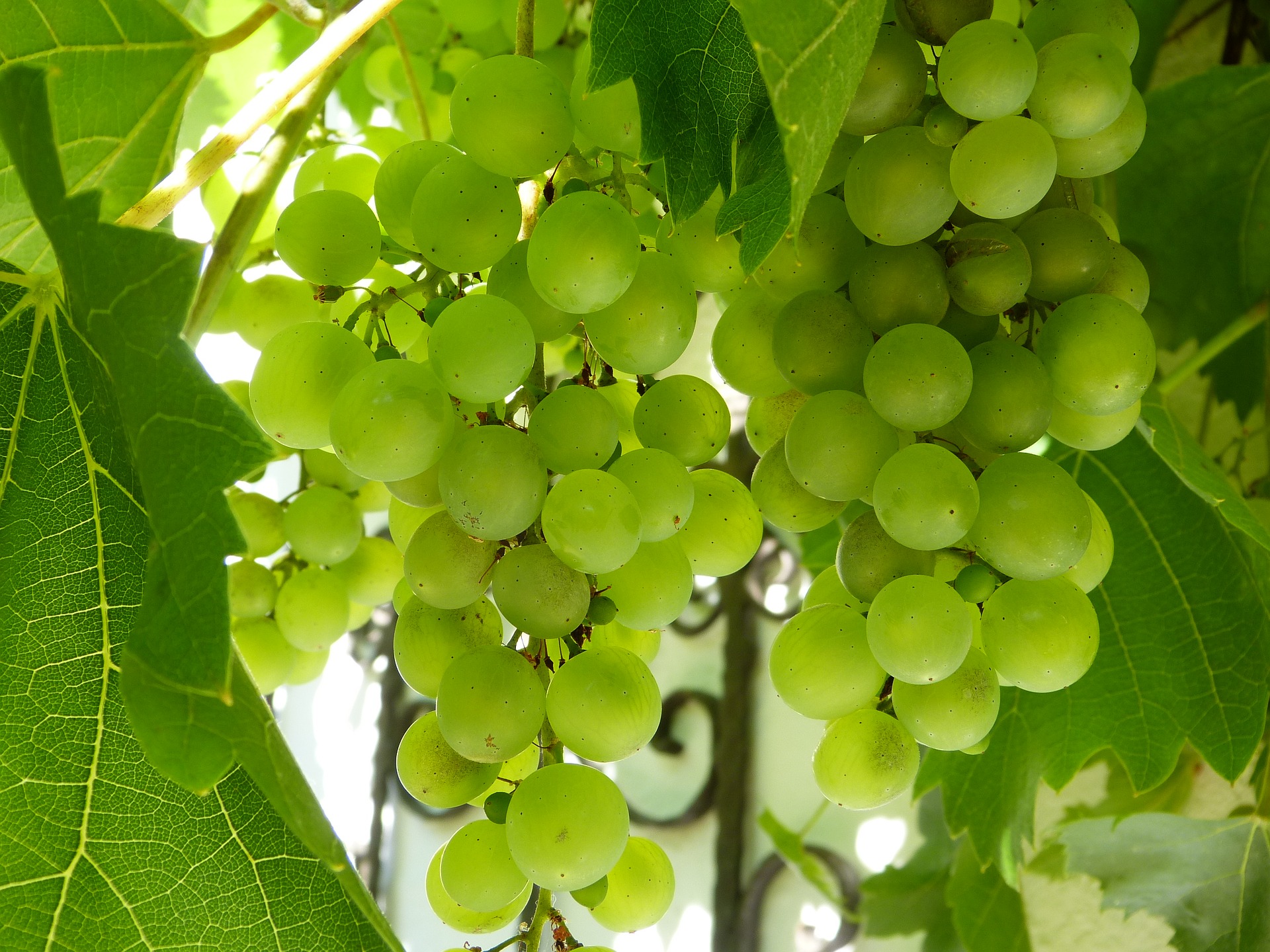
The main varieties in the wine district are Olaszrizling, Riesling, Traminer, Királyleányka, Chardonnay and Müller-Thurgau, as well as Kékfrankos, Merlot, Pinot Noir, Cabernet Franc and Cabernet Sauvignon. The product specification does not protect individual vineyards in the wine district; however, it is worth mentioning a few for future possibilities and due to historical traditions. The Gerha vineyard near Nyúl is located on sandy loam brown forest soil, facing southeast and east, planted mainly with white varieties, at an altitude of 200 metres. The east-facing Héma vineyard is also located near Nyúl, at an altitude of 180 metres. It is characterised by a layer of loess up to ten metres thick, which often appears on the surface. Nyúl’s wine cellars are also located here. The Báródomb vineyard on the outskirts of Győrújbarát warrants a mention. It is a southwestern-facing area stretching between 130 and 170 metres above sea level. It used to be very famous, and today’s producers also have high hopes for it. Széldomb lies between Pannonhalma and Écs, at an altitude of between 160 and 180 metres. It is basically composed of brown forest soil with carbonate residues, supplemented with some sand. The Packalló and Cseresznyés vineyards are located on plateau-like areas with some southwestern exposure, between Pannonhalma and Ravazd, at an altitude of 160-200 metres. The higher areas are covered with Ramann-type brown forest soil, while the lower areas are covered with sediment from the slopes. The Babszökő vineyard is located 1.5 km southwest of the centre of Écs, at an altitude of 274 metres. The main direction of the slope is southeast, mainly consisting of brown forest soil settled on sandy loess. The Tavaszó vineyard lies on the edge of Ravazd on a southwestern slope, at an altitude of approximately 230 metres. It is mainly covered with chernozem soil mixed with lime, and any differences within the vineyard are mainly the result of erosion caused by the slope.
Origin protection
Pannonhalma has possibly the most permissive product specification in the country; moreover, it has not been changed since its introduction in 2012. The Pannonhalma wineries consider this a virtue for the time being, saying that many wine districts over-regulate themselves. As already mentioned, the wine district has distinctive named vineyards, but these are not defined in its origin protection system. The reason for this can be found in the wine district’s relative homogeneity and small size. Thus, for the time being, it is the genius loci emanating from the abbey that regulates quality production.





















































































































































































































































































































































Events
Domestic and international wine programs