
 English
  Magyar

History | National Geography

Vineyards | Origin protection

History
Its winemaking roots date back to Roman times, although there is no oenological continuity between antiquity and the Middle Ages. Under the Roman Empire, the military camp called Alisca was probably located on the side of what is now Kálvária-hegy, between Lugio (Dunaszekcső) and Alta Ripa (Tolna). Wine production really took off under Emperor Probus, who was born in Syrmia and promoted provincial viticulture. This is evidenced by archaeological finds discovered here. This was followed by a vacuum lasting more than half a millennium. The first written records, donation deeds mentioning vineyards called, date back to the reign of Béla I (1061), and it was during this period that the name Szekszárd first appeared. Continued grape production is evidenced by a charter from 1267, which mentions valuable vineyards, and in 1272, László IV mentions the vineyards growing on Szekszárd hillsides as his most valuable estate in his letter confirming the Szekszárd Abbey. In the following centuries, the Benedictine abbey in Szekszárd remained the centre of local oenology until the Battle of Mohács (1526).
Interestingly, grape growing and winemaking continued under Turkish rule, although sources indicate that wine quality declined. Winemaking in Szekszárd was enriched around this time by the introduction of Kadarka, also known as the “Turkish grape”, and the technique of fermenting red wine in vats and barrels, which is still practiced today. We know that wine production continued under Turkish rule from a letter written by a Polish nobleman in 1591, who wrote: “Excellent wine is produced here, we had a wonderful time, and even filled our bottles, which we did not regret later…”
At the end of the Turkish era, German settlers arrived en masse in the liberated areas from Hessen and the Pfalz at the beginning of the 18th century, modernising the region’s winemaking with their work ethic and wine culture. Over the following centuries, 7,000 farm cellars were built in the hills, which also indicates an increase in the standard of living. By the 19th century, the boom had reached such heights that exports began to grow, and Szekszárd wine was considered among the best in Europe. This boom was interrupted by phylloxera, which reached the wine region in the 1880s. The Tolna County Philoxera Committee was established in 1881. Defence was very successful, and the wine region recovered so well that a film was made about the harvest in 1908.
In response to the loss of markets resulting from the Treaty of Trianon (1920) and the global economic crisis, the Pinceszövetkezet (Cellar Cooperative) was founded in 1929 with the aim of creating a uniform style and selling only wine purchased from its members and blended by them. In the post-war era of collective farms and state-owned enterprises, the region’s wine cooperatives were nationalised, yet around 30% of the vineyards remained small-scale operations.
Natural Geography
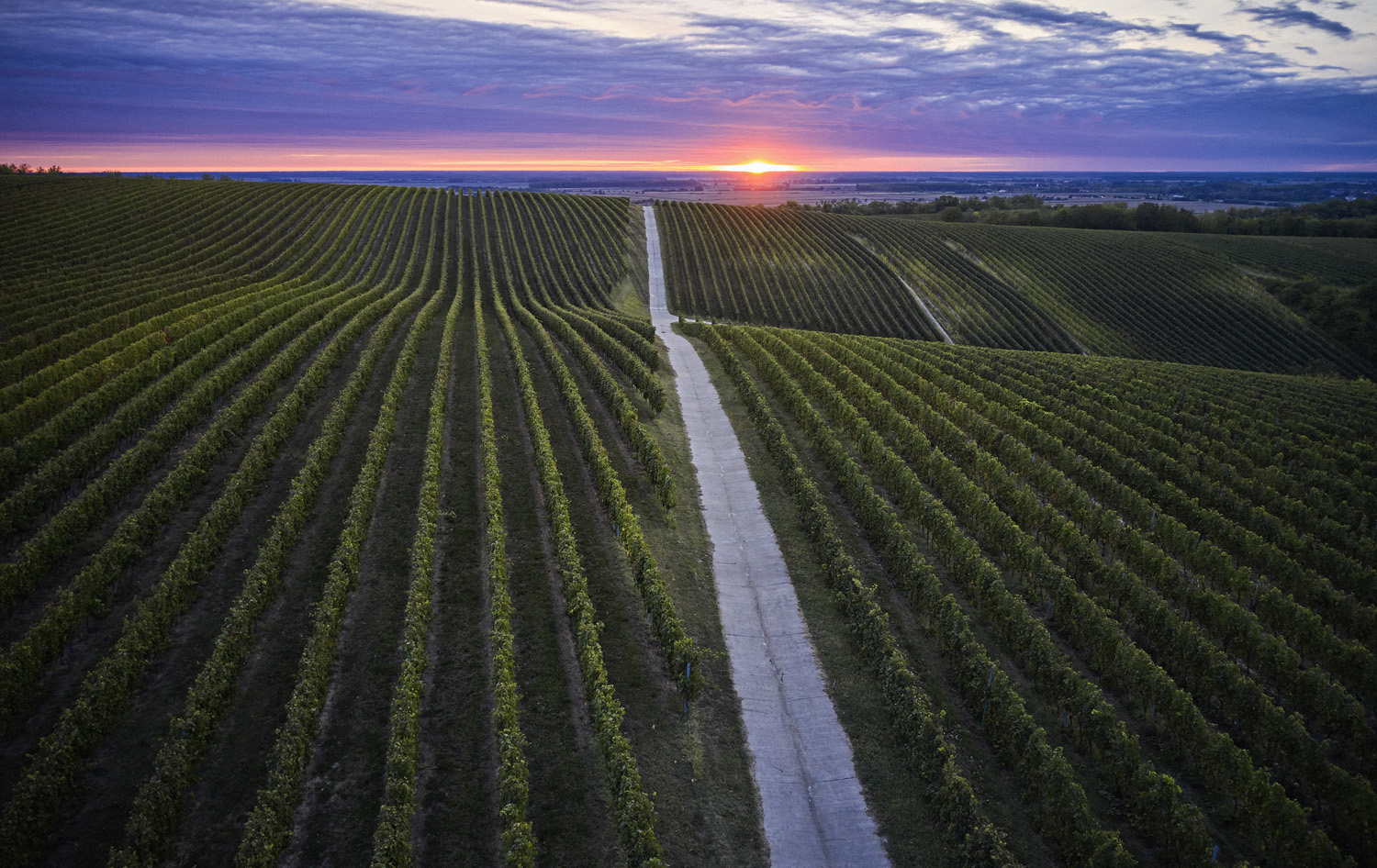
The wine district, located in the Szekszárd Hills and the northeastern part of the Geresd Hills, is bordered by the Mecsek Hills to the west and the Sárköz to the east. Of the over 2,000 hectares of wine grapes, nearly 80%, or approximately 1,744 hectares, are black grapes, while less than 400 hectares are white. The number of sunshine hours per year is between 2,050 and 2,100, which is just high enough for black grapes, the average annual rainfall is 600 mm, and the average annual temperature is above 11°C. As in almost all major wine regions, we also find the ideal spatial structure from a winemaking feng shui perspective: a large body of water tempering the region, in this case the Danube, stretching out in front of the south-east facing slope. The hills lie at the invisible crossroads of three climatic zones: oceanic influences from the west, Mediterranean influences from the south and continental influences from the east all affect the vines clinging to the loess. This often causes sudden changes in weather, with huge thunderstorms striking from the west and southwest. The prevailing wind direction is northwesterly, and thunderstorms quickly cool down the valleys, which bake in the continental heat coming from the Great Plain, where the heat accumulated in the heat waves often exceeds 40 °C. The heat of the Great Plain collides with the eastern wall of the hills, where the best vineyards are located, and this warm air hitting the hills generates constant air movement. The end of summer in September, perhaps the most important period in Hungarian winemaking, is warm and dry, which allows late-ripening varieties such as Olaszrizling, Kadarka, Riesling and the Cabernets to ripen nicely. Little rot occurs during the long, warm autumn, and winter is short with little risk of frost. While it is true that global warming is causing the grape belt to shift northwards, climate change is also having some positive effects: the ripening conditions for Szekszárd’s two most important varieties, Kékfrankos and Kadarka, have improved significantly. Although the central concept of modern winemaking, which favours uniqueness, diversity and the personality of wine, is the individual vineyard, at first glance, the Szekszárd wine district is not about single vineyards, as the soil of the wine region is essentially homogeneous: loess. The highest point of the Szekszárd Hills is Óriás Hill at 285 metres, with the upper Pannonian soil (clay, sand) of the 100-150-metre-high hills covered with thick (20-40 metres) loess (loess clay, sandy-rocky debris clay soil and, to a lesser extent, loess mixed with Pannonian sand) covered with red clay ridges, loess mounds, or, in the forested areas of Geresd, covered with brown forest soils with Ramann-type clay deposits. The loess soil of Szekszárd is a first-class red wine-producing soil with a lime content of between 5 and 30%, which, combined with the north-south orientation of the valleys, is the foundation for surprisingly fine and beautiful acidity. In addition to its lime content, another special feature of the loess bedrock in Szekszárd is the red clay, which contains iron oxide and can weave beautiful mineral flavours into the texture of red wine. Thus, given the very varied soil and extremely complex surface, it is worth thinking in terms of single vineyards.
The undulating surface of the hills is dissected by erosion valleys, valley basins, inlets and gullies, typically running north-south, creating a highly fragmented surface where the exposure of the vineyards and the incredible variety of micro- and mesoclimates create significant differences between the vineyards, and thus the wines’ flavours. Here, therefore, the names of the vineyards do not (only) serve to identify locations, but rather the beautiful old names (Bakta, Baranya Valley, Bartina, Cinka, Csatár, Faluhely, Iván-völgy, Porkoláb, etc) denote different oenological niches, i.e., significantly different characters and wine qualities. Volcanic rock gets better press, but loess has almost the same intrinsic value as soils formed on volcanic rock, rhyolite or basalt.
Vineyards
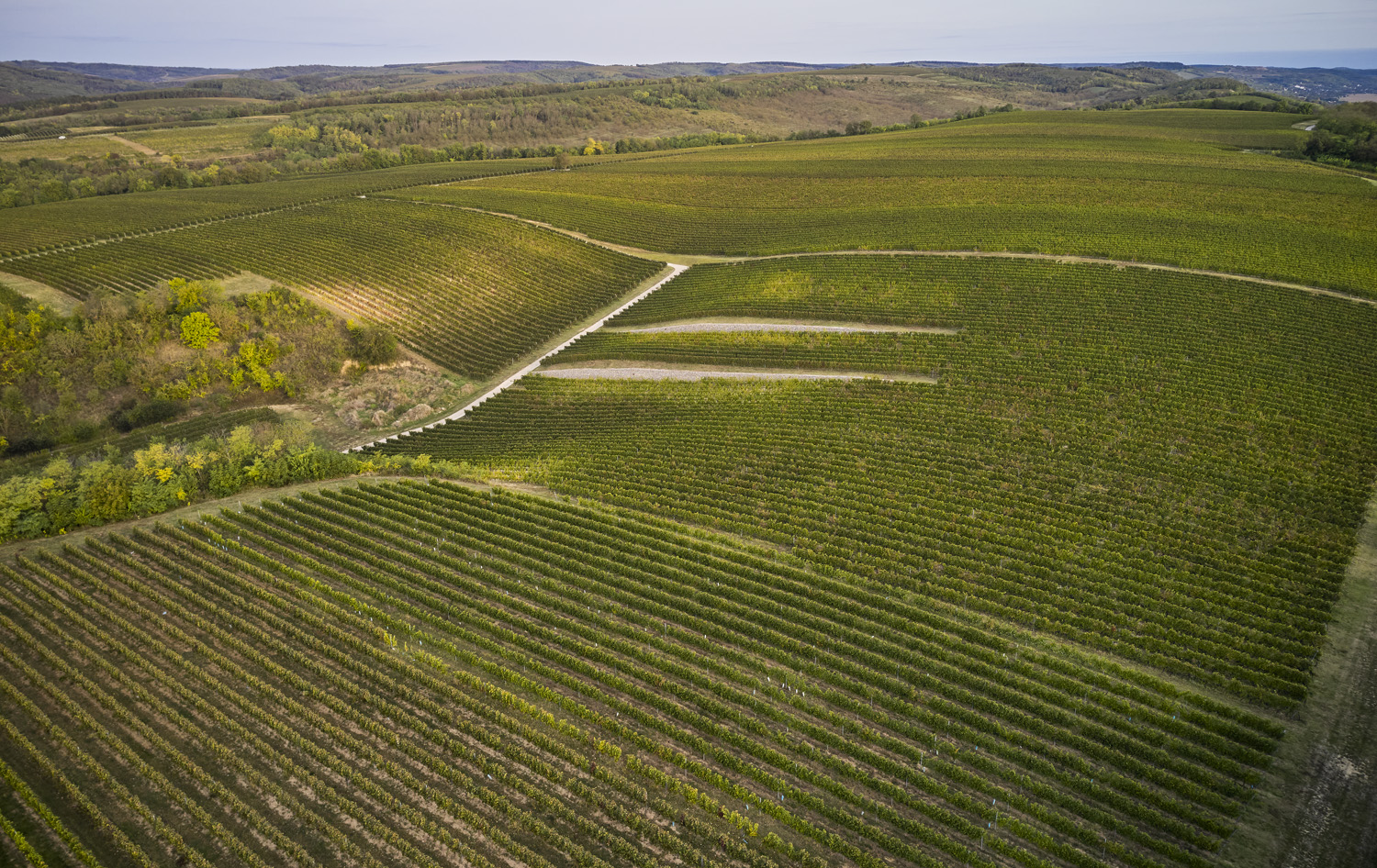
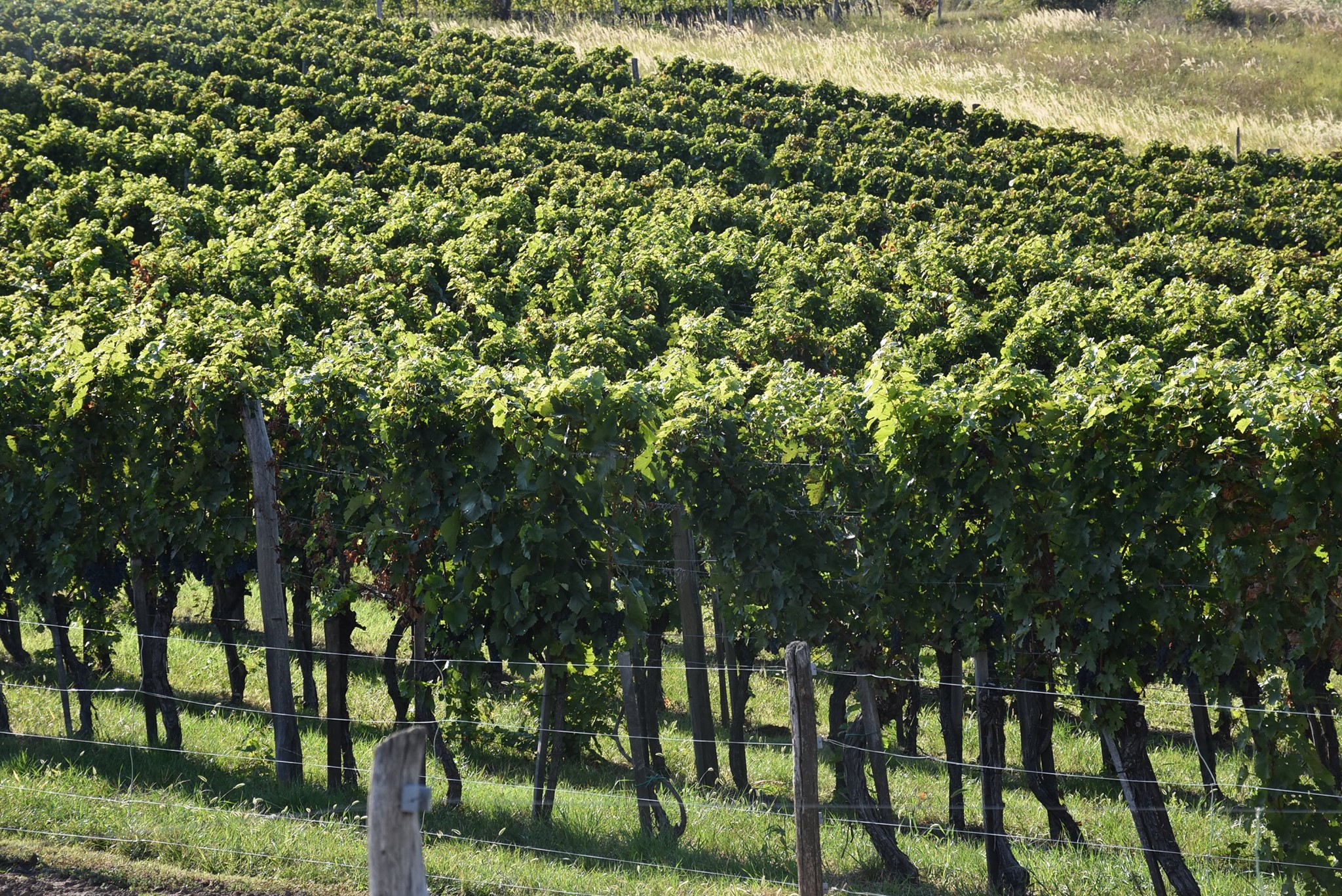
Szekszárd’s vineyards are therefore differentiated from each other by the matrix of soil, micro- and mesoclimatic differences, surface complexity and exposure, which create the colours, shades and relevant differences that give the vineyards their varying characters. The differences between the vineyards were noticed centuries ago by Szekszárd’s winemakers, as evidenced by centuries-old names dating back to the Middle Ages, such as Bakta, Bartina, Csatár, Iván-völgy, Nagymihályi, Parászta, Porkoláb-völgy and Remete. Experience shows that good vineyards are southeast-east or southwest-facing and are dry, yet have excellent water retention, because loess (and clay) stores water much better than stone or sand, as can often be seen from the reeds swaying on the hillsides. Even in drought years, Szekszárd’s vineyards thrive on the loess, thanks not only to the soil’s good water retention but also its generally good nutrient management. There are no large vineyards here, but due to the different microclimates of the narrow valleys, there are significant differences in the flavours created by the individual vineyards, although not as great as in Tokaj, in Eger or on the northern shore of Lake Balaton.
Heading north from the Báta area, the first vineyard is Bödei-hegy, which is currently in rather poor condition. It is worth mentioning because this was the closest point to the Danube, making Böde a special area where past generations made Aszú from Kadarka growing in its brown forest soil. The north-south Csóka-hegy is always windy, and its nutrient-rich slopes offer the potential for wines with good acidity, fruitiness and body, while the southwestern Cserhát-tető, with its good water retention and nutrient management, is capable of yielding light, fruity wines and rosés as well as robust, full-bodied wines. The Báta part, which comprises half the wine district, is less developed today, but boasts vineyards with great potential.
Heading north, one of the best known and most prominent vineyards is the 178-metre-high, north-south Szeleshát, which is actually a small plateau with red soil and loess forest soil. The presence of red clay here is so significant that it breaks through to the surface, spectacularly colouring the ploughed fields. Its two framing conditions, constant wind from the Great Plain and its calcareous red clay soil, lend the wines produced here excellent acidity. Experience shows that the old vines of Decsi-hegy produce smooth, pleasant wines with lovely acidity, while southeast-facing Görögszó, located roughly in the centre of the wine district at an altitude of 129 metres, is one of its best vineyards. According to the unanimous opinions of several winemakers, it produces extremely appealing, smooth wines that are always a little more rounded, with soft acidity, a velvety-silky texture and a Mediterranean character – pleasant wines that are typically Szekszárd. The vineyard is located on the border of two towns, Szekszárd and Decs, and belongs to both. It rises to 220 metres at its highest point, forming a kind of plateau, while further down, the terrain is extremely varied, resulting in a wide range of exposures and sun exposure. It drops below 100 metres above sea level in several places along the road.
One of the best-known areas is east-northeast-facing Faluhely-dűlő, similar to the Baranya-völgy, where Kékfrankos and Pinot Noir intended for rosé thrive in its cooler parts, because although the valley is wide with good sun exposure, the heat sums are lower here, resulting in slightly more acidity and fruity flavours. The neighbouring 131-metre-high Gurovica vineyard, which forms the other half of the plantation, faces south and opens onto the Great Plain, allowing warm air to flow through it. This is a warm vineyard that produces full-bodied wines; thus, it is planted with late-ripening varieties such as Cabernet Sauvignon and Kadarka. Experience shows that full ripeness in Gurovica goes hand in hand with high acidity, because the clay soil of the vineyard has excellent water retention properties. Its potential for winemaking complexity is further enhanced by the proximity of a tempering forest.
The best-known vineyards are located in the Baranya Valley, which forms the east-west axis of the wine district, with Faluhely, Gurovica and Gesztenyés in the south, and Bodzás, Bati kereszt, Csötönyi-völgy, Porkoláb and Iván-völgy in the north. Baranya-völgy is perhaps the largest vineyard in the wine district, with extremely varied exposure. It rises above 260 metres at its highest point, connected to Kerék-hegy, while at its lowest point, at the entrance to the valley, it falls below 140 metres. It is a true Kékfrankos vineyard.
The southwestern-facing Bodzás is a more rugged vineyard with loose loess soil streaked with red clay. It boasts good water retention, and the grapes always develop good sugar content here, so it is considered an ideal Kékfrankos vineyard. Experience shows that it produces spicy, lean, hard and sleek flavours, generating more acidity, minerals and even tannins, while at the same time increasing sugar levels by one degree. Kerék-hegy, planted mostly with Kadarka, is an airy, sun-drenched plateau with soil rich in red clay. According to some producers, it is one of the best vineyards in the wine district.
In east-southeast-facing Hidaspetre, brown forest soil spreads over loess and white clay bedrock. Cabernet Franc thrives in this fresher, more compact soil, producing a rounded, joyous, dense, uniform wine with lively acidity, while Kadarka feels most at home in south-facing Parásztán.
Porkoláb-völgy has one of the best microclimates and is one of the most distinctive growing areas in Szekszárd, where the soil varies even within the valley itself: in some places, it is loess rich in loess dolls, in others red clay dominates. On the palate, Porkoláb has a delicate, almost overripe flavour that ripples over the fine calcareous acidity. Iván-völgy is a well-known, representative vineyard, where a series of small family wineries producing wines of remarkable quality, even by international standards, lead up to the estate and Kadarka vineyard crowning the 212-metre-high hilltop. Kadarka and Cabernet Sauvignon, two heat-loving, late-ripening black grapes, are the most planted here. South-facing, it lacks pure loess soils, but its red clay soils can accumulate incredible heat during heatwaves, with temperatures above 40°C not uncommon in summer, yet it also boasts excellent wind conditions. The city is already encroaching on the vineyards close to it, and in most of Bakta, Csatár and Előhegy, there are now blocks of flats where there were once vineyards.
Heading north, we find several noteworthy grand crus, from which the Szekszárd winemakers produce a wide variety of wines, ranging from light, soft Kadarka to dark, fiery blends. South-facing Kerék-hegy is bathed in sunlight all day long, and it can get extremely hot here too, with the heat only slightly alleviated by the constant breeze blowing across the hilltop. Part of the closed, dry, valley rich in lime of Hidaspetre has been reclaimed and terraced, improving its water management. Black grapes grow best on its red clay, eroded brown forest soil. The south-southwest-facing Bodzási-dűlő is also a hot basin, where the limestone and red clay soil of the well-drained terraces produce full-bodied wines with lovely acidity, mainly from Kékfrankos, Cabernets and Merlot. Leányvár, one of the northernmost areas, is a different world altogether, with brown forest soil or sand, and although it boasts good nutrients and water management, it is not as large as the previously mentioned vineyards: it does not produce heavy wines, rather lighter, simpler, aromatic wines.
Origin protection
Szekszárd is one of the country’s wine districts which already boasted origin protection before product specifications became mandatory in 2012. The first such material was published in 2009, focusing not only on Bikavér, but also on Kékfrankos and Kadarka. The aim of this was clearly to improve quality, so it specified yield restrictions and certain other details relating to cultivation methods and production. The most important of these are:
– Bikavér must consist of at least 40% Kékfrankos and Kadarka.
– Bikavér must not be less than 12.5% abv.
– Szekszárdi Bikavér with protected designation of origin may only be produced in wineries controlled by the Szekszárd wine district.
– Szekszárdi Bikavér with protected designation of origin must be aged in oak for at least 12 months; the wine may only be bottled from 1 December of the year following the harvest; the vintage must be indicated on the main label. Szekszárdi Bikavér with protected designation of origin may only be sold in glass bottles (0.75 litres; 1.5 litres).
The pursuit of quality was clearly already present at this time, but this was taken even further in 2012 with the introduction of the Premium Bikavér concept, which imposes stricter conditions, while the regulations for classic Bikavér wines are very similar to those of 2009. The most important characteristics of Premium Bikavér are:
– Yield may not exceed 55 hl/ha of new wine with lees.
– Must be aged in oak barrels for at least one year.
– Must be aged in bottle for at least one year.
– The blend must contain at least three varieties.
– The proportion of Kékfrankos in the finished wine must be at least 35%.
– The proportion of Kadarka in the finished wine must be at least 5%.
– The proportion of Syrah in the finished product must not exceed 10%.
– Premium Bikavér may also contain Cabernet Sauvignon, Cabernet Franc, Merlot and Pinot Noir.
Four years after the first product specification, the wine district implemented further changes (primarily stricter regulations) for Bikavér. The most important details are:
Bikavér: Yield may not exceed 100 hl/ha of new wine with lees. The blend must contain at least four varieties. Kadarka must account for at least 5% of the blend. Kékfrankos must account for at least 40% of the blend. The following varieties may also be used in Bikavér up to a maximum of 10%: Blauburger, Portugieser, Menoire, Pinot Noir, Syrah, Zweigelt, Bíborkadarka, Alibernet, Turán, Tannat, Sagrantino, Malbec and Mészikadar.
Premium Bikavér: Yield may not exceed 60 hl/ha of new wine with lees. The blend must contain at least four varieties. Kadarka must account for at least 5% of the blend. The proportion of Kékfrankos must be at least 45%. Cabernet Sauvignon, Cabernet Franc and Merlot may not exceed 40%. The remaining permitted premium wine varieties may be used up to a maximum of 10%.
The use of vineyard names is only permitted for premium wines.
The next amendment was effective from 2018. Minor changes were made to the rules for Bikavér.
Szekszárd Bottle: In 2014, winemakers in Szekszárd created the so-called Szekszárd Bottle, which can only be used for Kadarka, Kékfrankos and Bikavér wines that have been approved by two-thirds of a twelve-member committee of winemakers. The basic expectation for these wines is that they represent the characteristics of their variety and the Szekszárd style, while also reflecting the character of their terroir. The bottle is Burgundy-shaped, although it has unusual dimensions, and the name “Szekszárd” is written around its neck. Its use is not mandatory.

























































































































































































































































































Events
Domestic and international wine programs