
 English
  Magyar
Balatonfüred-Csopaki Wine district

History | National Geography

Vineyards | Origin protection

History
Viticulture in Balatonfüred-Csopak was undoubtedly first introduced by the Celts, while the Roman Empire then further developed its wine culture. The latter is evidenced by the 2nd-3rd century Roman villa excavated in Balácapuszta, whose decorative motifs also include depictions of grapes. The Hungarians who migrated to the Carpathian Basin settled there in the 9th and 10th centuries, and in 1018, according to a surviving document, Saint Stephen, the first king of Hungary, donated the vineyards on the outskirts of Paloznak, a village in the wine region, to the convent in Veszprém. According to a document dated 1082, the Bishop of Veszprém already owned vineyards in Csopak, while Balatonfüred itself became church property in 1211. The Turkish conquest in the 16th-17th centuries brought destruction, with only the Christian reconquest in the late 17th century bringing renewed prosperity. The Benedictine Abbey of Tihany played a decisive role in the development of the wine region in the Middle Ages. As the largest vineyard owner in the surrounding twenty villages, it effectively controlled its progress. The turn of the 19th and 20th centuries in Balatonfüred-Csopak was also determined by phylloxera, which significantly changed the wine region’s varietal structure. During the renewal process, varieties that are well suited to the climatic conditions and tend to be harvested later, such as Olaszrizling, Pinot Gris and Juhfark, came to the fore. Other easily cultivable varieties, such as Cserszegi Fűszeres (the breeder of which was born in Csopak) also appeared in the late-20th century.
After World War II, large-scale farming naturally became widespread. In 1959, an area that had previously belonged to the Badacsony wine region gained its independence as the Balatonfüred-Csopak wine region. During the communist era, the shores of Lake Balaton became a holiday destination accessible to the masses. By the time of the regime change, this had led to buildings replacing vineyards in the best growing areas, thus reducing their area. After 1990, local producers and outside investors who loved the region began establishing new wineries one after another and invested enormous energy into bringing former vineyards back into cultivation. This process has also proved a double-edged sword, as the proliferation of wineries has also contributed to turning Balatonfüred and Csopak into the “Monaco of Lake Balaton” since the 2010s. It has become even more expensive with the influx of wealthy citizens, while at the same time becoming even less sustainable in terms of viticultural economics.
Mention should also be made of the history of the wine region from the perspective of origin protection. When the Balatonfüred-Csopak PDO was introduced in 2012, the Tihany PDO already existed alongside it; however, other local initiatives within the wine region did not stop there. The Csopak winemakers introduced their own system in 2017 under the name Csopak PDO. The changes also continued, leading to the Nivegy-Valley becoming independently regulated in 2021 and Füred itself in 2023. These are all discussed in detail in the section on Origin Protection.
National Geography
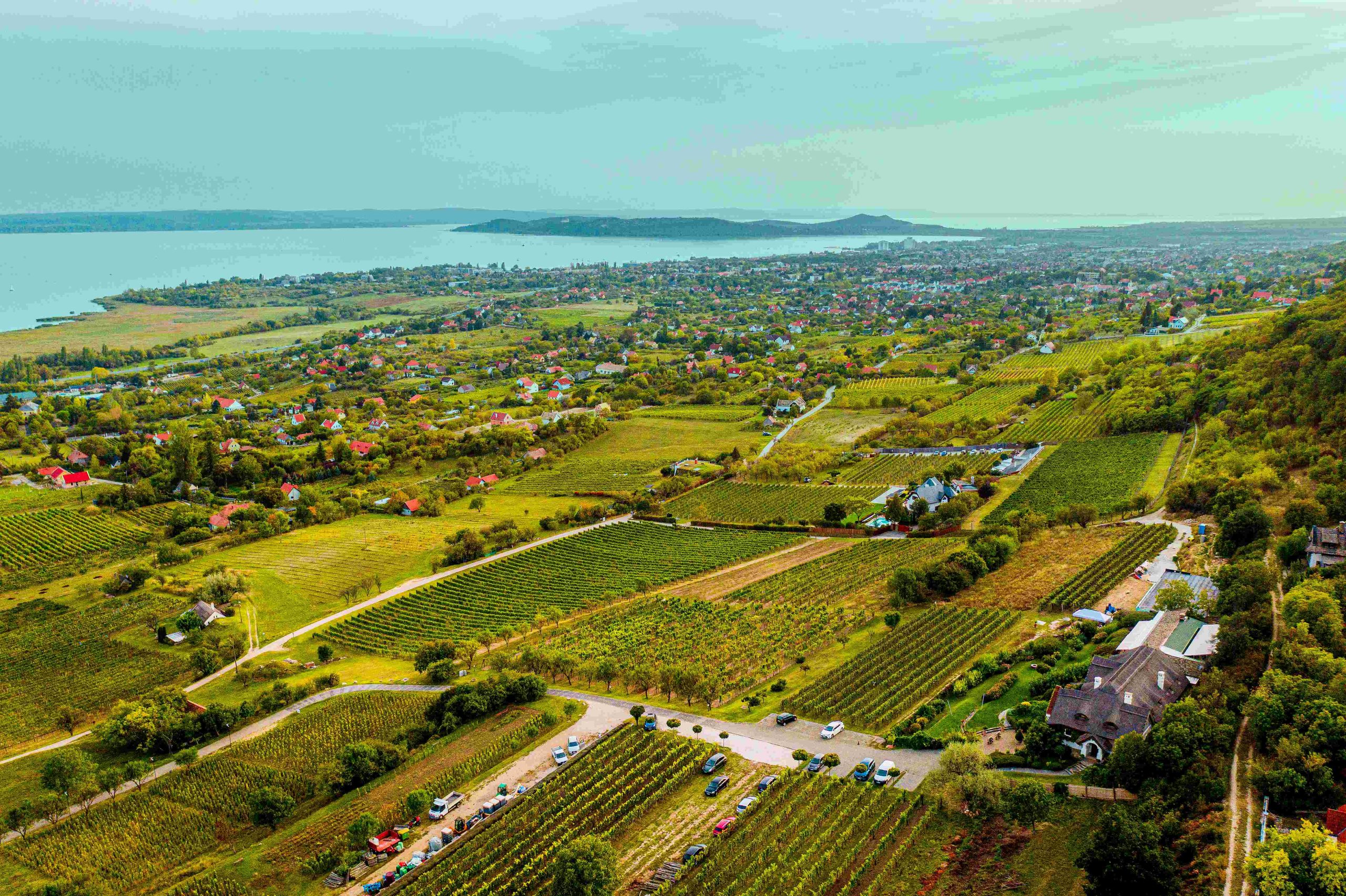
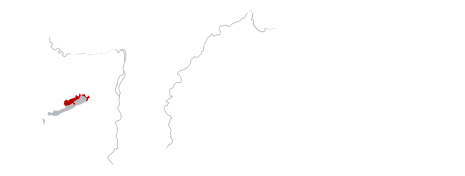
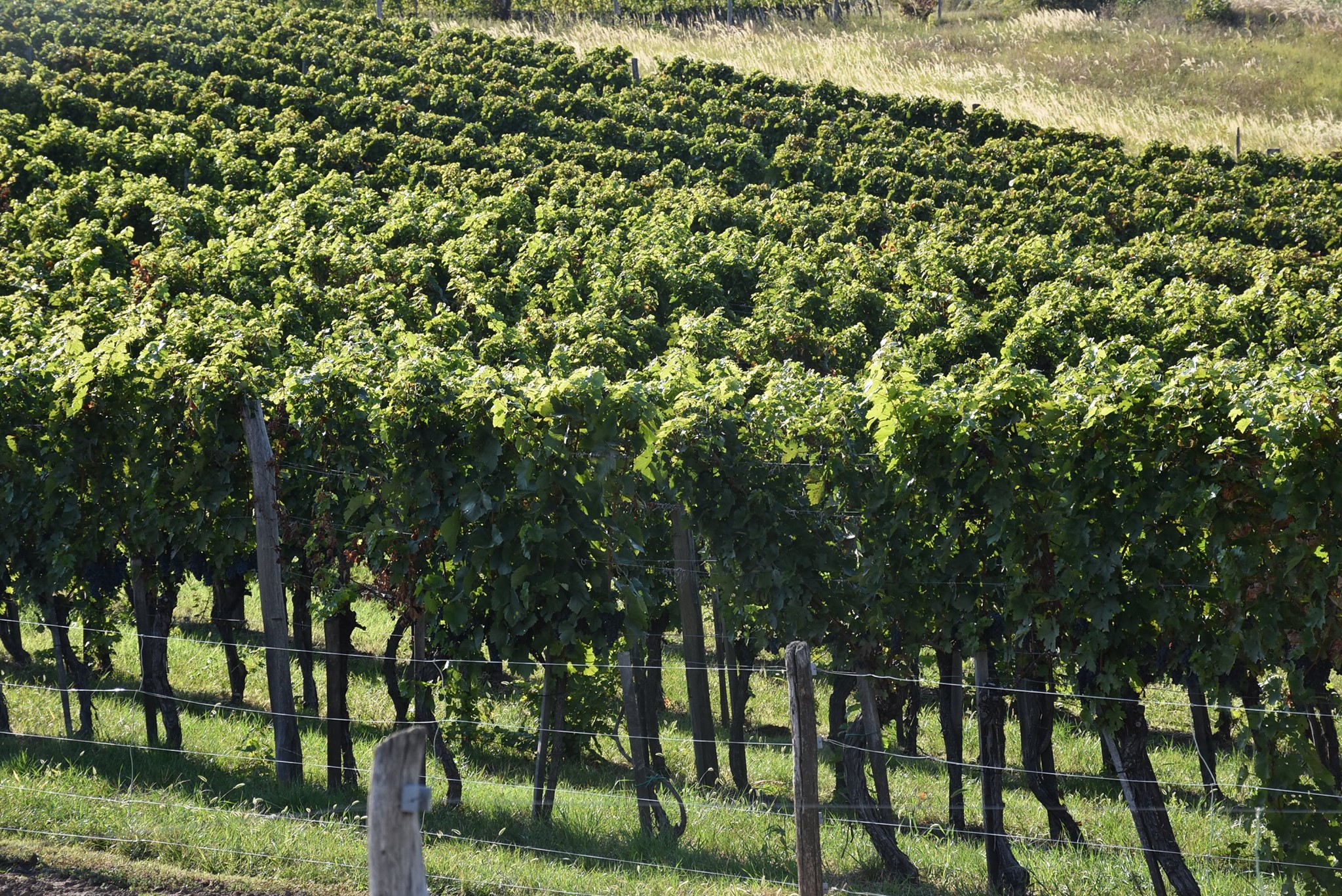
The Balatonfüred-Csopak wine region is located on the northern shore of the lake, in its eastern basin, and stretches from village of Balatonfőkajár to village of Zánka. The hillside rises from the lakeshore, with the first and second ridges forming the winegrowing areas, the best of which are found at the foot of the hills and on the gently sloping hillsides. The wine region, which rises steadily from the shore, is bordered to the north by the Veszprém Plateau, which protects the vineyards from bitterly cold north winds. The wine region’s climate is determined by the cool air masses flowing in from the Bakony Hills and Lake Balaton, which borders the wine region to the south. Another characteristic feature is the abundance of wooded areas surrounding the vineyards, which cause the warm air flowing from the lake during the day to be replaced by cool breezes in the evening, thus ensuring one of the prerequisites for balanced grape production: sufficient temperature variation. The Balatonfüred-Csopak wine region has around 2,000 annual sunshine hours, an average annual temperature of 11-12°C, and average annual precipitation of 650-700 mm, of which 350 mm falls during the growing season. However, since the mid-2010s, it has become one of the Hungarian regions most affected by climate change, mainly due to its unpredictability. Heat waves, hail, droughts and floods may occur any year, and only producers’ experience can save these vintages.
The oldest rock in the wine region, known as Balatonfőkajár Quartz Phillite, was formed around 440 million years ago. This rock – a metamorphic crystalline slate – is usually found deep below ground level, but it comes to the surface at Balatonfőkajár, near Somlyó Hill. The so-called Lovas Shale, which surfaces in the wine region near the villages of Lovas and Alsóörs, is not much younger. This shale contains microscopic fossils that tell us about the ancient deep sea. The shale, marl and silt found here were also formed in this environment. These sediments, formed in prehistoric seas, were later transformed and accumulated due to crustal movements. The ancient high mountains that formed at that time later collapsed due to external forces, and the accumulated debris still appears today in huge areas between Badacsonyörs and Zánka, as well as Aszófő and Balatonfűzfő, staining the soil red. This is the famous Permian red sandstone that is so characteristic of certain areas of the wine region, mainly east of Csopak. The red sandstone material was transported here at that time by rivers flowing towards the nearby sea in a semi-desert environment. The sandy, gravelly sediments deposited on the river flats are coloured by iron minerals, mainly hematite and goethite, giving them their characteristic purple-red to brownish-red colour.
Later, during the Mesozoic era, the Tethys Ocean appeared in the area, ending the dominance of freshwater. Sedimentation began again, initially forming sandstone, then later carbonate rocks, mainly dolomite, in the shallow sea areas. Marl and limestone also appeared in the deep sea basins. As the sea receded, a large lagoon formed, where sulphate minerals precipitated at the same time as dolomite.
These rocks dominate the western part of the wine region (the Pécsely Basin), with red sandstone completely absent from these areas. At the same time, basalt volcanism familiar from the Kál Basin already appears, albeit only to a minor extent. Solidified basalt in a former volcanic vent can be viewed at the Hegyestű exhibition site located on the western side of well-known and renowned growing area Tagyon Hill.
The Tihany Peninsula differs fundamentally the other parts of the region in terms of geology. There were active volcanoes here about seven million years ago, but there were no lava flows because the molten rock collided with watery sediment before reaching the surface. Other types of volcanic activity also occurred later. The highlands visible on the edge of the peninsula, for example, are the remains of a former caldera rim, and the peninsula’s lakes can be found where the craters once were. Once the volcanic activity had ceased, significant post-volcanic activity ensued. Water seeping deep into the earth along tectonic fissures was heated by the heat of the magma and mixed with gases. The vapours dissolved carbonate and silica from the rocks as they flowed upwards. These were then deposited on the surface due to the sudden cooling, forming the peninsula’s famous geyser cones, of which there are still around 60-80 today.
Vineyards
The Balatonfüred-Csopak wine region offers fantastic diversity in terms of soil and climate, which will be illustrated through over a dozen vineyards presented below. The wine region’s soil basically forms a continuous transition from west to east, with volcanic characteristics still prevailing in the west, gradually changing to limestone-marl-dolomite, then to red Permian sandstone base rocks near Csopak.
Some wine lovers may find it difficult to navigate between the five previously mentioned PDOs, so these details will be mentioned in the vineyard list wherever necessary. The most extreme detail is undoubtedly that a few vineyards of the Kál PDO, discussed in relation to the Balaton Highlands wine region, “slip” into the Balatonfüred-Csopak wine region, specifically into the Nivegy Valley PDO territory.
From Monoszló to Dörgicse
Let’s start in the west, with the most important vineyards of the Nivegy-Valley PDO. The largest volcanic hill in the entire wine region, Tagyon Hill, lies directly southeast of Monoszló. It boasts perfect southeastern exposure, an altitude ranging from 160 to 240 metres and perfect soil. Tagyon-hegy is a large vineyard containing nine named sub-vineyards.
The Szent Balázs-hegy vineyard is an interesting case, as it is not one, not two, but three vineyards. It almost completely surrounds the 305-metre-high cone of Szent Balázs Hill, which belongs to villages of Balatoncsicsó and Szentantalfa (Nivegy-Valley PDO) on its western side and to Dörgicse (Füred PDO) on its eastern side. The situation is similar with the Agyaglik sub-vineyard, which connects the main vineyard at the southernmost point of the hill, on the outskirts of all three villages. Szent Balász-hegy itself is a south-west-facing slope, between 180 and 280 metres high, with mostly small parcels. The previously mentioned south-facing slope, Agyaglik, is undoubtedly the most valuable part of the hill, although single-vineyard red wines can also be found from the Margya sub-vineyard on the western hillside.
A well-known group of vineyards is located near village of Dörgicse, where the previously mentioned soil transition is particularly characteristic and the soil structure is the most diverse. The best example of this is Becce, located southeast of the village, with southern exposure (and therefore the warmest vineyard in Dörgicse) and rising from 180 metres to around 280 metres. Limestone is clearly visible around the hilltop, sometimes with fist-sized stones on the surface. A thick layer of material covers the bedrock on the middle of the slope. This rocky base also helps reflect heat, ensuring good ripening for most varieties. Moreover, the soil composition promotes acid formation, ensuring grapes ripen well in terms of acidity. Unfortunately, like other vineyards, Becce is far from being fully planted, with smaller plots dominating, which does not favour the vineyard’s reputation and development.
There is a group of vineyards northwest of the village, one of which, Halom-hegy, belongs to Mencshely. The three main vineyards belonging to Dörgicse, Kútfői, Mocsár and Sárkút, reach up to 340 metres in altitude. They boast southern and southeastern exposure and consist mainly of small parcels, although top-quality grapes could be produced here too.
Balatonszőlős
The next major group of vineyards is located entirely within the Füred PDO area, north of Balatonszőlős, which local producers consider one of the best areas in the wine region. The main reason for this is its relatively large distance from Lake Balaton, approximately five kilometres, meaning that the climate-modifying effect of the water is not very strong and the humidity is also more moderate. Moreover, the air flow coming from the hill and the Bakony Hills, which dries the grapes, provides a healthier environment in summer and aids concentration in autumn. The vineyard ridge’s soil is limestone and dolomite covered with loess-clay, which also provides an excellent foundation for viticulture.
The largest of these vineyards is Zádor-hegy, located northwest of the village and clearly visible from the Pécsely road. With its huge area of several hundred hectares, it is the largest in the entire wine region. This is an ideal, southeast-facing hill over 350 metres high, with vineyards climbing to over 320 metres in places. It is typical in that there are larger vineyards further down, around 200 metres away, but most of the grapes are grown on small parcels of a few hundred square metres attached to weekend houses and small cellars, thus no named, single-vineyard wines appear to be made from here. Its historically important and most well-known part, sub-vineyard Bordoma, is located on the eastern side, which, after a brief interlude, regained its place in the designation of origin.
A little to the west of here is another grand cru vineyard group, which only began to earn its true reputation in the early 2010s, mainly thanks to the Figula Winery. This basin includes four vineyards with a slight break: Öreg-hegy, Gella, Sóskút and Penke. The latter is the largest, covering an area of more than 200 hectares. This is not surprising, as two vineyards previously considered separate in popular parlance were merged when the product specification was drawn up: Nyerges on the eastern side and the flatter Barátszőlő on the western side. Today, the northernmost tip of Penke rises to over 260 metres, but even its lowest parts barely drop below 200 metres. The vineyard’s terrain in the Nyerges section is varied, but ultimately faces southeast.
The second largest vineyard in the basin is Sós-kút, where calcareous clay soil is most characteristic. It is a large vineyard of around 150 hectares, with its highest point well over 300 metres, but practically nowhere below 200 metres. It is shaped like the letter H, with southern and southwestern exposure, characterised by larger plots at the bottom and smaller parcels at the top. It is a high-potential growing area, favourable for late-ripening varieties.
The two most notable areas are Öreg-hegy and Gella. Their soil is particularly interesting in that a significant number of large stones can be seen on the surface, and if you tap them a little, you are bound to find evidence of marine sediment in the form of shell imprints. The lowest points of the two vineyards are over 250 metres, while their upper parts, which extend to the forest and are covered with scrub in places, reach their peak at nearly 400 metres. Their exposure is perfectly southeastern, although there is a north-south scrubby ditch running through the middle of Gella, which collects most of the rainfall and slightly disturbs this orientation. The highest parcel in Gella is Köves (“Stony”), which is not an official sub-vineyard, but the selection from here is one of the best white wines in the country. It was named after its soil which was stripped bare by erosion.
Száka is a well-known vineyard covering only six hectares, located on the edge of the road connecting Balatonfüred and Balatonszőlős. It faces southeast, but slopes gently, from around 210 metres at the top to around 190 metres at the bottom. The subsoil is Triassic limestone, but with good water-retaining clay on top. It generally produces tight, elegant wines, which can be tasted as single-vineyard Olaszrizling.
On the western edge of Balatonfüred lies the large Bocsár vineyard, bordered by two other vineyards (Baricska and Vörös-mál) to the south and forest to the north. It basically consists of two parts, separated by a strip of forest. The western part is also a named sub-vineyard, Farkó-kő, which is even better known than the main one. It covers 16-18 hectares, with its highest point at 180 metres and its lowest at around 155 metres. It faces the lake in a southeasterly direction, and as the bottom is about two kilometres away, the mist does not cause any real difficulties. The main vineyard is being eaten up by the town from both the east and the north. Its exposure is the same as that of Farkó-kő, but its highest point climbs above 200 metres. The vineyard’s total size is 60-70 hectares.
As mentioned above, Baricska is located directly below Bocsár, also on the western edge of the town, but reaching all the way down to the road. The town has almost surrounded it, to such an extent that it even has a small exclave that is now completely embedded in the urban fabric. It has three sub-vineyards (Berekszél, Lapos-telek, Balázs-hegy), of which Berekszél has gained national fame. Baricska covers a total area of more than 100 hectares, but much of it has been taken out of cultivation for various reasons. It descends to a height of almost 100 metres at the main road, with its highest point around 140 metres.
Tihany
Tihany is an independent entity within the wine region, hence it has had its own product specification from the very beginning. As already mentioned, the peninsula is a seven-million-year-old dormant volcano, so its soil structure was essentially formed on tuff, making the topsoil extremely rich in minerals. The microclimate is also unique. The lake warms up the entire peninsula in summer, the vines are the first to bud here in spring, and foliage stays green the longest in autumn, resulting in an extremely long growing season. Thus, it is not suitable for white grapes, but it is one of the best locations in the country for red wine, and this is true even for Bordeaux varieties, to such an extent that the designation of origin does not permit white varieties. Besides their delicate minerality, red wines from here often display particularly well-rounded tannins. Four of the six vineyards on the peninsula are located on the shores of the Inner Lake and cover a total area of approximately 100 hectares. Their exposure is interesting, as they are practically flat, with a slight northern slope. The best known of these is Farkasverem. Separate from these are Cserhegy and the Óvári szőlők, the former descending from a height of 208 metres at the tip of the peninsula. The vineyards also reach an altitude of 180 metres. Óvári is also located at a high altitude, between 150 and 200 metres, with eastern exposure, making it one of the best areas even within Tihany. Hosszú-hegy and Ráta dűlő are slightly less sought after, since severe winters and problematic springs can cause frost damage at their altitude of 120 metres above sea level, and even Lake Balaton cannot save them from this.
Csopak and Paloznak
Finally, we come to Csopak, which is now not only a wine region but also one of the most consciously developed viticultural villages in the entire country. The village’s grape production can be divided into two distinct parts, as the soil conditions of the vineyards to the west and east of the village differ significantly. The vineyards on the western side are truly historic. Their boundaries on maps dating back to 1863 are precisely the same as they are today. The soil on the hillside is extremely complex, with the main soil components changing almost every metre, but overall it is dominated by clay shale, marl, limestone and sandstone, with only occasional patches of red Permian sandstone on the eastern side.
The highest vineyard is Hegyalja, with sub-vineyard Szita-hegy lying to the east. Its highest point is over 210 metres and its lowest around 180 metres. It boasts perfect southeastern exposure and excellent wind conditions, as well as perhaps the most beautiful panorama of Lake Balaton. One level down is Nagy-kút, from which several single vineyard wines have been produced for many years. As it begins directly below Hegyalja, its highest point is 180 metres and its lowest around 130-140 metres. It includes both large estates and small plots, and by the 2020s, it had become the epicentre of the wine region in terms of prestige.
The small red sandstone section mentioned above can be found in the Bene vineyard, which begins below Nagy-kút. This vineyard stretches all the way to main road number 70. Its lowest point is around 115 metres, and it is often completely shrouded in mist from Lake Balaton, which is picturesque but conducive to the development of grape diseases. However, special mention must be made of the Berek-hát vineyard, which is located east of the Veszprém road, nestled among the houses of Csopak, with perfect southern exposure, but only about five hectares of vineyards.
Perhaps the best-known vineyard on the eastern side is Siralomvágó, which for a time was only listed in the product specification as a sub-vineyard of Kis-hegy. Fortunately, this situation has now changed, but the Kertmög sub-vineyard, which is exclusively associated with it, still belongs to Kis-hegy. The entire Siralomvágó area covers just two hectares, where there is only one winery: the Jásdi Winery, which beautifully renovated the historic Ranolder villa. The name can also be linked to them in a certain sense, as this area was previously known as Siralomvágó in common parlance, and owner István Jásdi finally named it this even before the origin protection came into being. Another name that can be confused is the previously mentioned Kis-hegy, as there are two of them, and both are divided into two by a municipal boundary. The less significant one lies on the border between villages of Lovas and Alsőörs, but we are now discussing the other one, which belongs to both Csopak and Paloznak. It is a large growing area, covering more than 40 hectares, but the vineyards are seriously splintered by numerous houses and gardens. Its highest point rises to over 230 metres, bordered by forest, and at the bottom is the Csopak-Paloznak upper road at around 130 metres. Red Permian sandstone only appears at the bottom, in the area bordering Slikker, while marl and limestone dominate its upper reaches. There is a sub-vineyard called Hajnóczy at the bottom of the Paloznak section, which now also produces a single-vineyard wine.
The small 20-hectare Slikker gained considerable renown in the 2010s. It starts north of the Csopak-Paloznak road, reaches its highest point at 160 metres and boasts red Permian sandstone soil. This type of soil dominates from here on towards Lake Balaton, both in the well-known Lőcze-domb and Sáfrán-kert. The former covers perhaps four or five hectares in total, and, interestingly, its main southern slope is complemented by a distinct eastern incline, which significantly improves morning dew evaporation. Sáfrán-kert is large (approx. 30 hectares) and warm, which is further enhanced by the mist rising from the lake, creating ideal conditions for grape diseases to develop. Generally, it is an area that produces well-structured, ripe wines with a tendency toward floral notes.
Origin protection
The Balatonfüred-Csopak wine region is a particularly complex place in terms of origin protection within Hungary. There are five and a half PDOs registered in the wine region, which are listed below in order of priority. At the outset (2012), there was already a product specification for the wine region and for Tihany, as well as for the Kál PDO, which partially overlaps with the wine region (but is discussed under the Balaton-felvidék wine region). The Csopak PDO was the first to join, followed by the Nivegy-Valley and Füred PDOs in 2021.
Let’s start with the wine region (Balatonfüred-Csopak PDO) regulations, which did not impose any specific requirements on producers in 2012, but did define the boundaries of the vineyards.
It is hardly surprising that Tihany already became an independent PDO in 2012. Unlike the rest of the wine region, it is entirely devoted to red wine, thanks to its peninsular location. Hence, regulations only permit the production of rosé and red wines under the Tihany name; moreover, stricter yield restrictions than the wine region were imposed from the outset. It also demarcated six vineyards and stipulated that Tihany PDO wines could only be sold in bottle. Since then, only one minor, less significant amendment was made in 2017.
A more significant event also took place in 2017 with the establishment of the Csopak PDO. The most striking detail is that Csopak (Csopaki) can now only be used as a name exclusively within the framework of the Csopak PDO. It is important to note that wine can still be produced under the name of the wine region (Balatonfüred-Csopak) or wider region (Balaton) in Csopak (and the other PDOs) if the producer is unable or unwilling to comply with the Csopak PDO conditions. The Csopak PDO is limited to the villages of the former Csopak district, meaning that besides Csopak, it also covers the areas of Paloznak, Lovas, Alsóörs and Felsőörs.
Another important detail is the use of grape varieties. The wine region’s PDO permits dozens of varieties, including black grapes, which can also be used to produce rosé wines. However, the Csopak regulation limits the options to two varieties, Olaszrizling and Furmint, so only these two varieties can be used to make Csopaki wine. At the same time, strict restrictions were introduced on Furmint, which may only be blended into Csopaki wine in a maximum proportion of 15%. In other words, if a winery adds 20% Furmint to Olaszrizling, it cannot be called Csopaki, even if it meets all other requirements. Furthermore, only so-called Hegybor (village wine) and Dűlős (single-vineyard) wines can be produced; these are the two levels of the regulation.
The Nivegy-Valley PDO became official in 2021 and covers the vineyards belonging to Balatoncsicsó, Monoszló, Óbudavár, Szentantalfa, Szentjakabfa, Tagyon and Zánka. Similar to Csopak, village and single-vineyard wines were defined. The first version stipulated Olaszrizling only, but this was amended in 2024, with Chardonnay, Furmint, Pinot Gris, Juhfark and Riesling also being permitted as supplementary varieties (max. 15%).
The most recent regulation is the Füred PDO, which came into effect in 2023. Unlike the other sub-regional PDOs, it permits the production of white, rosé and red wines, but it basically also thinks in terms of the concepts of village and single-vineyard wines. It distinguishes between five types of wine: Olaszrizling and Kékfrankos on both levels, while only the village wine category is permitted for rosé, in which case only Kékfrankos and Zweigelt may be used.



























































































































































































































































Events
Domestic and international wine program