
 English
  Magyar
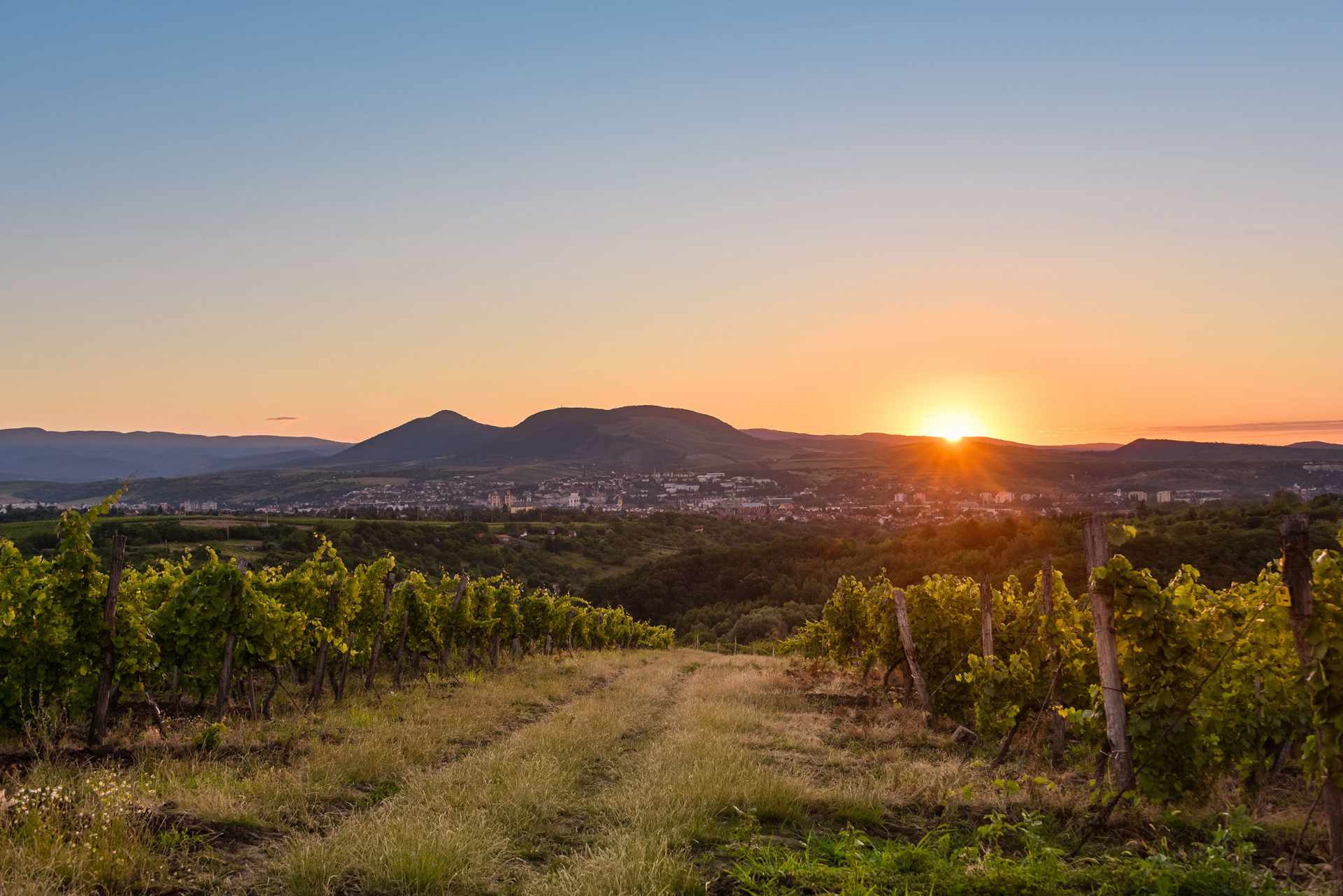

Egri Wine district

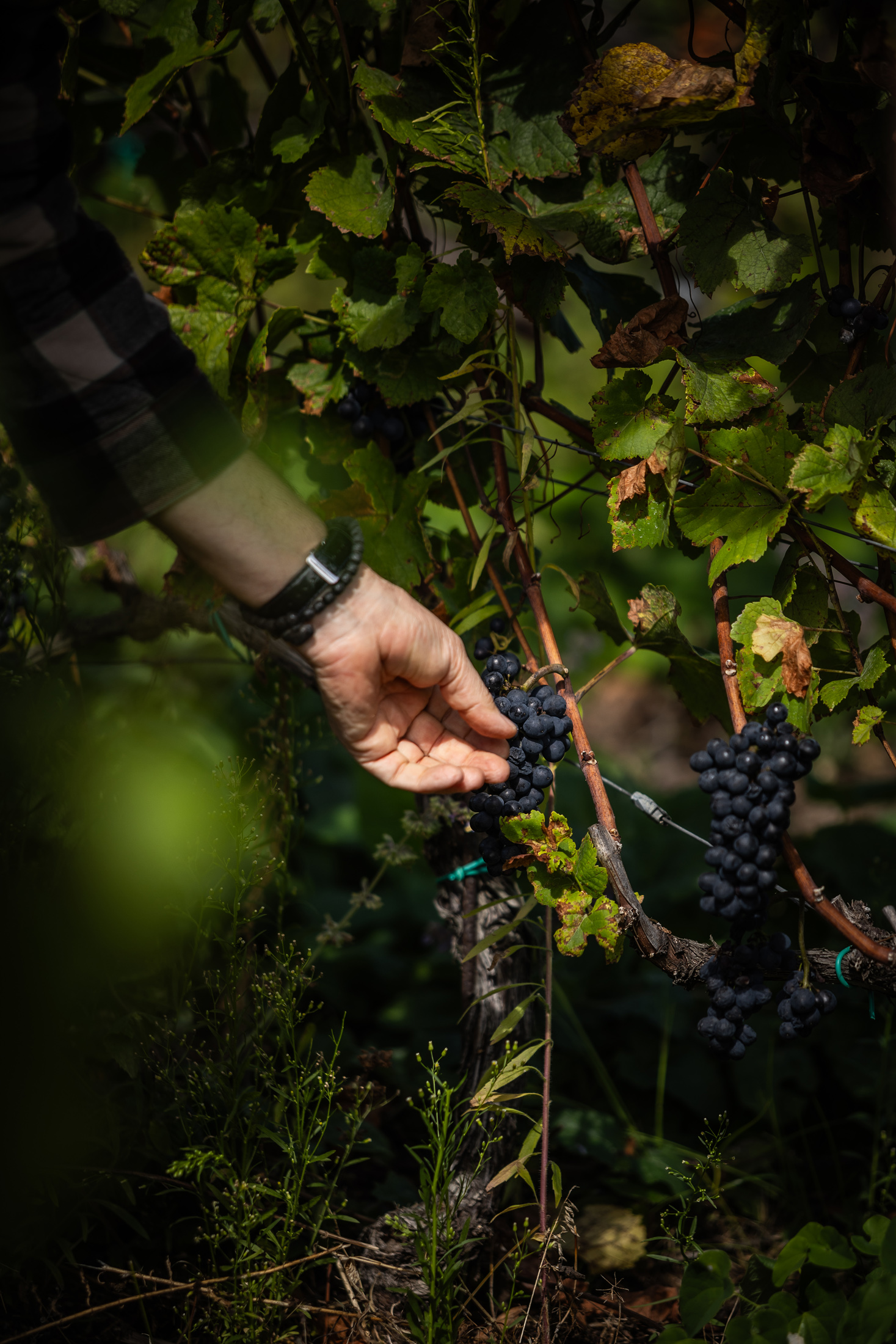
History | National Geography

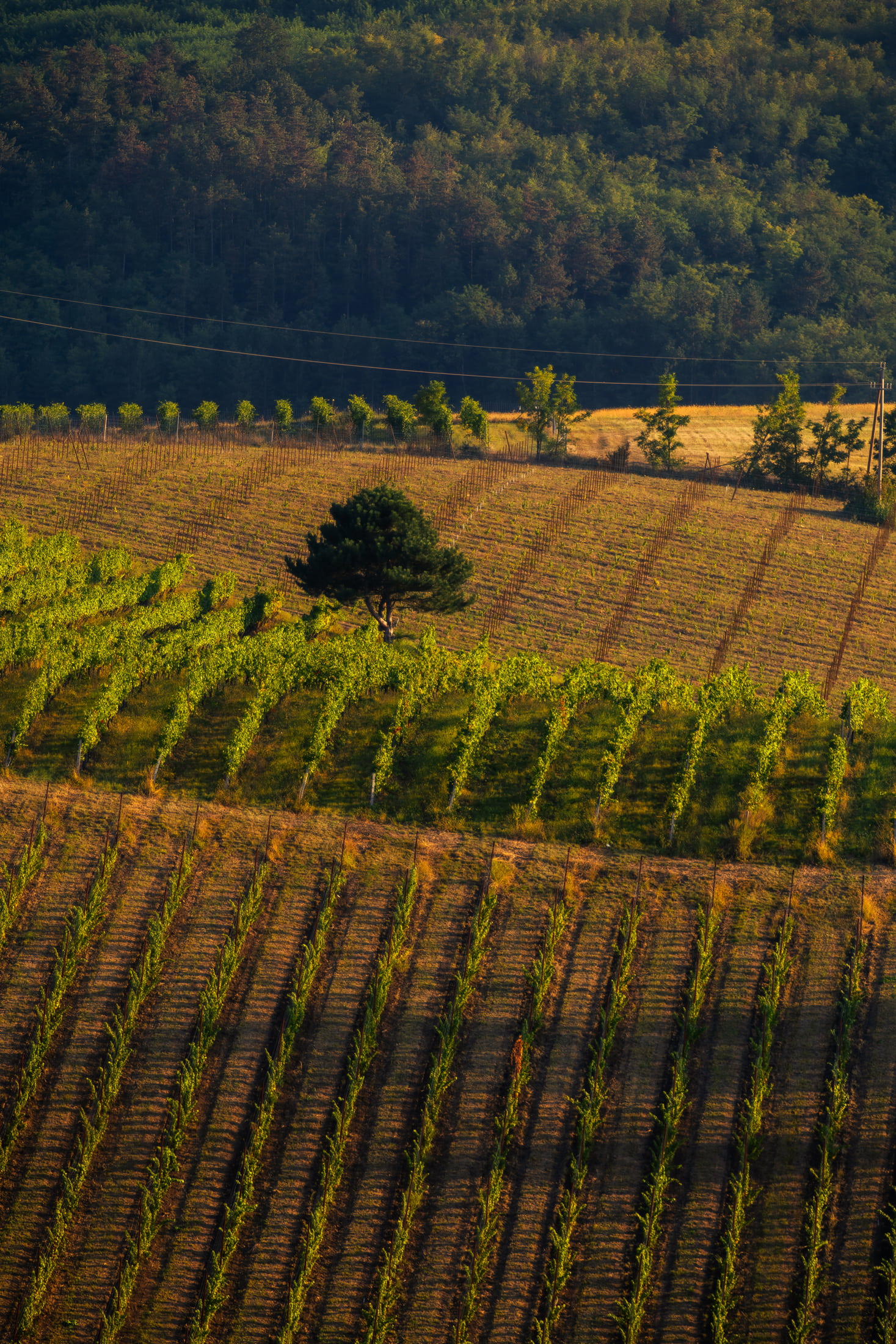
Vineyards | Origin protection

History
The region was conquered by the Hungarian tribes at the beginning of the 10th century, which can be accurately dated based on Arab coins found in Almagyar and Répástető; however, artifacts from the time of the conquest have also been found around the Szépasszony Valley. St. Stephen (the first Hungarian king) donated the valley’s vineyards to the bishopric he founded, and after the Tatar invasion in the 13th century, Béla IV invited Walloons to settle in the area, who introduced the use of barrels as well as French cultivation methods and grape varieties.
Vineyards have been cultivated since the 14th century, and important routes leading to the mining towns of northern Hungary (now partly in Slovakia) were established, making Eger the region’s bustling centre. The famous Turkish siege took place in 1552; however, it is a little-known and less glorious fact that its 7,000-strong defending army surrendered in 1596, and it remained a Turkish stronghold for 91 years, only to be recaptured in 1687. From a wine history perspective, it is interesting to note that the white/red paradigm shift also took place in the Eger wine region during the Ottoman occupation, when Kadarka and fermentation on the skins became widespread in the area.
In the 18th and 19th centuries, the Eger winemakers mainly produced red wine; there was hardly any white wine. The current varietal structure essentially developed during the reconstruction following the destruction caused by phylloxera (1880-1910), and it was only then, at the beginning of the 20th century, that the Bikavér brand as we know it today came into existence. This is generally considered to be the most successful period of modernisation in modern Hungarian history. The connection to Eger is that Jenő Grőber (1869-1941) formulated Bikavér in his modern vineyards, based on French experience.
An extraordinary, almost endless network of cellars, built over centuries lies beneath the city. It is an interesting story, and no fairy tale, that during the communism winemakers at the state winery regularly hid the best wines in this intricate cellar system, not for their own sale, but simply out of professional pride. These later became Eger’s significant library wine collection. Since the fall of the communist regime, the wine region has developed dynamically, as the largest vineyards were located here (the area under cultivation had doubled by 2006 from the approximately 3,000 hectares in 1996). Dozens of small and medium-sized private wineries were established, producing wines with personality and achieving extraordinary success in international competitions almost every year. Through serious cooperation, they established their first origin protection in the 1990s, which they had elevated to a highly sophisticated level by the 2020s
Natural Geography
The average annual temperature in the wine district is 10-11 °C, with annual precipitation of around 600 mm and an average of nearly 2,000 sunshine hours per year. The climate is mainly influenced by the proximity of the Bükk Mountains, which protect the region from winter frosts, while after hot summer days, the mountain winds bring cool night air into the vineyards, which traditionally brings out the fresh Eger acidity in the fruit.
Its northern part consists of the oldest marine rocks of the Bükk Mountains, such as the Upper Triassic Felsőtárkány and Berva Limestones, which are over 200 million years old, and the 180-million-year-old Jurassic Lökvölgy Shale. These are partly crumpled, hard rocks covered by Eocene and Oligocene rocks from the Tertiary period. While Eocene limestone is subordinate, Oligocene clay marls and sandstones are much more significant. The vineyards of the triangle bordered by Eger, Felsőtárkány and Noszvaj, such as Tekenőhát, Kis-Eged and Áfrika in Noszvaj, are spread across Oligocene deep-sea formations, Kiscelli Clay and Egri Clay Marl. Oligocene rocks also appear in a thin strip on the edge of Ostoros. The cool, slightly acidic soils that have formed on them can produce particularly rich wines.
The rock group forming the southern part of the wine district is completely different in character, consisting of younger Miocene formations settled on the Oligocene, which are the products of volcanic activity. These volcanoes were active during two major periods approximately 19 million and 16 million years ago, spewing rhyolite tuff and the much rarer rhyolite-dacite lava rocks onto the surface. These can reach thicknesses of up to 400 metres. These volcanic remnants are crucial, as many of the wine district’s outstanding vineyards are located on this rhyolite tuff. There is another, presumably 13-million-year-old rhyolite tuff flow in layers in the western and northwestern parts of the wine district, but this is also layered with gravel and terrestrial clay layers deposited in the Middle Miocene. This area includes, for example, the northern part of Eger as well as Egerszólát and Egerbakta.
Towards the Great Plain, in the increasingly flat part of the wine district, the Miocene formations are covered by the fourth group of formations, Pannonian-age clayey-sandy sediments and thin Pleistocene loess. These rocks are not significant in the Eger part of the wine district, they are mostly found in the northwestern part of Maklár and Egerszalók, and this is typical of the entire Debrő area.
Vineyards
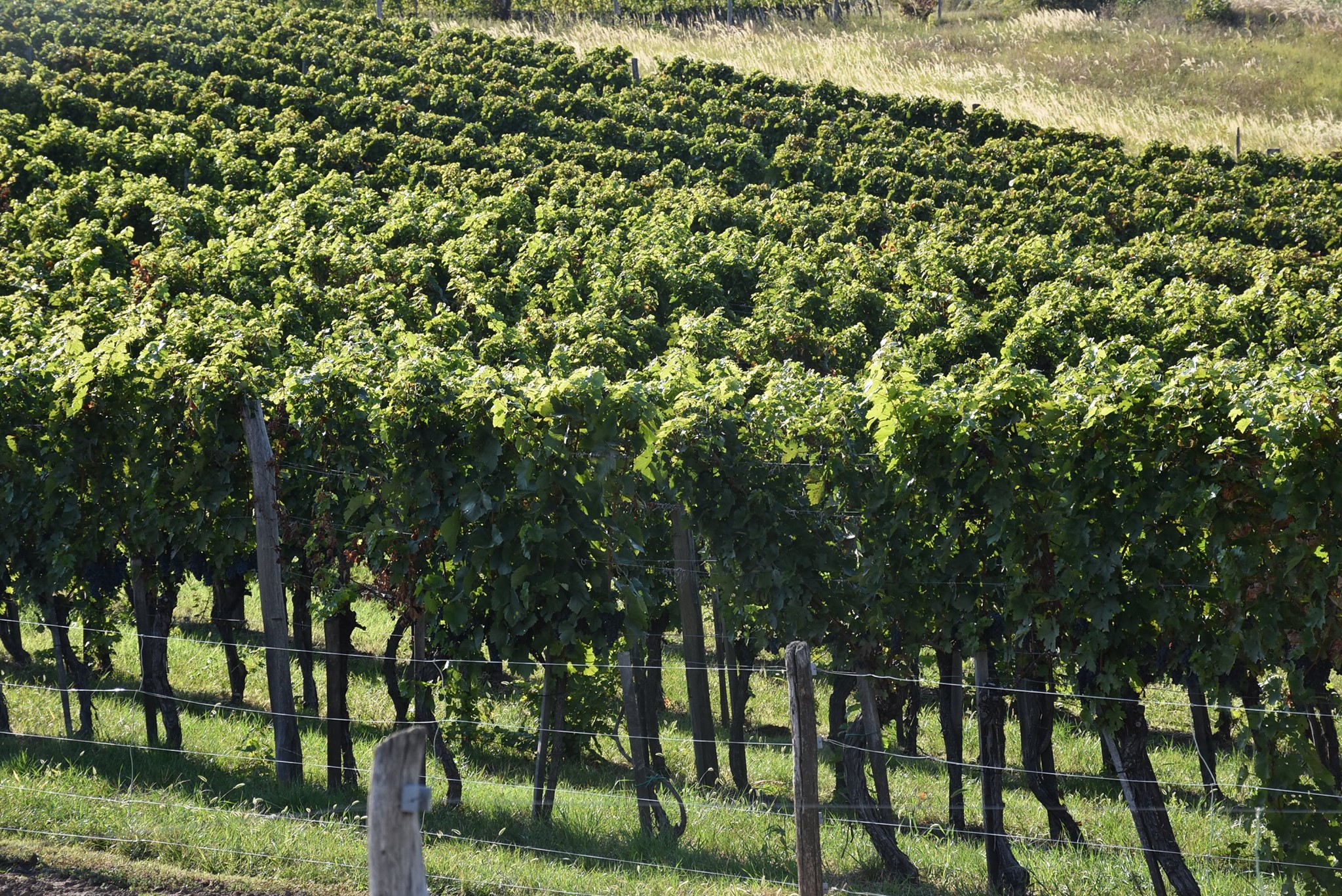
The system of vineyard plots in the wine district can be simplified by dividing them into two parts: those east of the city and those west of the city. The block east of the city is grouped around Nagy-Eged, which is surrounded by dozens of renowned vineyards.
Eged Hill, rising to 537, is located on one of the southern spurs of the Bükk Mountains. Unlike most of the Eger wine district, its soil is not rhyolite tuff, but grey Triassic limestone. This area was covered by sea around 40 million years ago during the Triassic period, and most likely even during the Eocene epoch. The flora and fauna in this relatively shallow sea were extremely rich, and their remains can be found on the hill. A yellowish-white sediment based on calcareous marl was deposited on the Triassic limestone by this sea. Geologists named this nummulite limestone, after the most characteristic single-celled animal species of the Eocene epoch, the Nummulites. This material is now the most characteristic rock of Nagy-Eged.
The average annual temperature in Nagy-Eged is around 10°C, but during the grape growing season, this figure exceeds 17°C. There are many sunshine hours (approx. 2,100) and days with a maximum temperature of 25°C (approx. 100), while annual precipitation is around 550 mm. Due to the steep slopes and quite shallow soil, precipitation runs off relatively quickly, so the hillside can be considered dry.
South of Eged Hill, across a small valley, lies one of the wine district’s most iconic vineyards, Sík-hegy, which is essentially a hill with vineyards planted south of its east-west ridge, meaning that the vineyard faces southeast to southwest. Sík-hegy has interesting climatic conditions, as the heat reflected from the Nagy-Eged massif can still be felt even at this distance, creating one of the warmest vineyards in the wine district. It is interesting to note, however, that just one kilometre away from Nagy-Eged, the soil is completely different. Here, the bedrock is composed of rhyolite tuff, which is characteristic of Eger, covered by a very shallow brownish forest soil.
Another very famous Eger vineyard, Pajados, lies to the southeast of Sík-hegy, and is a very interesting and complex vineyard. It has a very gentle southern slope, with a gentle western slope on the western side, but it also curves very slightly to the north. Its soil structure is very similar to that of Sík-hegy; however, the rhyolite tuff is covered by an even thinner layer of topsoil, so the wines are quite mineral even when young, yet typically warm in tone.
This block also includes Mész-hegy and Áfrika-dűlő. Mész-hegy has nothing to do with lime (mész), as it is composed of the usual rhyolite; its name most likely derives from the word for honey (méz). Áfrika is very similar. Its name is a joke in the vernacular, as it is “very hot and very far away…”
Among the best-known vineyards, Grőber is a bit of an odd one out, named after Jenő Grőber. This hill is located northeast of the city of Eger. Its slopes are mostly south-facing, but there are also eastern and western slopes. Its soil differs from that commonly found in Eger, as the dense topsoil here is more clayey, loamy and sandstone based.
There is another renowned vineyard, which has been an exciting production site for many years thanks to its single-vineyard wines, but it falls outside the above range, namely Tekenő-hát in Noszvaj. It is a small vineyard, barely 20 hectares in size, which is not even fully planted. It slopes gently southward, with its highest point at around 320 metres and its lowest point at just under 290 metres.
The most important villages west of the city are Egerszalók and Egerszólát, with dozens of excellent vineyards surrounding them. Among these, Kántor-tag is one of Egerszólát’s most exciting vineyards, with eastern, southeastern and in some places, southern exposure, with a gentle slope to the south and a steeper slope to the east. Its soil is mostly formed on tuff, with brown forest soil washed in, but it is extremely varied, with differences occurring even within small areas, such as patches with high lime content. The over-100-ha Tó-bérc vineyard is located on Egerszólát’s eastern peak. Its soil is similar to that of Kántor-tag, brown forest soil formed on rhyolite tuff, but its lime content is lower. One of Egerszalók’s emblematic vineyards, Ferenc-hegy, lies to the east. Its nutrient-poor, thinner soil yields lean wines with precise elegance.
The history of Boldogságos, bordered by Ferenc-hegy and Tó-bérc, is interesting. Its original name was Pipis. In 2007, the St Andrea Winery erected a statue of the Virgin Mary in the vineyard on its own initiative, which gave rise to the idea of naming the vineyard Boldogságos (Blessed). This was accepted by the wine community and thus became part of the designation of origin. It has thin clayey topsoil on strongly tuffaceous subsoil and is almost entirely south-facing.
The Hangács vineyard branches off from the main range to the south and belongs to the village of Demjén. It has an extremely varied surface, with a basin-like centre, but with a prevailing southern direction. It has thin, clayey topsoil on heavily tuffaceous subsoil. It produces exciting wines, with a strongly rustic flavour and a firm structure.
Origin protection
The protection of Eger’s origin began well before the 2012 regulations. The rules for producing Egri Bikavér were drawn up as early as 1993 but could only exist as recommendations. After two years of preparation, the Egri Bikavér Regulations were adopted in 1997 and became official in 2002. This was extended to all Eger wines by a new decree in 2009. This process was completed at the end of 2011 with the creation of the PDO, which introduced Egri Csillag and the Grand Superior category for all wine types and laid down the rules for their production. They demarcated hundreds of vineyards, but the use of vineyard names was only permitted for superior wines and above. In addition, 32 vineyards were identified where grand superior wine can be produced, while the rest are unsuitable.
A series of amendments began in 2016, when the number of varieties that could be used in the different types of Bikavér wine was standardised in at least four varieties. At the same time, the use of vineyard names was changed completely; this is now only possible for grand superior wines, but for all the demarcated vineyards. The origin must be 95% authentic, and the indication of the vineyard also became mandatory.
The regulations were completely rethought in 2023. As a result, separate PDOs were established for Egri Bikavér and Egri Csillag, and these two wine types and all their quality levels were removed from the scope of the Eger PDO. However, the specifications set out in the latest Eger PDO remain unchanged for both types of wine.










































































































































































































































































































































Events
Domestic and international wine programs