
 English
  Magyar
Hajós-Bajai Wine district

History | National Geography

Vineyards | Origin protection

History
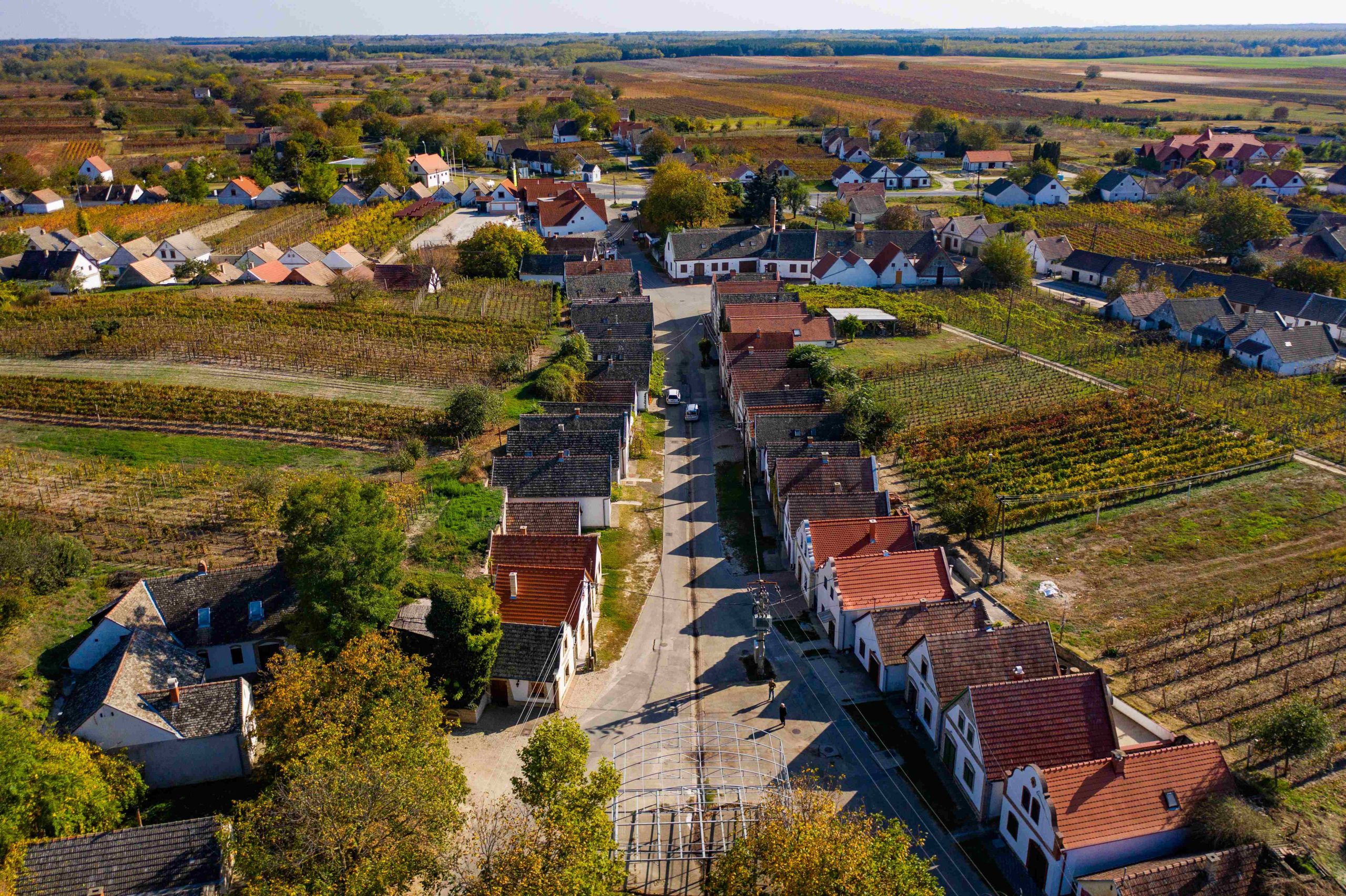
The history of the wine district is closely linked to German settlers, as they also founded some of the settlements. Hajós is mentioned (under the name Hayos) in a document from 1366, but by 1690 it was already referred to as a deserted settlement. There were already vineyards in the early Middle Ages, thus the Kalocsa Archdiocese, which owned the land, brought in skilled German workers in 1722 precisely to revive this wine culture. The church had already been bult by 1728, demonstrating the settlers’ diligence, while the number of registered families had grown from an initial 25 to 122 by 1732.
However, the cellar village we know today did not exist at that time, and the vineyards were located elsewhere. The village was later granted market town status, and in the 1780s, the Archbishop of Kalocsa obliged the residents of Hajós to plant vineyards and produce wine. Construction of the cellar village we know today began in the early 19th century, and there were already 363 cellars by 1851.
The other settlements in the area were also depopulated during the Turkish conquest, including Nemesnádudvar (mentioned in 1431 as Nagwdwar). The original settlement was located on lower-lying land, but Hungarian and German settlers from the highlands built their houses higher up, thus creating the dual settlement structure that can still be seen today. The best-known vineyard names at the end of the 19th century were Pénzlyuk (Geldloch), Dézsmahely (Zehetplacz) and Zárdácska (Klösterle). According to contemporary documents, the residents of Hajós and Nádudvar, who prospered much more than their neighbours, acquired increasing numbers of estates in Császártöltés, Sükösd and Kiskunhalas. Császártöltés was founded directly by the Germans.
Renovation of the Hajós cellars began in the 1980s, when they were converted for hospitality use, while the Orbán Day Wine Festival began in 1982. In addition, the three Swabian villages of Császártöltés, Nemesnádudvar and Hajós boast a lively wine culture, and a new wave of natural wines has also appeared in Hajós.
Natural Geography
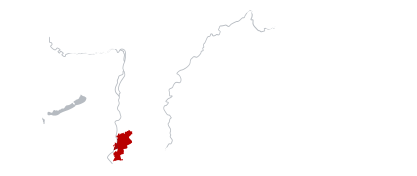
The wine district is directly connected to the Kunság wine district, which borders it on several sides, and the Danube to the west. The village of Dusnok, for example, although located near Hajós, lies north of the area typical of the wine district, about 30-40 metres lower and on different soil than Nemesnádudvar, Érsekhalma or Császártöltés. An area generally referred to as the Bácska Loess Ridge begins nearby. It is often covered with thick loess, sometimes mixed with sand (especially in the north). This sandy ridge, which rises steeply 20 metres above the former Danube Valley (along the line of Sükösd, Nemesnádudvar, Hajósi Pincefalu and Császártöltés), slopes slightly toward the south. In the south, an area known as Illancs, bordered by the road connecting the towns of Baja, Jánoshalma and Kiskunhalas, is characterised by wind-shaped formations. The wind slowly formed shifting sand dunes from the river sand and piled up loess. The Illancs (geographical region) sand dunes rise to heights of 160-170 metres (Kopasz Hill 165 m, Ólom Hill 172 m and Vastag Hill 159 m), but the original sand formations are now barely recognisable due to human intervention. The region has moderate rainfall (approx. 550 mm), but the rapid decline in groundwater levels over the past century has become a real problem.
However, the wine district does not end at the southern border of Illancs, but extends all the way to the Hungarian-Serbian border. In the past, when Mohács Island was still an actual island, the Danube split into two branches at Báta. To the west of Bátmonostor, Nagybaracska and Dávod, there was a floodplain densely crisscrossed by river branches and streams, which was later partially drained. The settlements’ boundaries as well as the vineyards are mainly located on the northwestern foothills of the Telecskai Hills. This region is mostly covered with sand, but with alluvial soils in some places. Viticulture is greatly aided by high levels of sunshine (2,050-2,100 hours per year) and an average temperature above 16°C during the growing season.
Vineyards
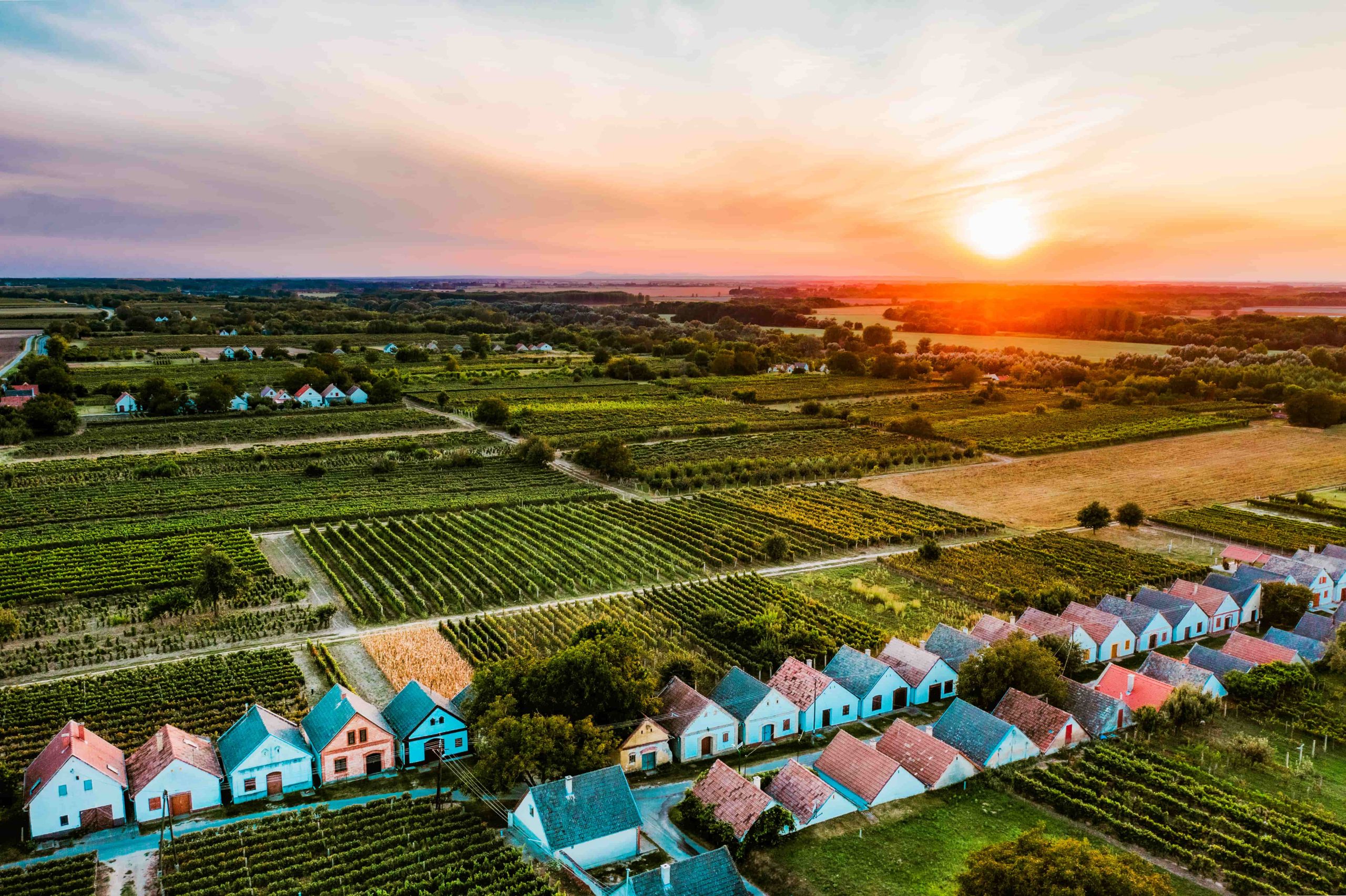
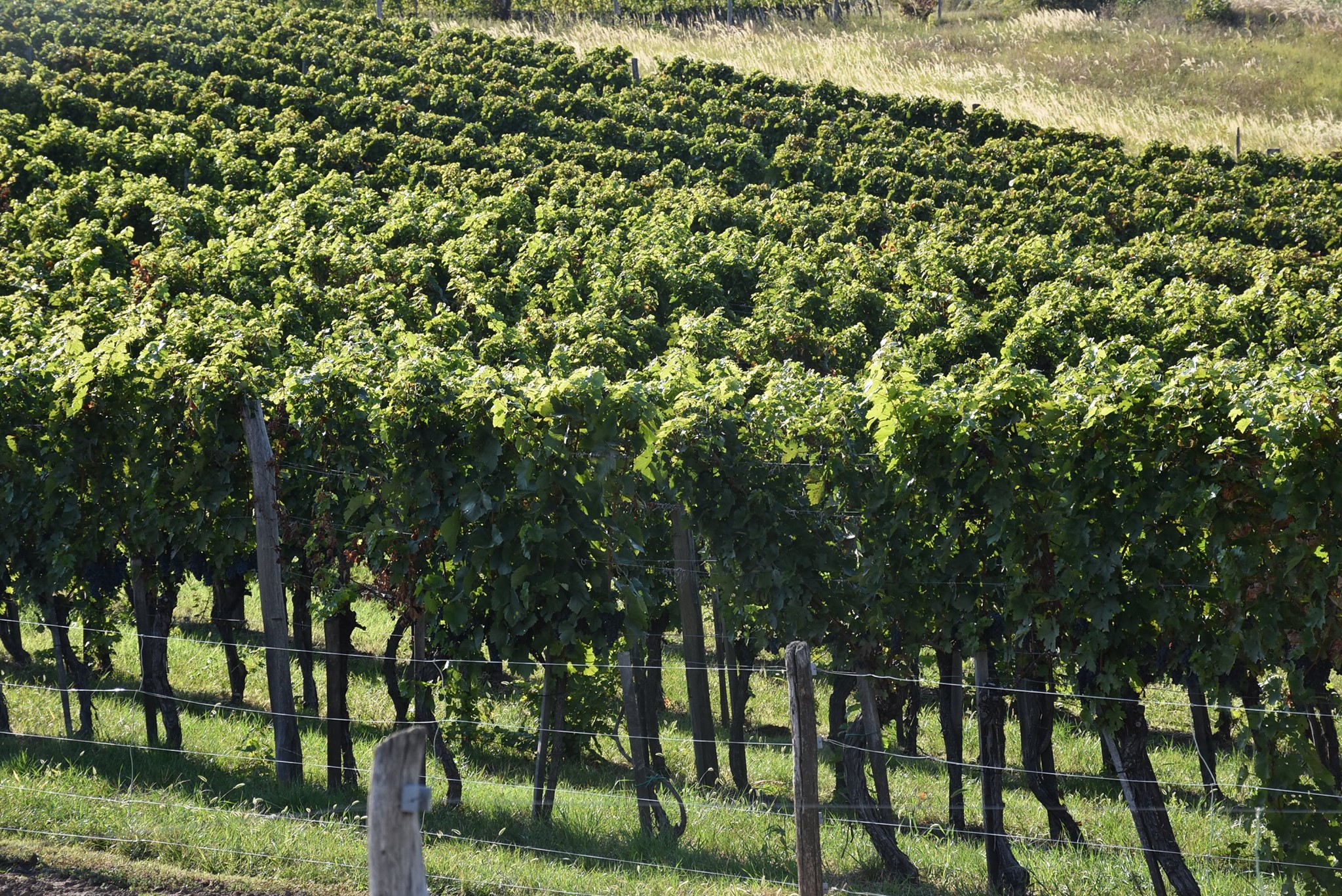
The vineyards around the German villages (Hajós, Nemesnádudvar and Császártöltés) are located on top of a loess plateau that drops steeply on its northern side. Overall, exposure is less important than soil structure and water supply, which are the decisive factors for plantings. Importantly, the wine district’s system of origin protection does not specify vineyards; only the names of the wine region’s settlements may be indicated on the labels in terms of smaller geographical units. Vineyards have recently appeared on labels in Hajós, which for now can only be considered fantasy names, but they refer to real vineyards. These include Herreberg, Kolostor-domb and Hársfás-út.
Origin protection
The wine district did not set stricter conditions than those laid down in the wine law in the 2012 regulations on protected designation of origin, but did include sparkling wine among the wine types at that time. However, a major change took place in 2017, when Siller, late harvest white and red wines, the premium series (white, rosé, red), and white and red ice wines were also included as wine types. The terminology for sparkling wines was also refined, with white, rosé, and red sparkling wines named, while semi-sparkling was introduced for all three colours.













































































































































































































































































































Events
Domestic and international wine programs