


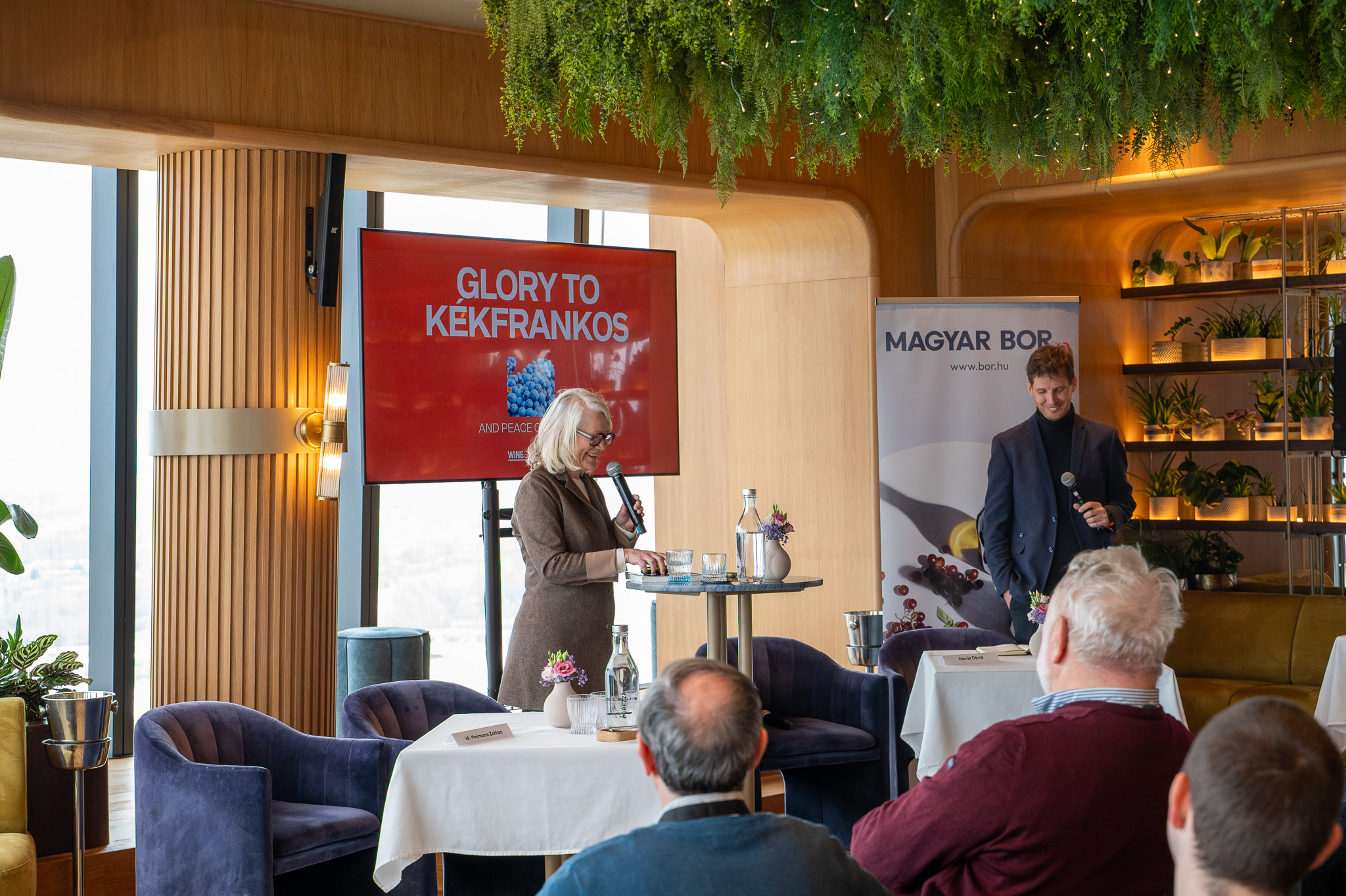


Dorli Muhr gave a highly motivating presentation at the recent Kékfrankos conference on the need for cooperation in the CEE region to promote the variety. We caught up with her afterwards to chat about Blaufränkisch
You’re a small but prominent Blaufränkisch producer in Carnuntum and a huge ambassador for the variety. Why do you place your trust so firmly in it? How do you see Blaufränkisch’s potential?
My advantage and also my disadvantage when I decided I wanted to make wine and started winemaking is that I didn’t have anything. As a winemaker, you are usually born into a winemaking family and then the tradition and everything is there. But when I started, nothing was there. There was just a hill where my grandmother had a tiny vineyard with mixed plantings, with white grapes, everything together. And that had already been dug up. So, I literally started from scratch. I realised very fast that the Spitzerberg itself is an outstanding terroir, and I wanted to understand which variety, which winemaking, which style would help us to express the terroir. So I came from the other side and did a lot of research because I planted Cabernet Franc, Petit Verdot, Malbec, Tempranillo, Syrah, Merlot and Blaufränkisch, of course. Because I knew it was hot and dry and wanted to know which variety could do a good job. It must be a variety from a hot, dry climate. But then which of those can best express the terroir? And this is how I came to Blaufränkisch. So it was there already, but we didn’t know whether it was really the best? So, I didn’t start as a Blaufränkisch patriot; it was Blaufränkisch that convinced me.
I work on 12 hectares and have now regrafted everything, so there are 11.5 hectares of Blaufränkisch, the other half hectare is Syrah. Of all the varieties we planted, Syrah was the only one that was also able to show different characters from different soils. But I think Syrah is far behind Blaufränkisch in terms of elegance and precision and so on. So, Blaufränkisch is really the queen of Central Europe. But if it becomes too hot and dry for Blaufränkisch where we are, then we need to know what to do next if we want to express the terroir, and I know that that would be Syrah.
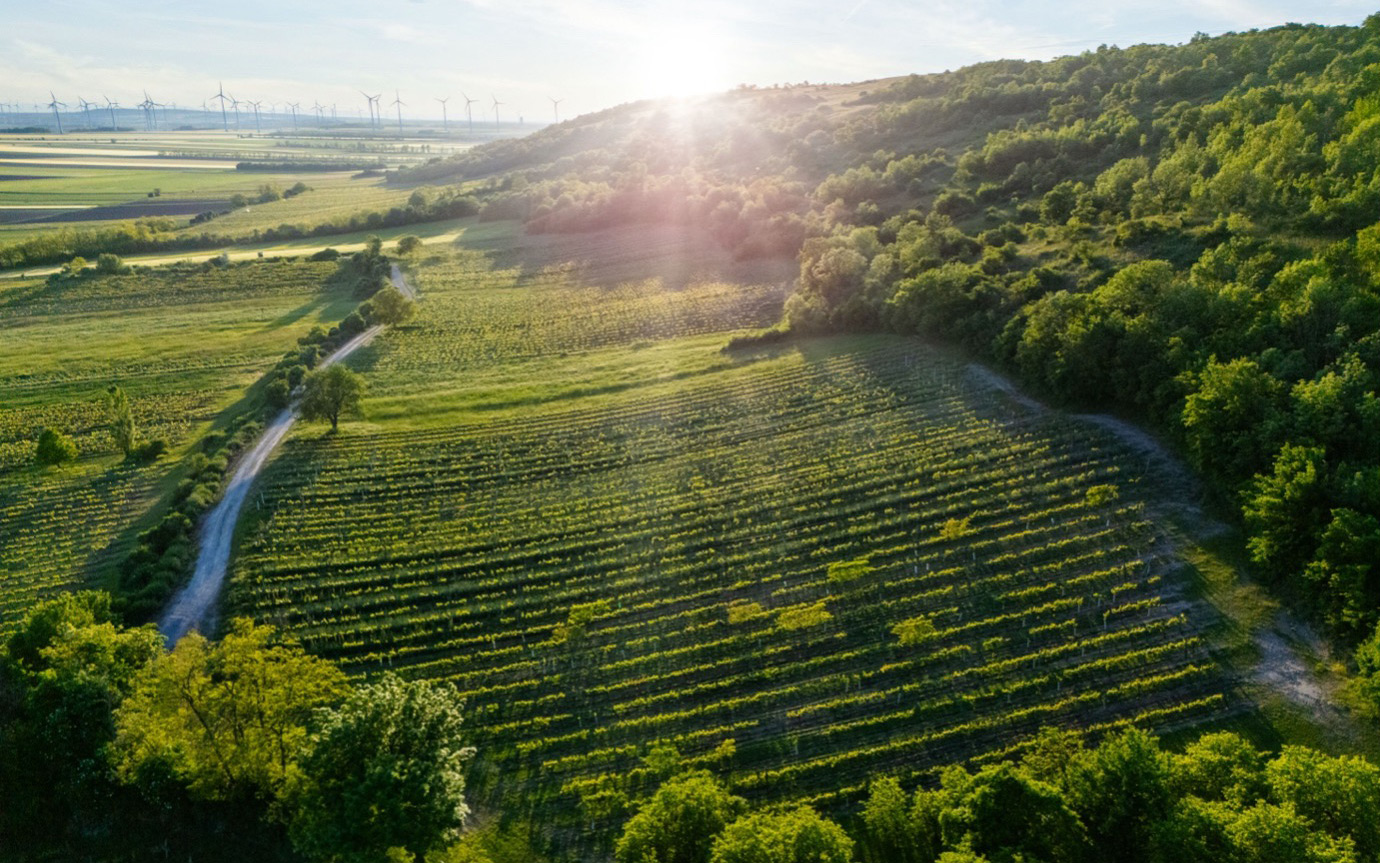
Image source: www.dorlimuhr.at
Do you have your own signature style for Blaufränkisch? If so, how would you describe it?
Again, it’s not about me and it’s not about the winemaking. We wanted to express the sense of place. We did dozens of trials on how to de-stem. We de-stemmed by hand. We did not de-stem at all. We kept whole bunches. We kept whole berries. We did conventional. We did all kinds. The question starts more like, when do we pick? What is the element of everything that is in the berry that decides now whether it’s pickable or not? In our case, it’s the tannins. Because we know it’s so dry that the moment that the tannins soften is the moment that we pick. We don’t look at the sugar, we don’t look at the acidity, we just look at the tannins. Because it’s so dry, so they are really dependent on the rainfall or the water.
For us, where we are, it’s tannin ripeness. And then from there, from the moment of picking, the question was how do we define it? And how and for how long do we mature it?
And the lesson of these 22 years is maybe where we came to what you call the signature style. But it is just the big desire to express the uniqueness of the terroir. And it might be the wrong way of doing it on a heavy loam soil. I don’t know, because I don’t have experience with loamy soils. But this is what we see, how we can bottle this silkiness and the purity of the limestone. Because my dream is that if you find a bottle in your cellar after 20 years, and the label is gone, and you open it, pour it into your glass and smell it, you can still feel the Spitzerberg. That’s my goal. And Blaufränkisch is the perfect tool for this.
So, you rather believe that the terroir has a signature style, and you’re using Blaufränkisch to communicate that.
Blaufänkisch is the perfect communicator. I have learnt that if you are interested in a vineyard, the best thing you can do is to plant Blaufränkisch, because it expresses the vineyard.
Image source: www.dorlimuhr.at
How important do you think Blaufränkisch is for the CEE region as a whole?
It is extremely important. I think that Central Europe has a big future in wine, because regions closer to the sea, the classic great nations of wine growing, in my opinion, are having a lot of trouble because the wines are becoming very high in alcohol and heavy because of climate change. In Central Europe, we can make more light-footed wines, because we have less water. To me, water is the key, because we have all a lot of sun nowadays. That is no longer a problem. But if together with the sun you also have a lot of water, the vine continues to photosynthesise and produce sugar, and then the wines are heavy. But if we don’t have water, like in Central Europe now, then you have beautiful maturity with lots of aromas and lower acidity than maybe 30 years ago. But we don’t have this high alcohol, and that’s the great potential and beauty of Central Europe. So, I think this is the future of European wine growing. Now, let’s see how we can express the style of Central Europe, which has freshness, elegance, full aromas and drinkability. This is what the world is currently seeking, and this is exactly the right grape to do it.
Exactly. So, you started a regional collaboration around Blaufränkisch a few years ago. Could you just tell me a little bit about it – why you did this and why you think it’s important?
I think Blaufränkisch is one of the best varieties in the world. We had this tasting last night, and everyone was raving about the fantastic Cabernet blend. And then we had the 2019 Blaufränkisch, and I said, wow, this is greatness; it’s blowing all the others away. I think the Cabernets of the world are good, easy-going drinks. Cabernet is easy to understand, but it never has, for example, the personality and freshness of Burgundy. And Blaufränkisch does. It has personality, freshness and precision, so it’s a fantastic variety. But if we don’t communicate it together, and if we – everybody who grows it – are not convinced, then it will never be seen as a great variety.
One of Hungary’s big problems is that Hungarian producers sell most of their production domestically, where the perception of Kékfrankos is not very high. I think that high-end wines always only reach a very small niche in any country, no matter which one. I’m now working on 12 hectares and make 50,000 bottles annually, which is still very, very boutique, but I export them to 22 countries. Wherever you go in the world, the large public want easy-drinking wines, so if you sell most of your production here, you have to have easy-drinking wines and a lot of white wine. But you shouldn’t target the mass public with Blaufränkisch, rather the most experienced and knowledgeable people, the best restaurants and sommeliers… And that means you can’t sell it in one country. I sell my Blaufränkisch to France, where it’s listed in Michelin-starred restaurants. I also sell my wine to Spain, but most of my production goes to Switzerland, Norway, Sweden and Denmark. Not only do these markets have money, but they are open-minded and seek elegance. They also drink a lot of Burgundy.
So, we shouldn’t compare it to Cabernet Sauvignon and Merlot, rather to Pinot Noir, Nebbiolo or a lighter Syrah?
You know, there are two big families of varieties with different origins. One comes from Gouais Blanc – Heunisch in German. And all the varieties in that line can express terroir. While the varieties in the other family rather express themselves or the climate. Pinot Blanc, Pinot Noir, Blaufränkisch, Syrah, Chardonnay, and I think Riesling too, all come from Gouais Blanc.
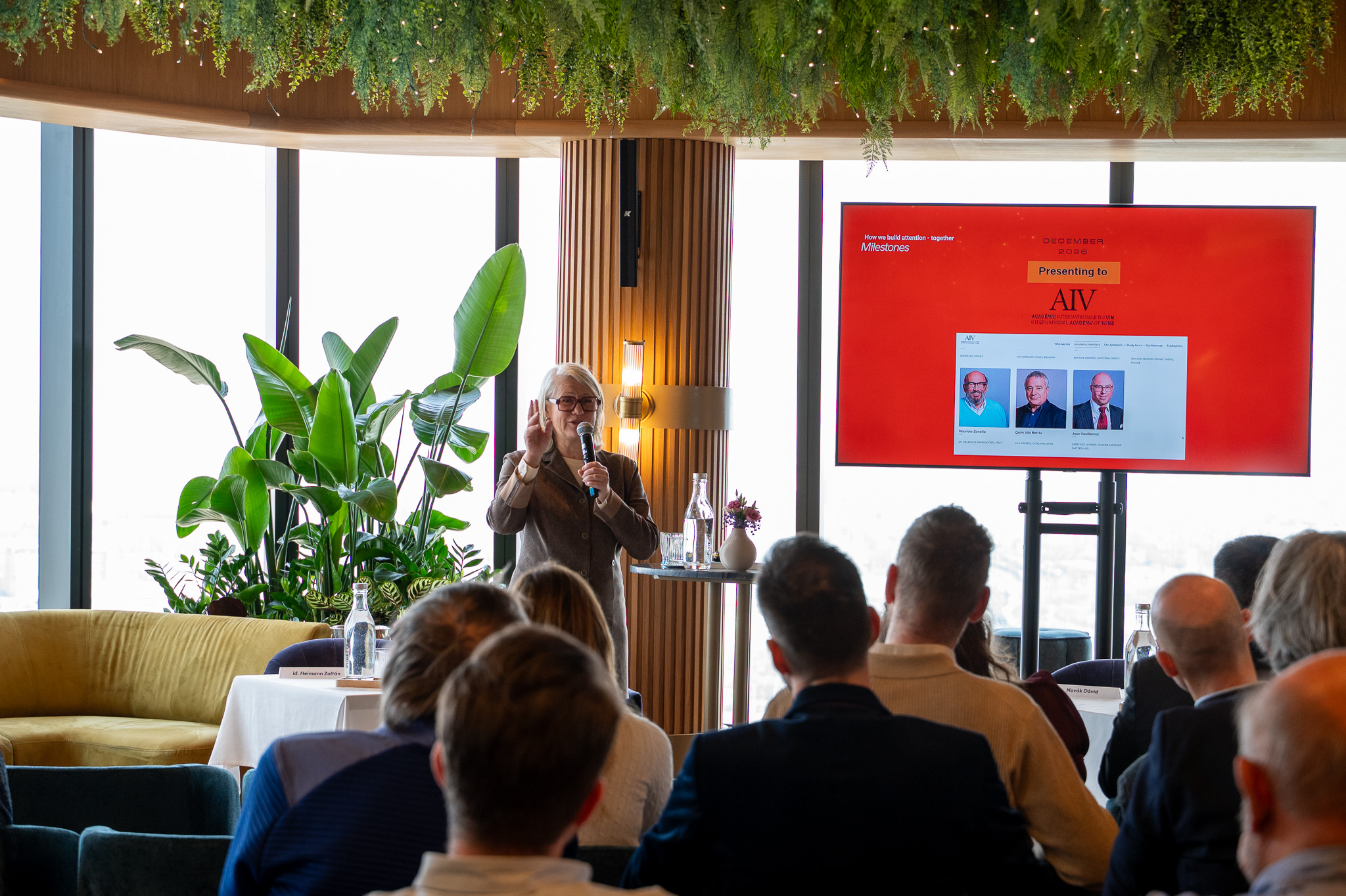
Image source: bor.hu / Hungarian Wine Marketing Agency
So, the best communication strategy is through sommeliers and more high-end channels?
Generally, but it depends. In Nordic markets, the monopoly countries, you can’t do any advertising, so certain journalists have an incredible power of education. This means we need to go there and talk to them, show and explain, because people don’t know Blaufränkisch. You know, producers sometimes believe if you make a good wine, it will sell. But there are only good wines, or mostly good wines in the world, so I think we have to be very smart or very clear in what and how we communicate to help people understand what we are doing.
When people come and taste wine at my place, I have a full range of ten glasses for everybody, and I serve the regional wine, the village wine and all the single vineyards from one vintage. And I tell them, look, it is all the same variety, and they are all made the same way. The vinification, maturation and bottling are all exactly the same, but you’ll see a difference. It’s a fantastic experience for people, because they do see the difference and realise it’s not only experts who can do that. And they are so impressed. And then what I sometimes do I if someone feels the acidity is too high, I tell them to put some salt on their tongue and taste the wine again, and this decreases the acidity, which means it’s a wine that you can have with food. I don’t tell people things, but rather ask them how they feel about the wines, which wine they prefer.
Yes, people have very different opinions about wines, even experts, it’s subjective.
Exactly. It’s very difficult to say it’s objective. I have 35 years of experience in wine PR and sometimes I’m sitting at a table with experts who spend all their time doing wine ratings. We are talking about a wine, and it’s like we’re talking about different wines. It’s because everybody seeks or wants another aspect in a wine. It’s very, very subjective. And it’s very naive to believe that we can be neutral or objective. And in a way that’s good, because if there was only one right opinion, we would maybe need only one wine in the world. Then it would be very boring and very, very frustrating, because there would maybe be only one producer worldwide.
I want to motivate consumers to discover what they like and not tell them what they should feel. At Vie Vinum, there will be a Carnuntum tasting with Caro Maurer MW, with different flights, each four wines and four stories, and people will have to decide for themselves which wine is which story, which wine is which style, which wine is which expression.
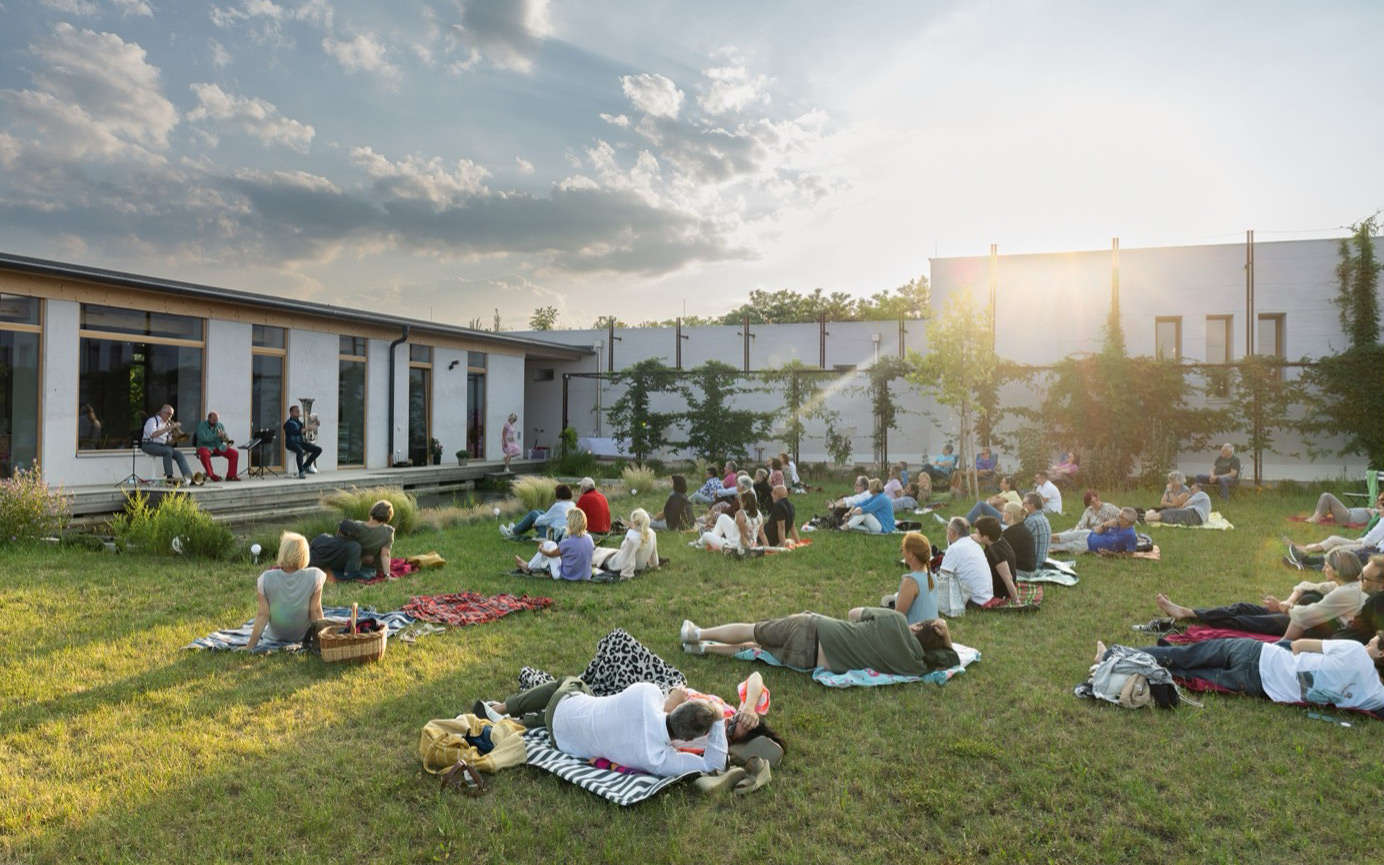
Image source: www.dorlimuhr.at
One final question. The variety has many names. Do you think this causes a problem when building an international image and presence?
I don’t really have an opinion. Of course, it would be much more helpful if we could have a joint name. After all, the big varieties only have one name, Cabernet Sauvignon is Cabernet Sauvignon everywhere. I would say if we had to decide on one of the names and collaborate, it might be helpful. Of course, Blaufränkisch as a concept already has the highest quality awareness, but on the other hand, Kékfrankos is the biggest producer. Moreover, Blaufränkisch is also difficult to pronounce. Maybe Frankovka would be a good choice…
Or just Frank.
Or just Frank, whatever, or Blue Frank. I don’t really care. I think it’s something that needs 30 years. Everybody knows about this. It’s not the biggest problem. It’s something we should push aside for the time being, and it will maybe sort itself out over the next 20, 30 years. The biggest problem is that producers don’t make the best wine from it, don’t position it at the top of their own portfolio and don’t distribute it correctly, that’s the biggest problem.
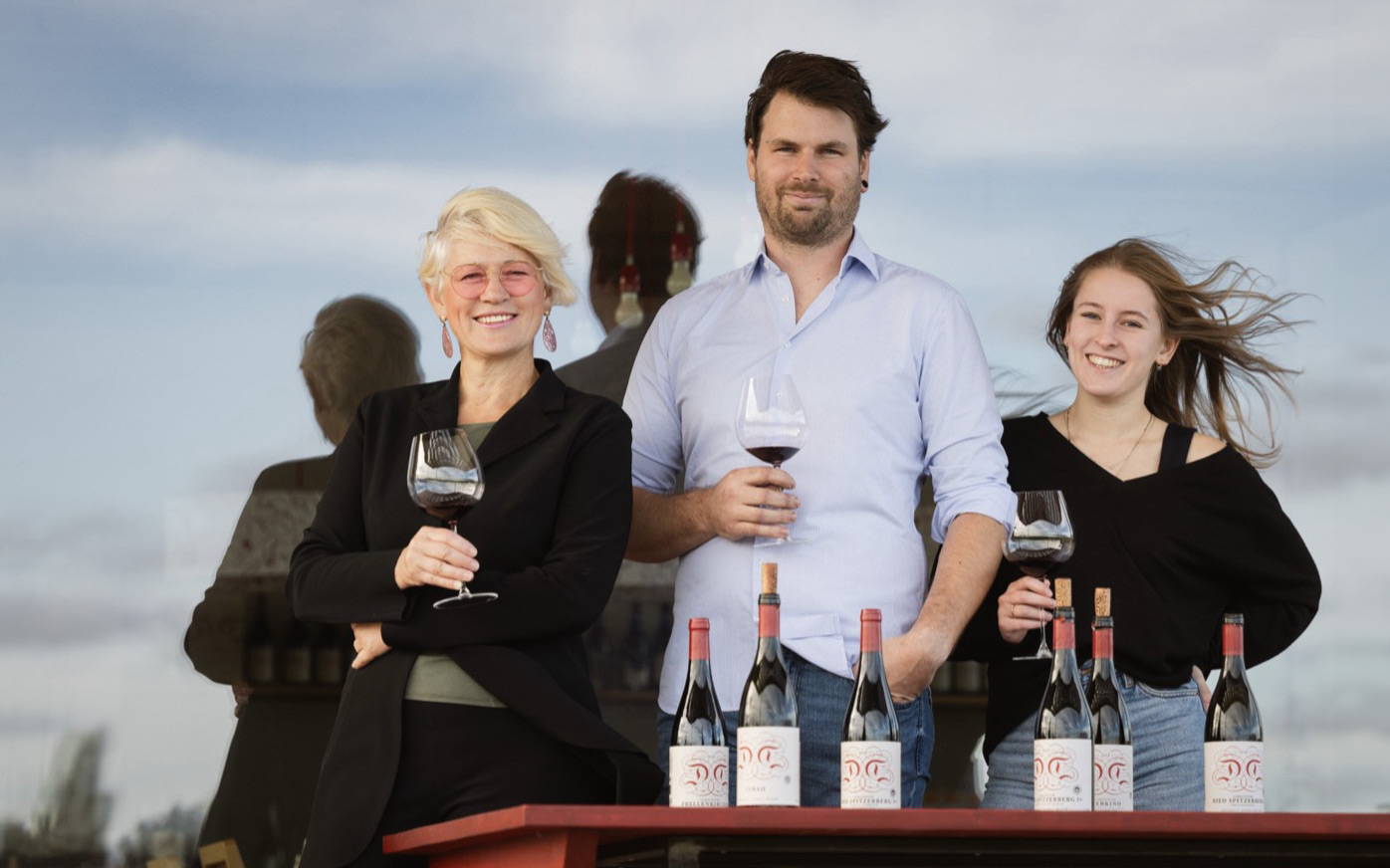
Image source: www.dorlimuhr.at