
 English
  Magyar
Móri Wine district

History | National Geography

Vineyards | Origin protection

History
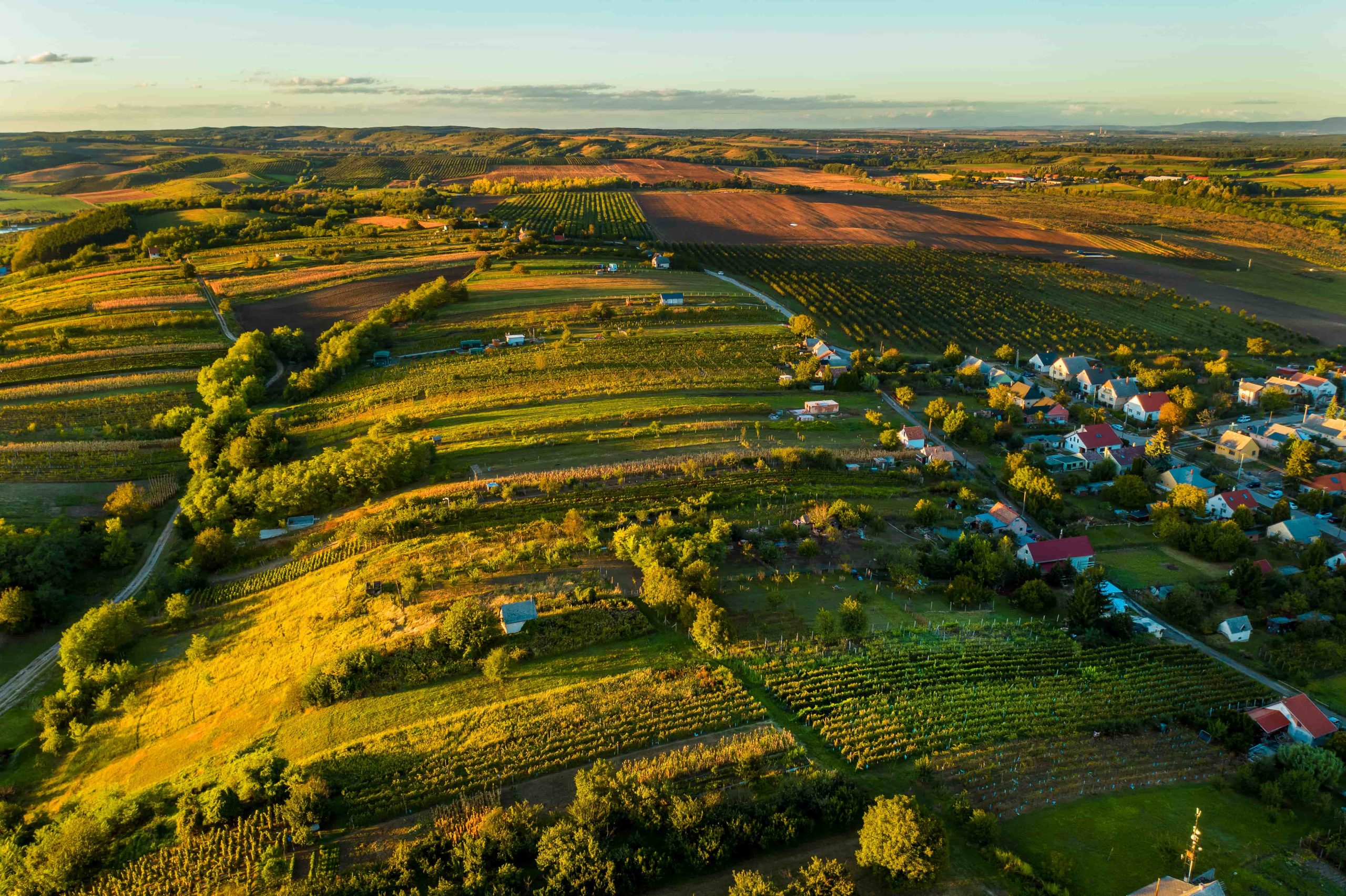
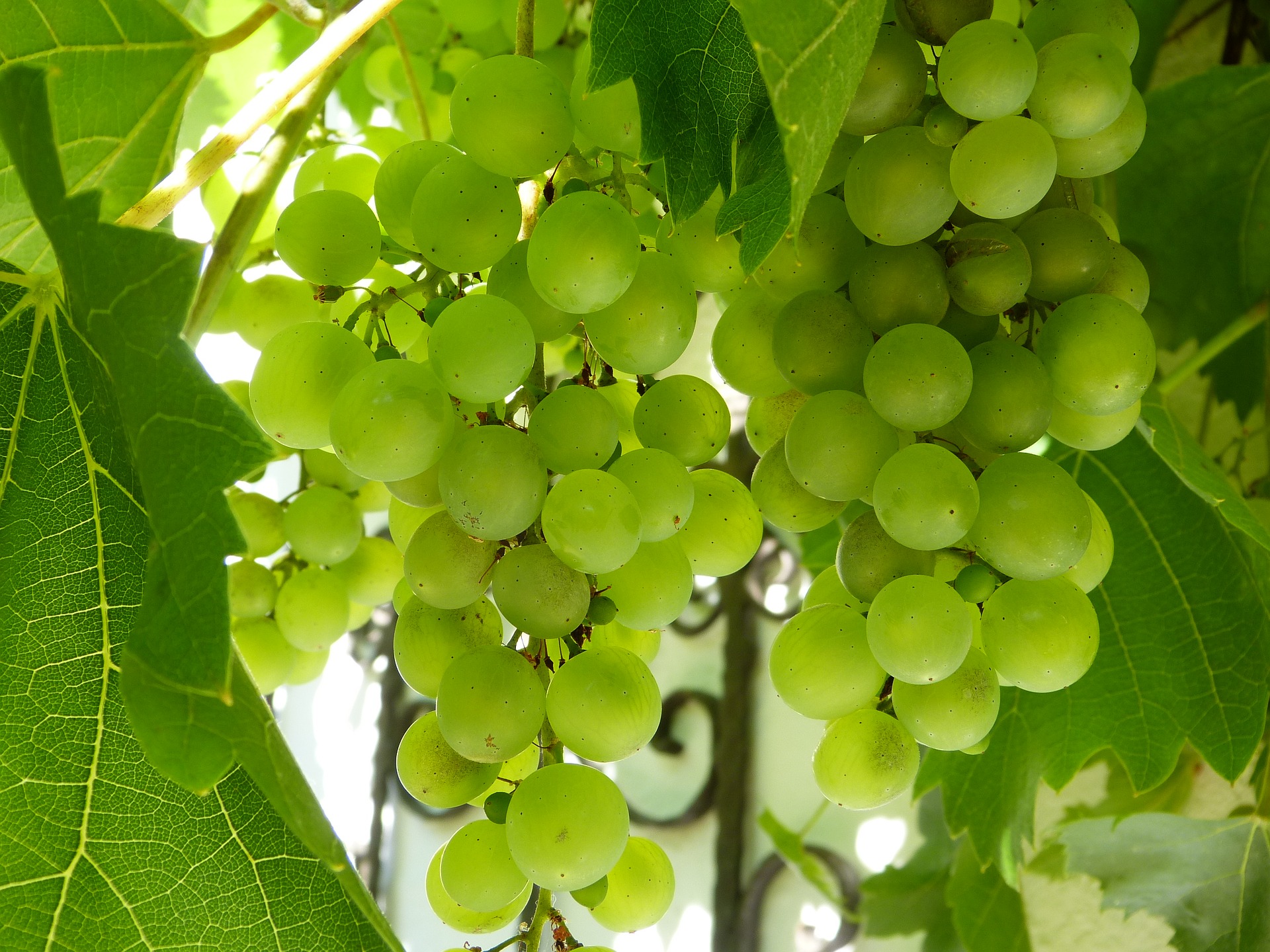
The Mór wine district can also trace its history back to Roman times. The region was already inhabited when the Hungarian tribes arrived from the 9th century on, and there are documents dating back to the 12th century that refer to viticulture. Mór and the surrounding settlements were still episcopal estates until 1327, when King Charles Robert annexed the region to Csókakő Castle. The steadily developing wine culture was destroyed by the Turkish wars, but after a long period of foreign rule (1543-1688), a nearly 300-year-long period of prosperity began. János Haas, who was originally from Hochburg, Germany, became the new landowner in 1691. The manor centre was established in Mór in 1694, and German settlers were invited to cultivate the estate. This proved successful, as the population grew steadily (from 2,900 in 1763 to 4,166 in 1784).
Austro-Hungarian Empress Maria Theresa’s charter of privileges issued on 16 March 1758 granted the village of Mór the status of a market town and permission to hold four fairs a year. It was then that the town of Mór received its seal, which also refers to grape cultivation, depicting fruit trees, grapevines and bunches of grapes on one side.
There is relatively accurate data on the grape varieties cultivated during this period, as the Capuchin monks who settled here requested and received cuttings of Bakator, Fehérszőlő, Gohér, Ökörszemű, Járdovány and Furmint from their fellow monks in Tokaj for planting purposes. Mór’s cellars and press houses were also built at this time. The price of Mór wines rose steadily, and for a time, they were the most expensive in Hungary after Tokaj wines.
Mór belonged to the Neszmély wine region at that time, but its producers requested the creation of an independent Mór wine region on 17 April 1900, although this was not achieved until 1928. During the replanting that followed the phylloxera disaster, Ezerjó, a grape variety with reliable yields, became almost dominant. Advances in winemaking technology boosted the region’s wine industry and cooperage until World War I, but the ensuing market crisis and nationwide problems led to the emigration of a significant portion of the population and a decline in vineyard area. According to a 1936 ministerial decree, only Ezerjó could be planted in the wine region, so the name of Mór and the variety slowly became synonymous.
The deportations following World War II meant that 1,700 residents of German descent had to leave Mór, after which state farms were established, privately owned smallholdings were abolished, and large-scale grape cultivation began. In Mór, this was represented by the Mór State Farm, established in 1949, and its 100,000-hectare cellar, which even purchased grapes from the Mátra in the 1970s and 1980s. After the regime change, the state farm ceased to exist without a legal successor, and its lands were broken up. Only a few family estates have managed to gain a foothold in the 35 years that followed. Some of them gained a certain degree of recognition, mainly with sweet Ezerjó made from shrivelled grapes. Then, at the beginning of the 2000s, a few small wineries burst onto the scene like a comet, quickly introducing Mór and its wine to a wine-loving public that had almost completely forgotten about it.
Natural Geography
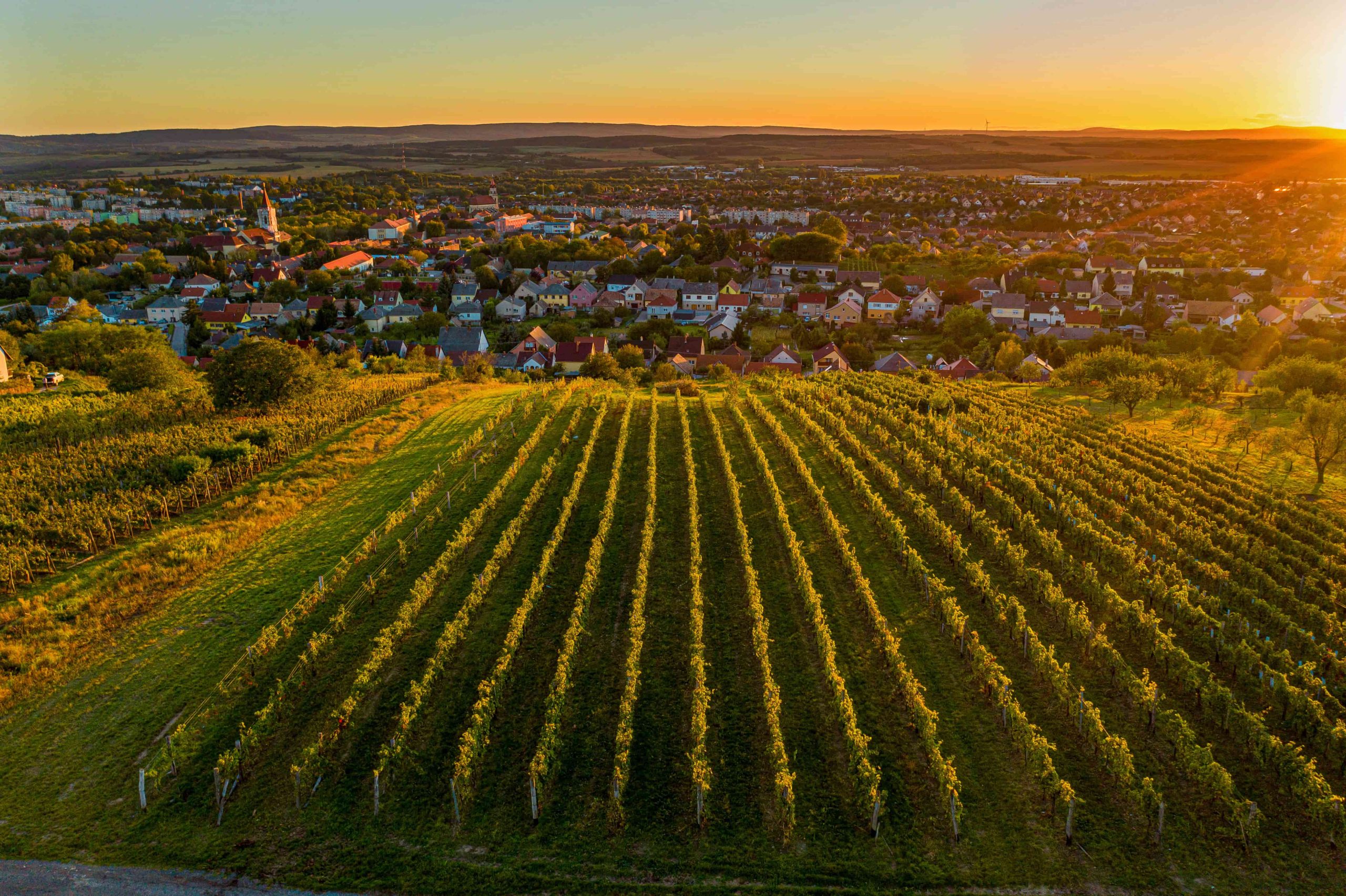
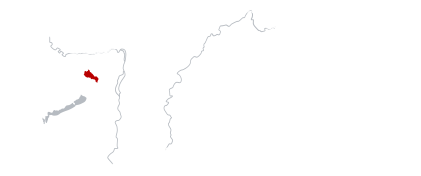
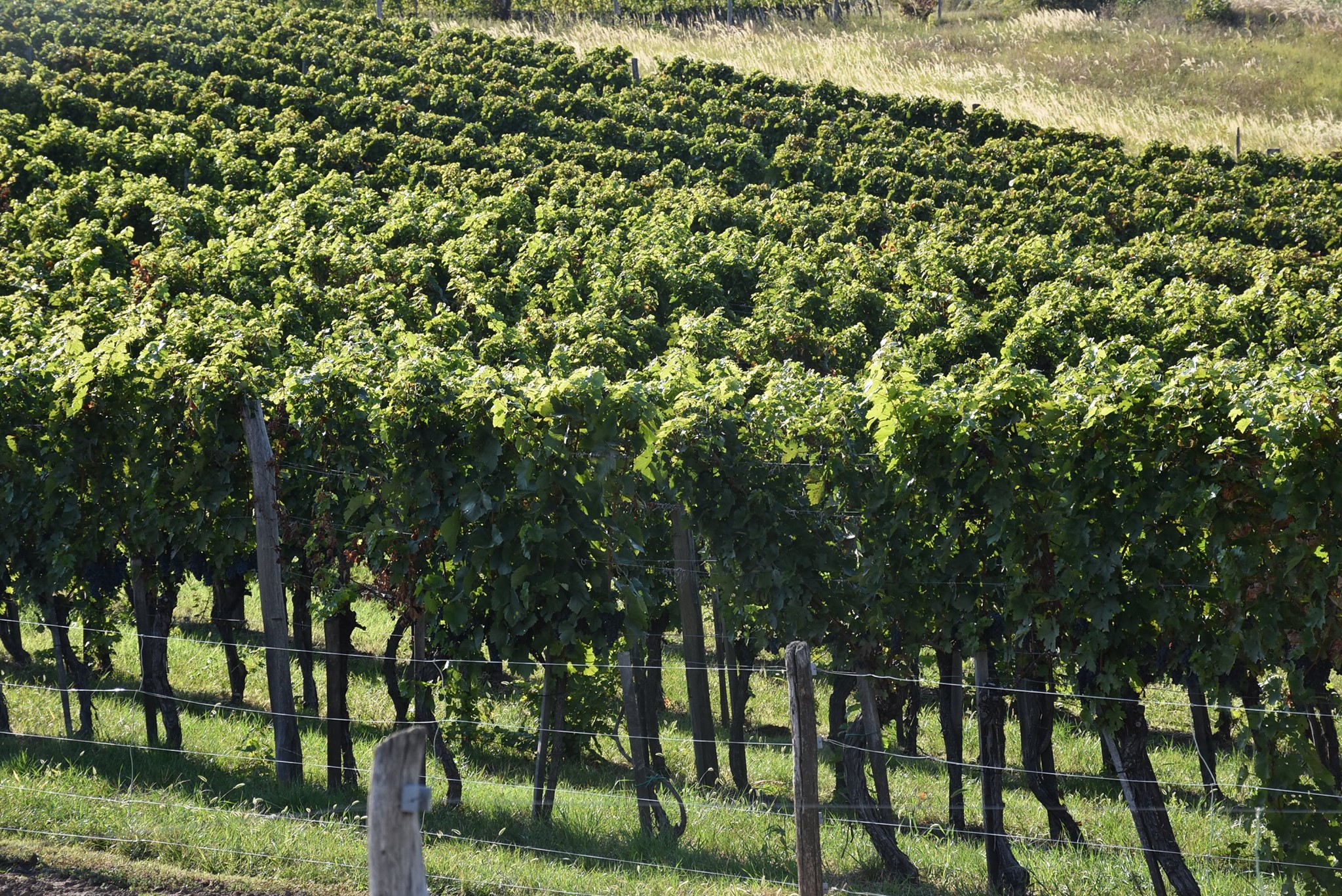
The Mór wine district lies in the so-called Mór Trench, which separates the Bakony Hills from the Vértes Hills, mostly on the southern and southwestern foothills of the Vértes. The range of hills, which was formed in the Mesozoic era, consists mainly of dolomite, with Dachstein limestone found only on the outskirts of Mór. The hills of the Mor Trench are mainly Pannonian clay and loess ridges. The structure of the soils settled on the bedrock varies greatly even within the wine district. Its climate is favourable for viticulture, although it is cooler than the national average. There is constant air movement in the Mór Trench, so frost damage and fungal diseases are rare. The average annual temperature is 10°C (16.5°C during the growing season), and annual precipitation is 600-650 mm. The number of sunshine hours varies between 1,900 and 2,000 hours.
Mór and the Ezerjó grape variety are still closely associated concepts, especially among consumers, but there are also many other varieties in the wine district, such as Leányka, Királyleányka, Chardonnay and Traminer. Since the fall of communism, it has become clear that the preconception about the previously shrill Mór wines no longer reflects reality; wines produced by the new wineries are balanced and pleasant.
Vineyards
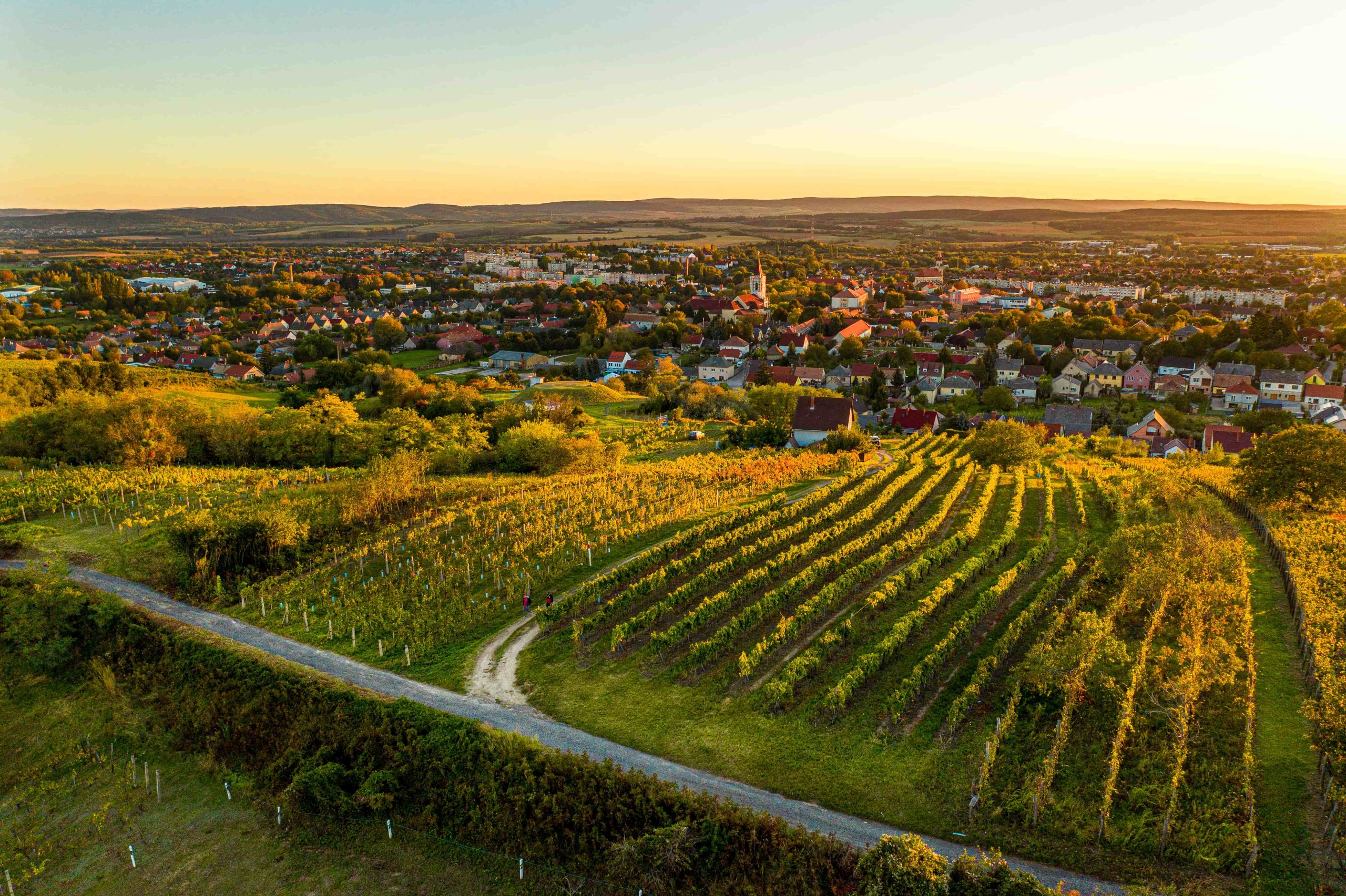
The wine district has not defined specific vineyard boundaries, but there are some notable vineyards. These include Aranyhegy, Örömhegy, Táborhegy, Remény hegy, Hankút, Homok, Kertalja, Páskom, Vaskúti, Katúkúti and Látóhegy. Of these, Látóhegy, which belongs to the village of Csókakő, has always been one of Mór’s best vineyards. Taborhegy’s northern corner and Homok have high lime content, while Kertalja is mainly acidic sand. The soil of Nyúl-hegy and Remény-hegy is also highly calcareous, just like that of Aranyhegy. Kecske-hegy is mainly loess terrain, mixed with marl in places (Hétkút dűlő). Overall, based on observations, certain areas with well-defined microclimates (e.g. Csóka dűlő) are capable of producing wines of consistently higher quality than the wine district average. Thus, it is often not the soil but the exposure and climatic conditions that are decisive in the vineyard.
Origin Protection
Similar to several other small wine districts, the Mór winemakers did not prepare a detailed product specification in 2012, relying largely on the provisions of the wine law, nor did they demarcate their vineyards. The first amendment took place in 2017, when the premium category was introduced, exclusively for white wines. This wine category requires lower yields (max. 60 hl/hectare), higher alcohol (min. 12.83% abv), a narrower selection of varieties and a new identification system. At the same time, the concept of quality sparkling wine was introduced, and the appropriate production criteria were assigned to it.













































































































































































































































Events
Domestic and international wine programs