
 English
  Magyar
Somlói Wine district

History | National Geography

Vineyards | Origin protection

History
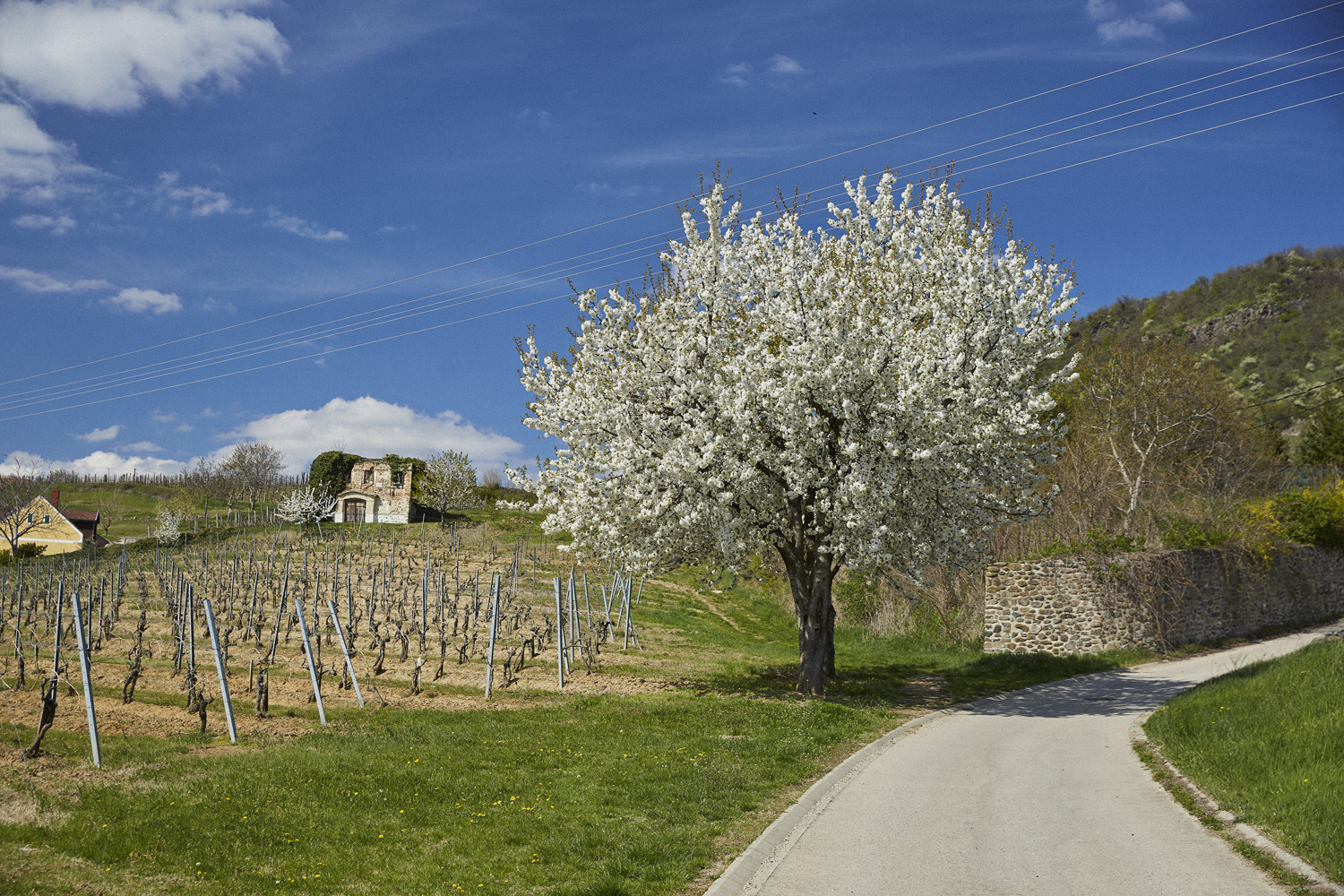
As in all Hungarian wine districts, Somló also has Roman precedents for winemaking, but these are not continuous. Documented and relevant winemaking began with St Stephen, the first Hungarian king, who founded a Benedictine convent next to the Torna stream and donated vineyards to the nuns. King Béla IV settled French Walloon winegrowers here, while his daughter Margit and her fellow nuns received the Somlóvásárhely side. Over the centuries, in addition to the convent, local winegrowing peasants, market town citizens, the ecclesiastical orders of Zirc and Pannonhalma, and aristocratic families acquired estates on the hill, the most famous of which were the Esterházys and the Zichys. Wine community judges, wine community masters, and vineyard shepherds maintained order during peacetimes. Regulations were enacted in 1629, 1752 and then in 1868 to protect the origin and quality of products, to establish the obligations of day labourers and to protect the environment.
The phylloxera epidemic of 1888 destroyed the vineyards and farms, and Somló struggled to recover. Before anything could get started again, the world wars broke out, followed by the communist takeover and the nationalisation of 1946, as well as the establishment of state farms. The region’s industrialisation brought relative prosperity to the villages in the area, but during this era, Somló, one of the world’s best wine-growing regions and a winemaking gem, was divided into small 1-2,000 square-metre holiday plots for miners, metalworkers and workers from Ajka and Várpalota.
The 1987 wine community law, which literally incorporates parts of the earlier regulations of 1752 and 1866, was a sign of renewed attempts at modernisation. This was followed by the 1998-99 wine community regulations and the 2002-2003 Protected Designation of Origin wine regulations, all of which essentially seek to guarantee quality.
Following the end of communism, the state economy collapsed due to the loss of the Comecon market. At the same time, a few small family wineries began to develop, which first reestablished the traditional Somló wine image. This old-new wine scene has been enriched by the efforts of several new players since the turn of the millennium.
Natural Geography
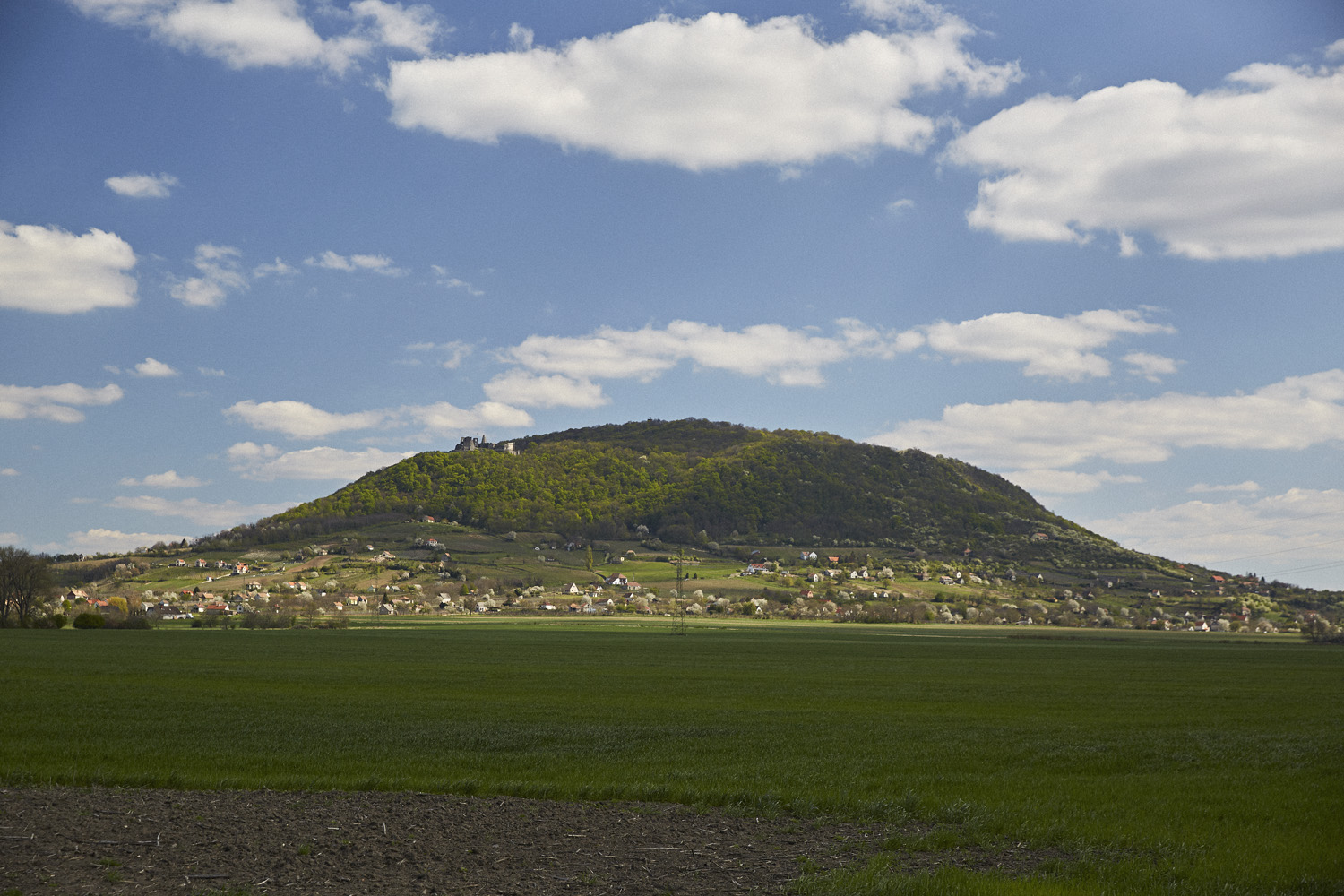
The truncated cone of Somló Hill rises 431 metres above the flat Marcal Basin. Ság Hill and Kis-Somlyó have also belonged to the wine district since 1997. The wine district currently covers 453 hectares, with annual sunshine hours varying between 1,950 and 2,000 hours. The average annual rainfall is 650-700 mm. Somló is a witness mountain – a solitary basalt stump cone that is not actually connected to any mountain range. It was formed by volcanic activity that intensified after the Tertiary Pannonian Sea dried up, while the subsequent destructive work of wind and water eroded the landscape, causing the ground to sink.
An important and characteristic feature in Somló is that there are no clear differences between the vineyards, compared to Tokaj, where each vineyard has different soil, and the soil can vary enormously even within the vineyards. Here, the hill is more like a block carved out of the earth, with small patches of loess, sand and clay. The vineyard names typically serve a locational function rather than indicating differences in soil type between individual vineyards.
Vineyards
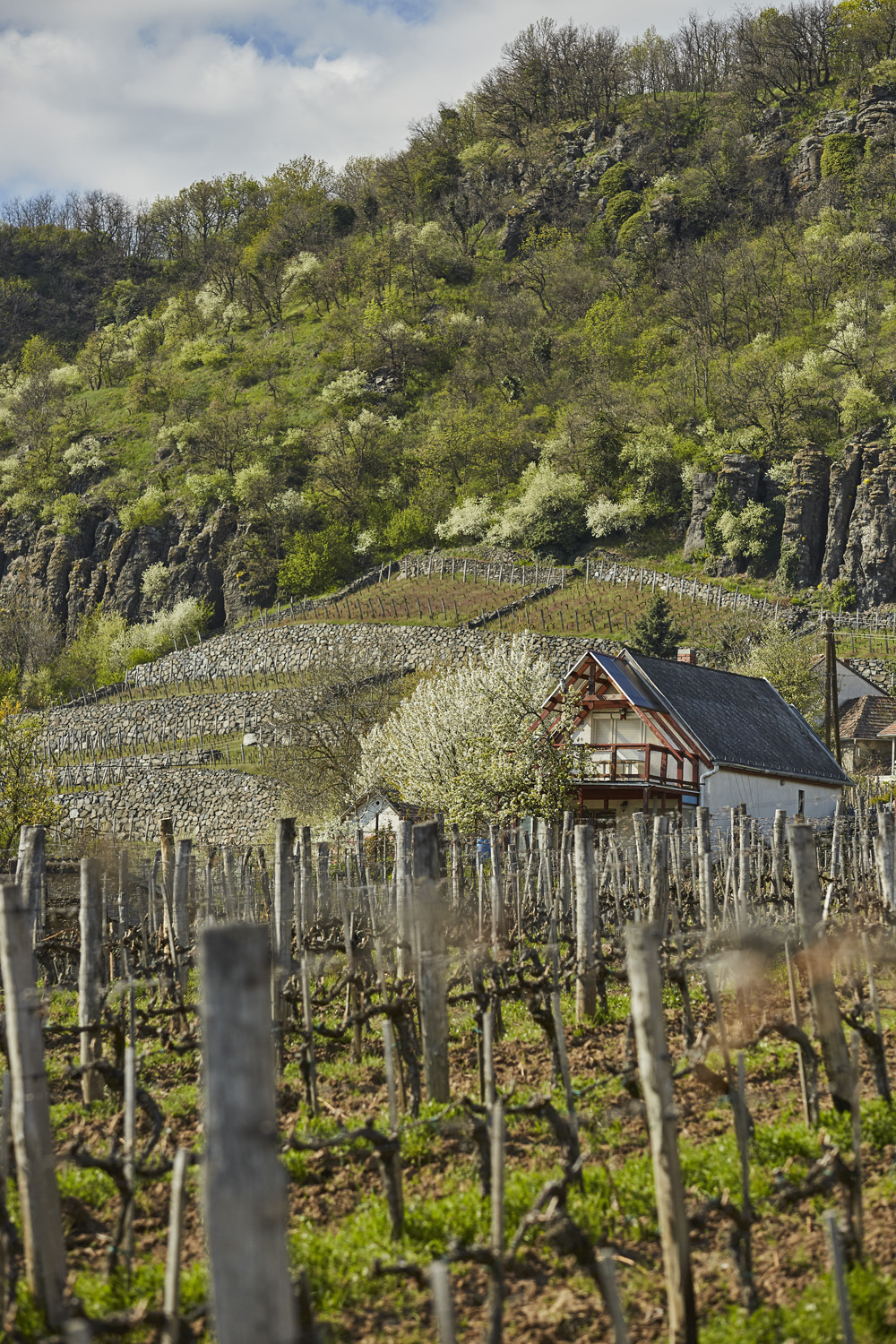
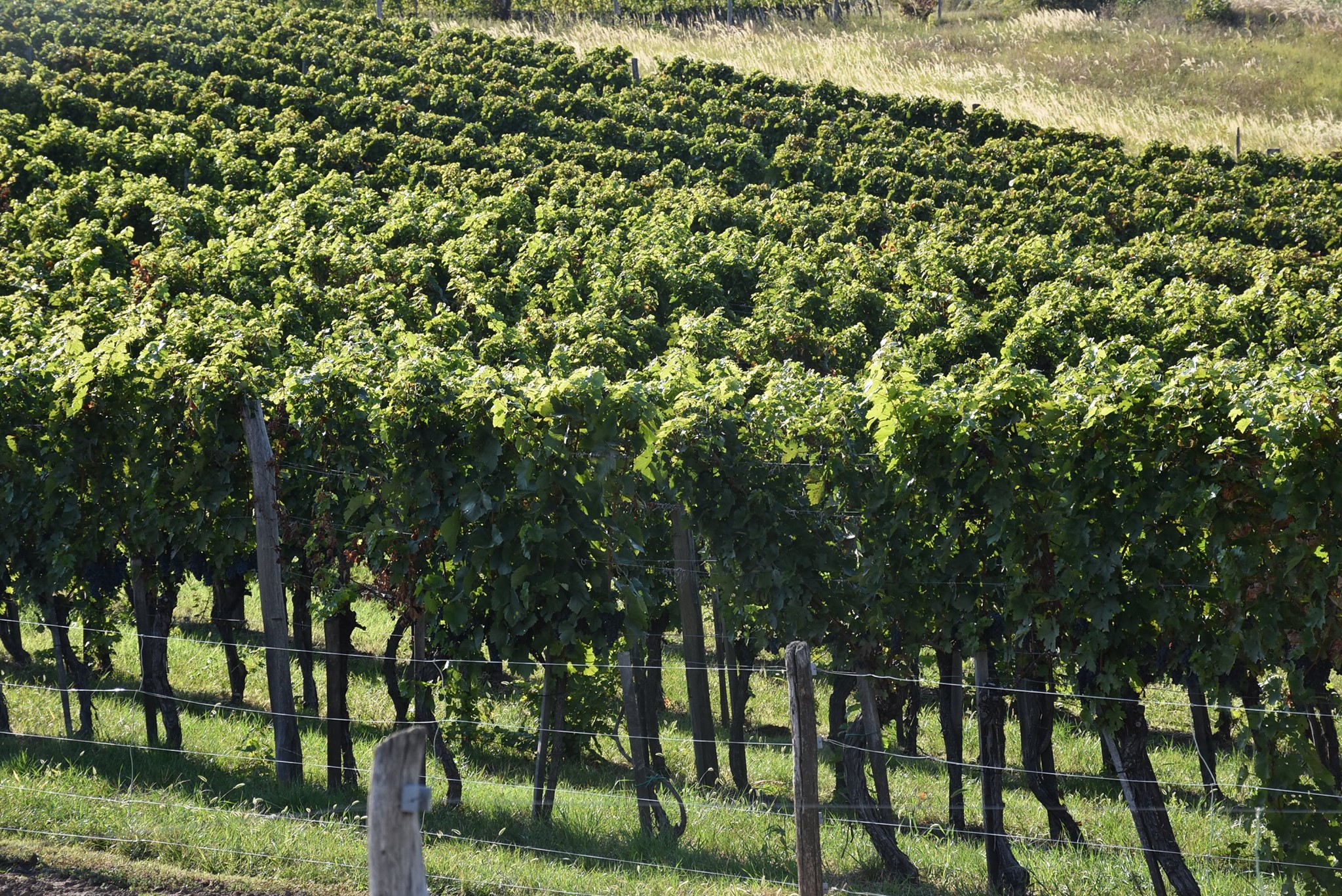
The main vineyards are Grófi-dűlő, Arany-hegy, Séd-dűlő, Apátsági-dűlő and part of Szent Márton, mostly on the eastern side and the southern slope, while Báró-tag is in the increasingly valued northern part. The quality of a vineyard is determined primarily by its location, with the difference in quality and potential depending on whether it faces south-southwest (Somlóvásárhely and Somlójenő) or north-northeast (Somlószőlős and Doba). Somló is one of the few Hungarian wine districts where there are also vineyards on the northern and northeastern sides of the hill.
Sugar levels at harvest are higher in its southern parts, as are acidity levels, which is why textbook Somlói wines come from here. The best part is the middle of the southern section, while wine lovers can enjoy traditional Somlói flavours from the southwestern, southern and southeastern sections. The vertical location of the vineyard is also decisive in terms of wine quality. Most of the vineyards are located at altitudes between 170 and 350 metres above sea level. At the bottom, the lower slope merging with the plain and the gently sloping lateral surface are covered by up to 300 metres of gravelly sand and sandy-loess clay as well as brown forest soil and loam; reductively made mass market wines generally come from this flat part. The truncated cone made of greyish-black nepheline basanite rises between 300 and 400 metres, and the higher you go, the more dominant the heat-storing rock becomes. In the middle, at 200-250 metres, basalt cinders are typical. This weathered and heat-storing basalt, containing augite, feldspar, magnetite and olivine, among other minerals, is the essence of Somló’s soil and gives wines their main characteristic.
The soil has typically been degraded on plots where viticulture has been practiced for centuries, and cultivation occurs at the bedrock level, so it is important to consider how fragmented and weathered this surface is. This basalt crumbles easily, allowing the vines to break through more easily and cling deeply with their roots. Below the main zone, we see mainly early-ripening varieties (Sárfehér, Traminer), while above it, late-ripening varieties (Furmint, Hárslevelű) are more common. The hilltop is covered with basalt and all kinds of lava fragments.
Origin protection
Somló and its origin protection can be confusing. In 2012, the wine district created regulations (PDO)) under the names Nagy-Somló and Somló, the main difference being that the former applied to the entire wine district, including Kis-Somló and Ság-hegy (and, of course, Somló), while the latter was exclusively a product specification for Somló Hill. Moreover, in addition to white wines, wine district regulations allowed the production of rosé, red, single-vineyard and sparkling wines. However, the Somló PDO only allowed white and single-vineyard wines, with stricter yield restrictions on the former. However, both PDOs used identical content to define 17 vineyards, one of which belongs to two settlements (Doba and Somlószőlős).
There was no change in the above until 2024, when the wine district merged the two PDOs under the name Somló PDO and discontinued the name Nagy-Somló. The product specification also significantly changed the types of wine. The basic still types and sparkling wine remained, but orange wine was introduced. The single-vineyard wine category was abolished; however, vineyards may still be indicated. At the same time, a superior wine category was introduced, which must meet similar basic parameters to the former single-vineyard wines as well as several other conditions: on the one hand, only traditional Somló varieties and blends thereof are permitted (Furmint, Hárslevelű, Juhfark and Olaszrizling), and on the other, they must come exclusively from vineyards that are officially organic or in conversion. Half the wine must undergo at least five months of barrel or amphora ageing. Interestingly, blending vintages is permitted, but in this case, the vintage cannot be indicated.


















































































































































































































































Events
Wineries of the district