

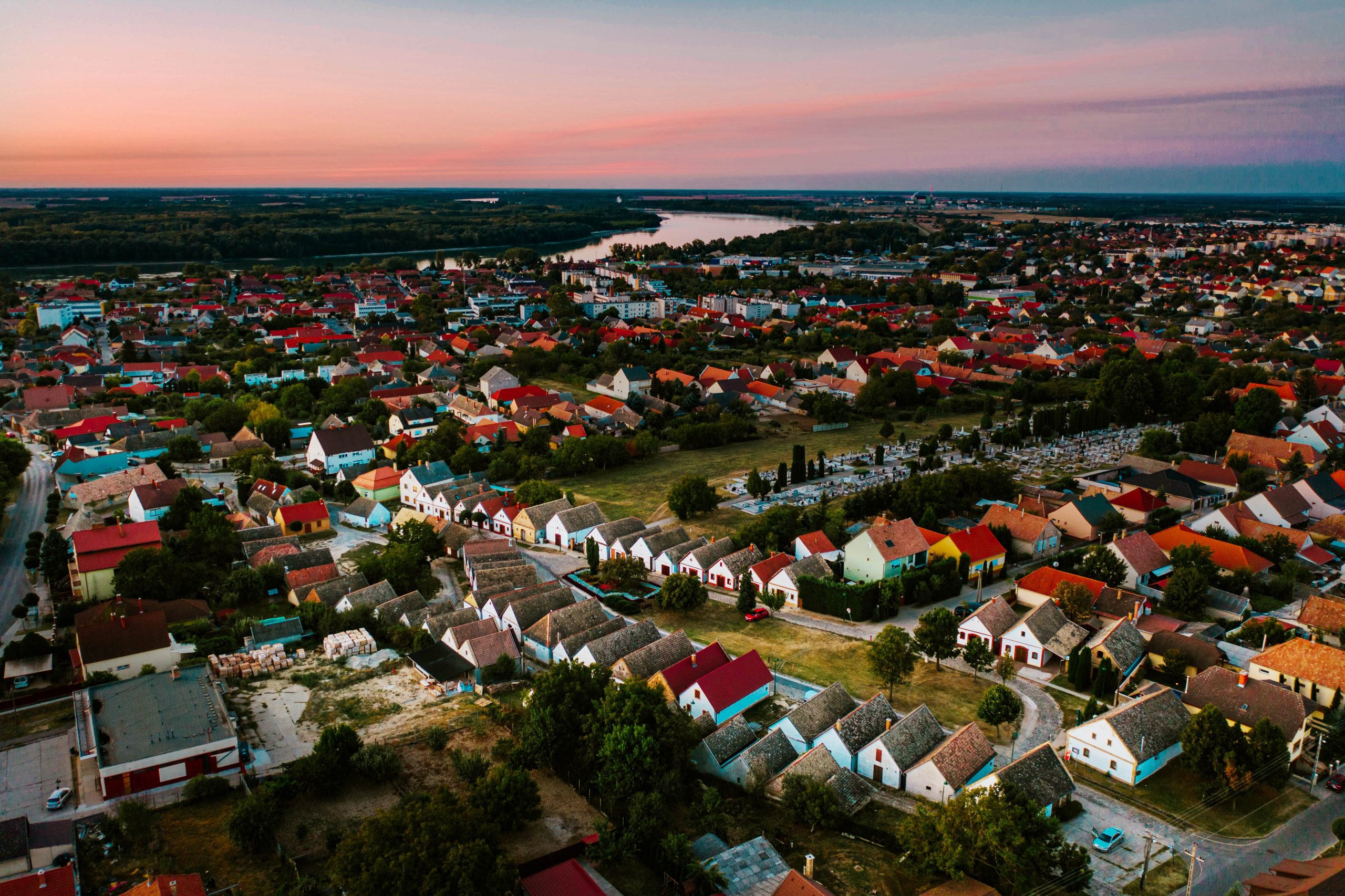
Tolnai Wine district


History | National Geography

Vineyards | Origin protection

History
The Tolna wine district therefore has no history, but in fact has a huge, little-known past. Tolna, or more precisely Southeast Tolna, produced more wine than Tokaj in the 16th century, and its wines were mainly purchased by the cities of Pest, Szeged and Debrecen. Wine production continued to prosper even during the Turkish occupation, as wine tax was one of the most lucrative types of tax. It is also little known that in the late-16th century, the River Sárvíz (nowadays a stream) was still large enough to transport 30,000 hectolitres of Tolna wine to its mouth in Szeged. Tolna was the market leader until the series of clashes in the permanent Habsburg-Turkish war, the Fifteen Years’ War (1591-1606) in Hungary, wiped out its thriving port and market. The centre of gravity of the Hungarian wine market then shifted to Tokaj.
The Turkish presence here also caused severe destruction of vineyards and population, but the Habsburg Court counterbalanced the demographic catastrophe by settling Swabians, who boasted a strong wine culture, just as it did in Szekszárd and Villány. Szekszárd and Tolna were synonymous, and the first Hungarian wine law of 1893 defined the Szekszárd wine region, rather generously, as being identical to the territory of Tolna County.
Tolna was separated in 1998, when several excellent wine-growing areas that had not previously been classified as wine regions were added to it. The Paks and Tamási sub-districts had not been part of the Szekszárd wine region, but were attached to the newly created legal entity when the Tolna wine district was established and elevated to wine district status. Since then, the wine district has found its place in Hungarian winemaking and on the market. The large-scale wineries in Bátaapáti and Bonyhád are both members of major international conglomerates and engage in significant export activities, but there is also wine production in the Paks area, and an ambitious small artisanal winery has even put Gyönk on the Hungarian wine map.
Natural Geography
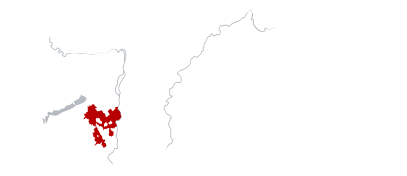
The wine district stretches across the Tolna Hills and the southern part of the Mezőföld and boasts a slightly strange structure, in that it not only includes the northernmost, easternmost and southernmost points of Tolna County (Dunaföldvár, Bölcske, and Báta), but also the northern tip of Baranya County and the southern tip of Fejér County.
The climate is almost perfect, with over 2,000 sunshine hours per year and an average annual temperature of 12°C, rising to 16-17°C during the growing season, higher in the Mezőföld area and lower in the Völgység area. There is sufficient annual precipitation, at around 500-700 mm, but this value is becoming more extreme due to climate change.
The Tolna region is mainly planted with white grapes, partly because it lacks the north-south orientation of the hills found in Szekszárd, and partly because the Völgység area has higher average annual rainfall. The 150-200-metre-high vineyards extend to Paks and Simontornya, forming a largely homogeneous surface in terms of soil. Almost the entire area is covered by a 20-50-metre-thick layer of loess, reaching 70 metres at Hőgyész. It boasts high lime content and was formed in the Upper Miocene from the sediments of the Pannonian Sea. This homogeneous and dominant loess is covered by brown forest soils with clay deposits and calcareous chernozems in the Völgység area. Sandy loam soil with stone debris can be seen in the Tengelic and Tolna areas, while forest soils and chernozem-type sandy soils also dominate in the Mezőföld. Grapes grow on sandy soil in the Pincehely, Hőgyész and Dúzs areas.
Vineyards
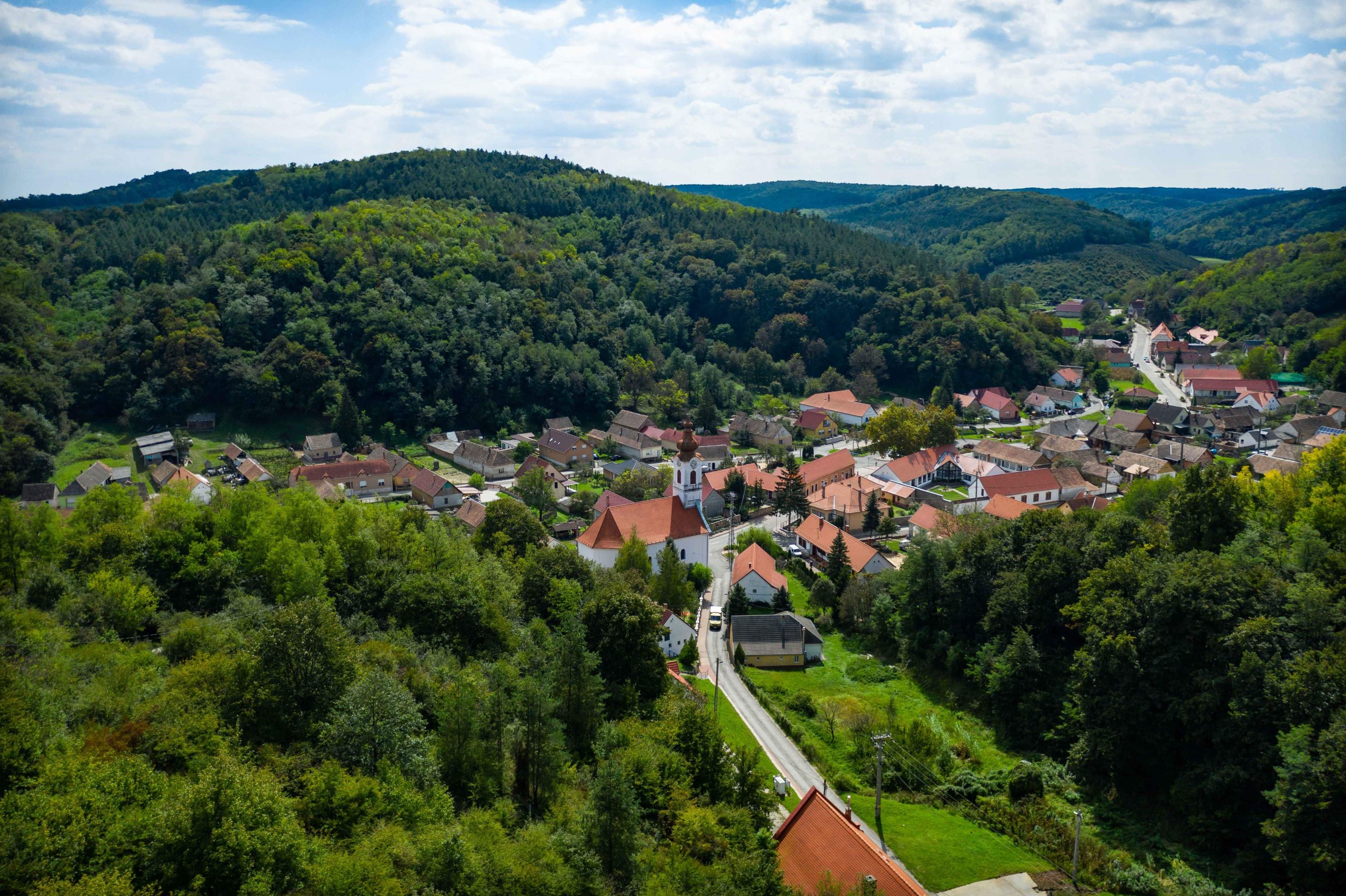
Due to the structure and history of the area, the concept of single vineyards is less significant here, but the 2012 designation of origin still defined certain growing areas and also designated a sub-district as a distinguishing mark that can be written on labels – something less common in Hungary. This is the Völgység area, which comprises 22 settlements.
In terms of vineyards, the most notable ones are Aranybánya and Szőlő-domb in Bonyhád, but Kereszt-dűlő, which belongs to Bonyhádvarasd, has also been demarcated. The same applies to Fülöp-hegy in Lajoskomárom, Derék-hegy and Mózsé-hegy in Simontornya, Hideg-hegy and Sánc-hegy in Paks, and Ködmön-hegy in Gyönk, which was only named in 2016. Nevertheless, bottled single-vineyard wines from any vineyard are currently unfamiliar to the public.
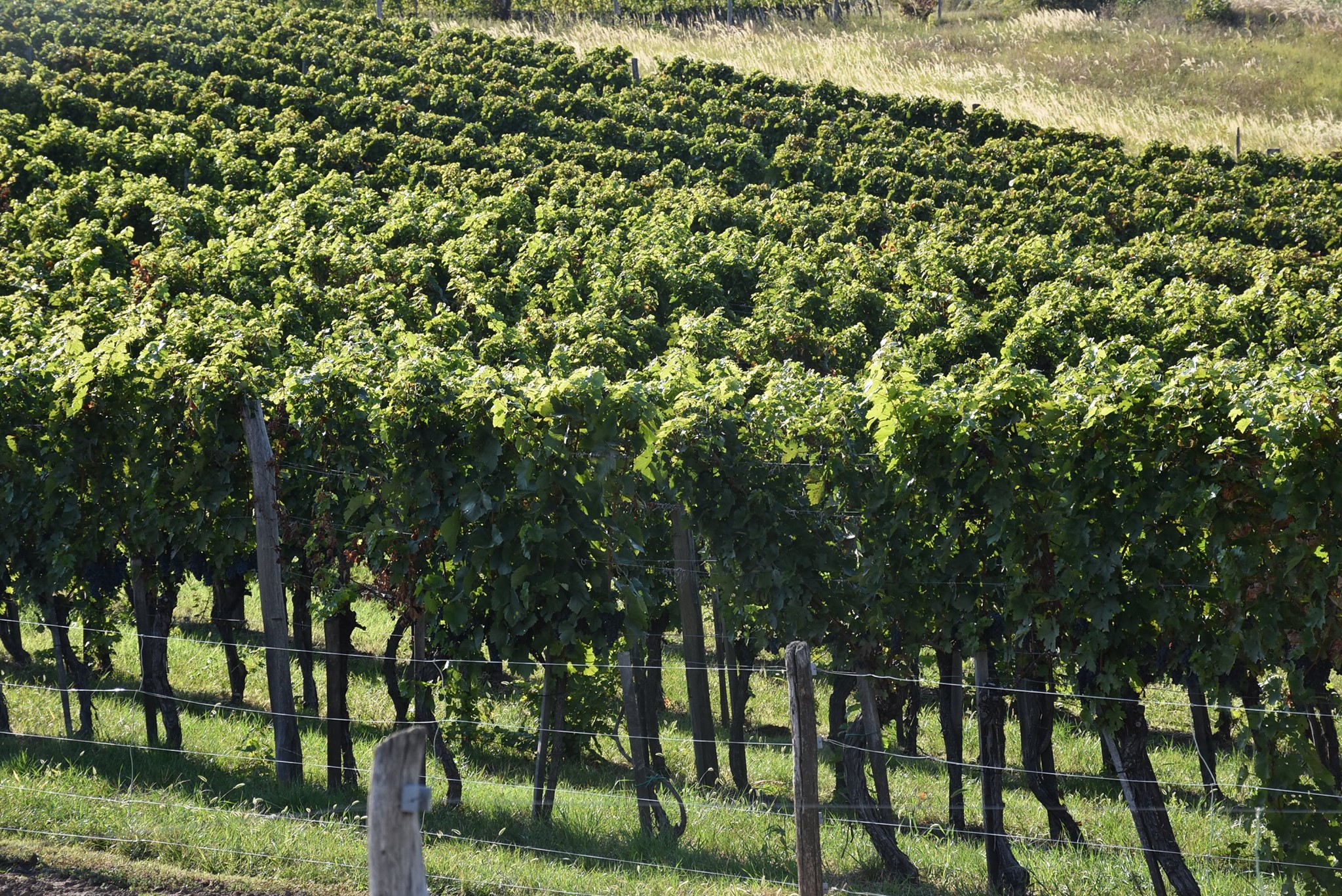
From a production perspective, the wine district’s core area, and its most significant part, is Völgység. This is also the most concentrated in terms of ownership, with larger vineyards than in the rest of the wine district or in Szekszárd. Vineyards in the Völgység area are located on plateaus in many places to prevent frost damage, but the vines still bud a week later on average. Rainfall distribution is more even than in Szekszárd, while the number of sunshine hours is similar, so according to the Völgység winemakers, Völgység is even better than Szekszárd in terms of harvest reliability.
Origin protection
The wine district – like many small wine districts – chose the easy solution from a production standpoint, deciding not to tighten up anything compared to the wine law regulations at that time. However, it opted for a more sophisticated solution in terms of vineyards, delimiting eight wine district vineyards and permitting the Völgység designation for 22 wine district settlements.













































































































































































































































































































Events
Domestic and international wine programs