
 English
  Magyar
Zalai Wine district

History | National Geography

Vineyards | Origin protection

History
There are areas of the country where several wine regions happily claim Roman artifacts found there as their own. This is the case with a Roman jug found in what is now Zala County (near Cserszegtomaj), which bears the Latin inscription “Da Bibere,” meaning “Give me a drink.” The next significant and clear record of Zala wines dates from 1288.
The revival of the vineyards began following the expulsion of the Turks, but there is only clear evidence of the existence of grape production from 1777, when the winegrowers of Zalakaros organised themselves into a wine community and even adopted a 33-point set of rules. In 1796, a description mentions several wine-producing areas in Zala County, including Tormafölde, Csörnyeföld and Vindornya-Szőllős. In 1873, there was grape and wine production in 23 settlements in the district of Nagykanizsa.
The vineyards almost completely disappeared during phylloxera, and they were largely replanted with table grapes. It was during this period that the 1893 wine law was enacted, dividing the vineyards of Zala County into two parts. On the one hand, there was Badacsony, and on the other, the Balatonmellék wine region, which included a significant portion of today’s wine district. Most of the Zala County vineyards lost their wine region classification in 1941 and were reclassified as table grape production areas.
After the fall of communism, the reorganisation of the wine region coincided with the reorganisation of the wine community system. The areas of Nagyrada, Pakod-Zalabér, Pogányvár, Szentgyörgyvár, Zalakaros and Zalaszentgrót were re-registered as wine-growing areas in 1994, and wine communities were established there, which joined the Balatonmelléki wine region. In 1997, the six wine communities of Zala submitted a request calling for the restoration of the wine region classification. The Zala wine region was established that same year, with the addition of the settlements of Homokkomárom, Letenye and Muraszemenye.
Natural Geography
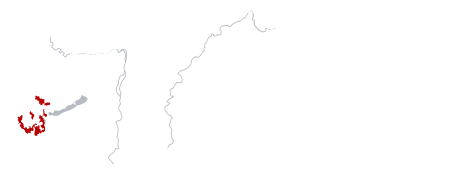
The wine district is basically located on the slopes of the Zala Hills, but if we examine the map a little more closely, it immediately becomes apparent that the situation is much more complicated than that. The Zala Hills can be divided into several parts: bordered by the Zala Valley to the north, the Mura River and then the Drava River to the south, the Keszthely Hills and Lake Balaton to the east, and the national border, or more precisely the Mura Valley plain, to the west. The vineyards are scattered across this relatively large area, but a small corner of the wine district also extends into the Keszthely Hills.
In terms of climate, the region is one of the rainiest in Hungary (750-800 mm per year), with temperatures more balanced than the national average thanks to the influx of Atlantic air masses. Annual sunshine hours (1,900-2,000 hours) are significantly influenced by precipitation, or more precisely, cloud cover, so this value is considered low compared to other areas in Hungary at the same latitude.
Vineyards
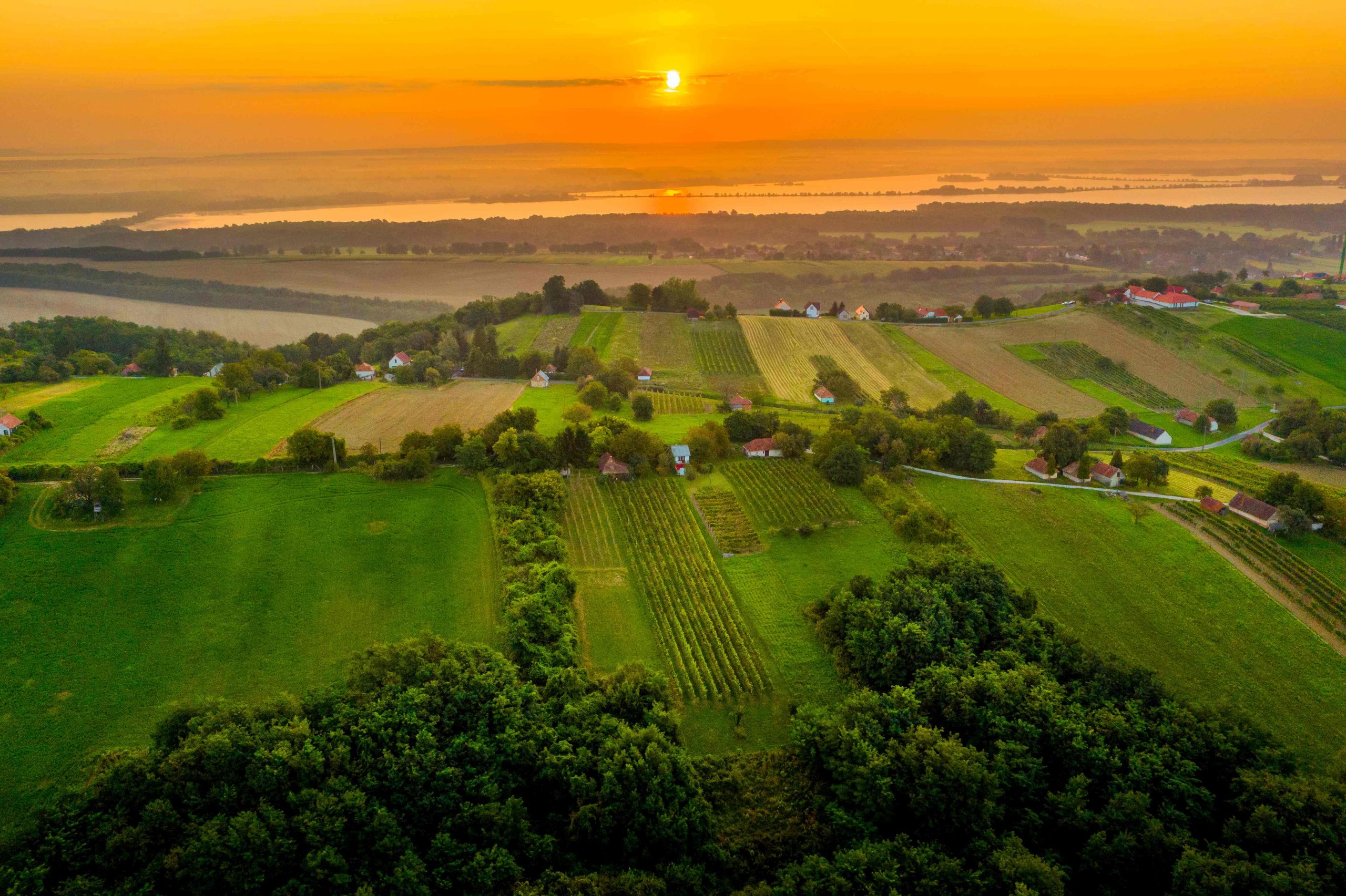
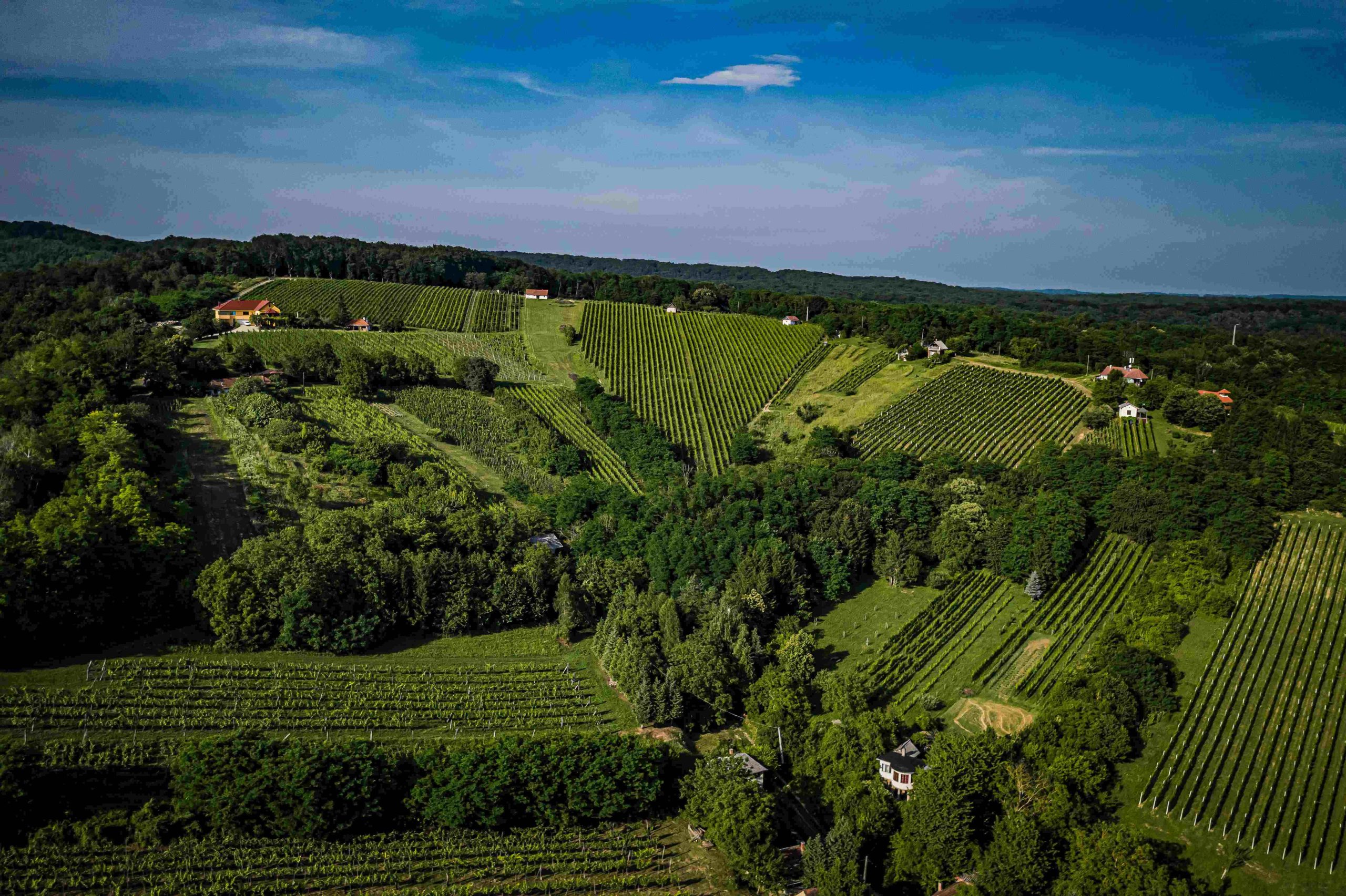
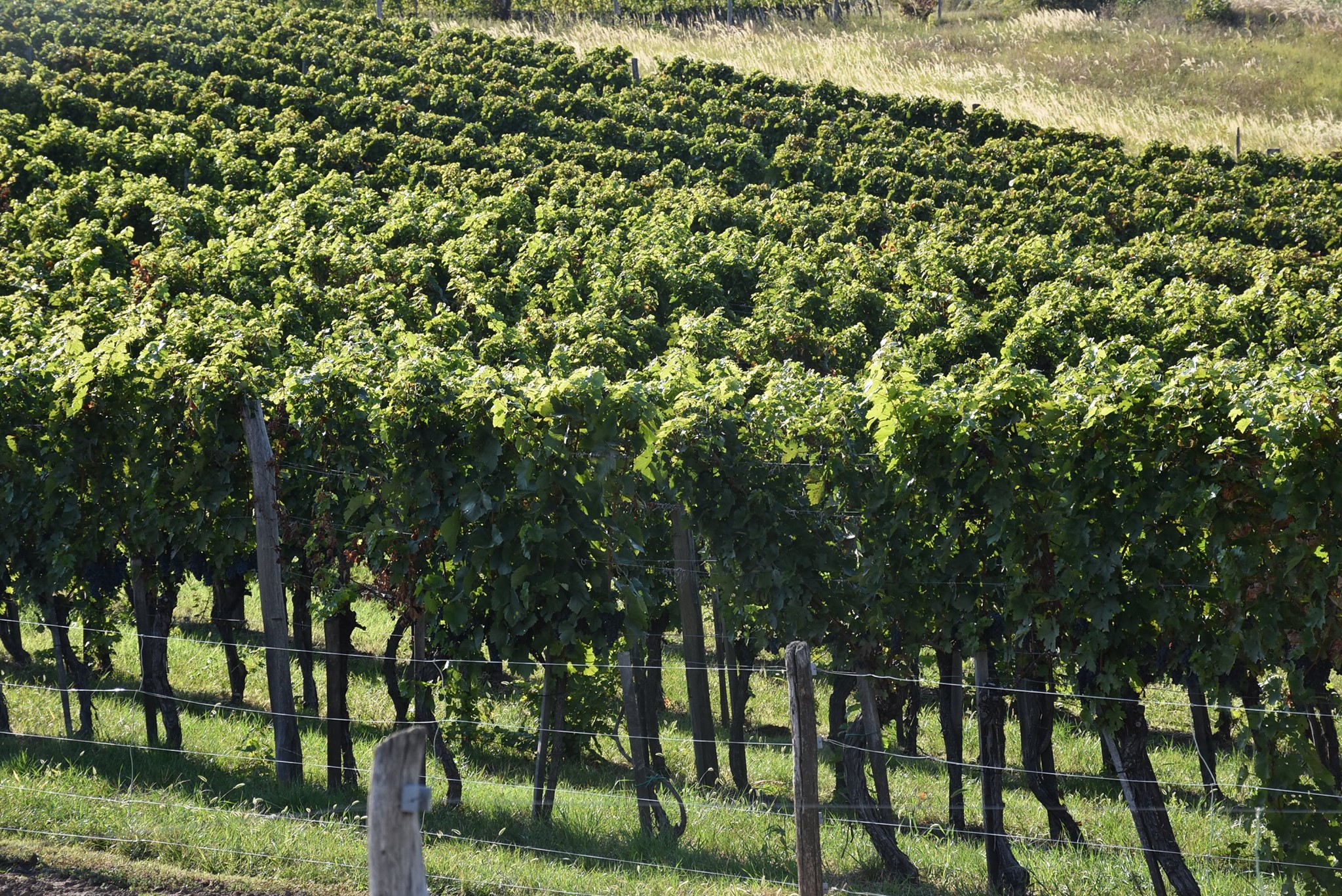
The vineyards of Vindornyaszőlős, Vindornyalak and Zalaszántó are not located in the hills, but on the southern slopes of one of the northwestern foothills of the Keszthely Hills (Kovács range), mostly on soils formed on basalt bedrock. The vineyards of Zalaszentgrót, Zalabér, Pakod, Bérbaltavár and Szentgyörgyvár are located on the slopes of the Zalavár Ridge, a small area of the Zala Hills, mostly on loess soils. Sármellék, on the other hand, lies in the Zala Valley. Bak is the only settlement in the wine district that is geographically located in Göcsej. The soils here are mainly loam and clay, as well as gravelly-loamy debris cover. The vineyards of Dióskál, Egeraracsa, Zalaszabar, Orosztony, Nagyrada, Garabonc, Zalakaros, Galambok, Nagykanizsa and Miháld are located in the next micro-region, on the Zalaapáti Ridge. The soils are mainly settled on Ice Age troughs, with loess and loess sediments in places. The Principális Canal separates the Zalaapáti Hills from the Egerszeg-Letenye Hills, where the vineyards of Söjtör, Magyarszerdahely, Homokkomárom, Eszteregnye, Rigyác, Valkonya, Becsehely, Letenye, Zajk, Murarátka, Muraszemenye, Csörnyeföld, Dobri, Tormafölde and Szécsi Island can be found. The soils are mainly loess and loam, but there are also shifting sand dunes in the Homokkomárom area.
Two settlements have so far been omitted from the list, Kerkateskánd and Lenti; their vineyards belong to the Kerka region. The Nagy-Tenke (332 m) and Lenti-hegy (262 m) are covered with Pannonian gravel, while a series of river sediments (gravel, sand) have accumulated at the foot of the hills in parts of Lendvai-hegy. It is also worth mentioning Pogányvár, although it is not an official vineyard, located on the border of Dióskál and Orosztony, where the vineyards are mainly planted on loess.
The independent Mura/Murai PDO was established in 1921 in the Muramenti area of the wine district. It includes two vineyards on the outskirts of Letenye (Öreg-hegy, Julián-hegy), two on the border of Tormafölde (Lakosi-hegy, Szent János-hegy) and five on the border of Csörnyeföld (Dalánc, Izsó-völgy, Kövecs-hegy, Pál-hegy, Vörcsöki-hegy) as well as one sub-vineyard (Új-hegy). The area is a ridge stretching from northeast to southwest at an altitude of 165-240 metres, with its southern side spreading out like a fan and opening onto the Mura Valley. Brown forest soil is settled on Pannonian clay, which means that the area’s water management is excellent even in drought years. Above the plain, this hillside receives the most moisture (thanks to the Mura and Kerka rivers) as well as the most heat. Kövecs-hegy also overlooks the Mura River. It is located on the edge of the village, at an altitude of 159-175 metres above sea level, with a southwestern slope.
Origin protection
In the first 2012 regulations on origin protection, the wine district did not impose rules stricter than those laid down in the wine law, it kept the range of varieties broad, and did not demarcate any vineyards. However, in 2021, the Mura PDO was established, which demarcated eight settlements and five vineyards under stricter production conditions than those applicable to the wine district.











































































































































































































































































































Events
Wineries of the district