
 English
  Magyar

Bükki Wine district

History | National Geography

Vineyards | Origin protection

History
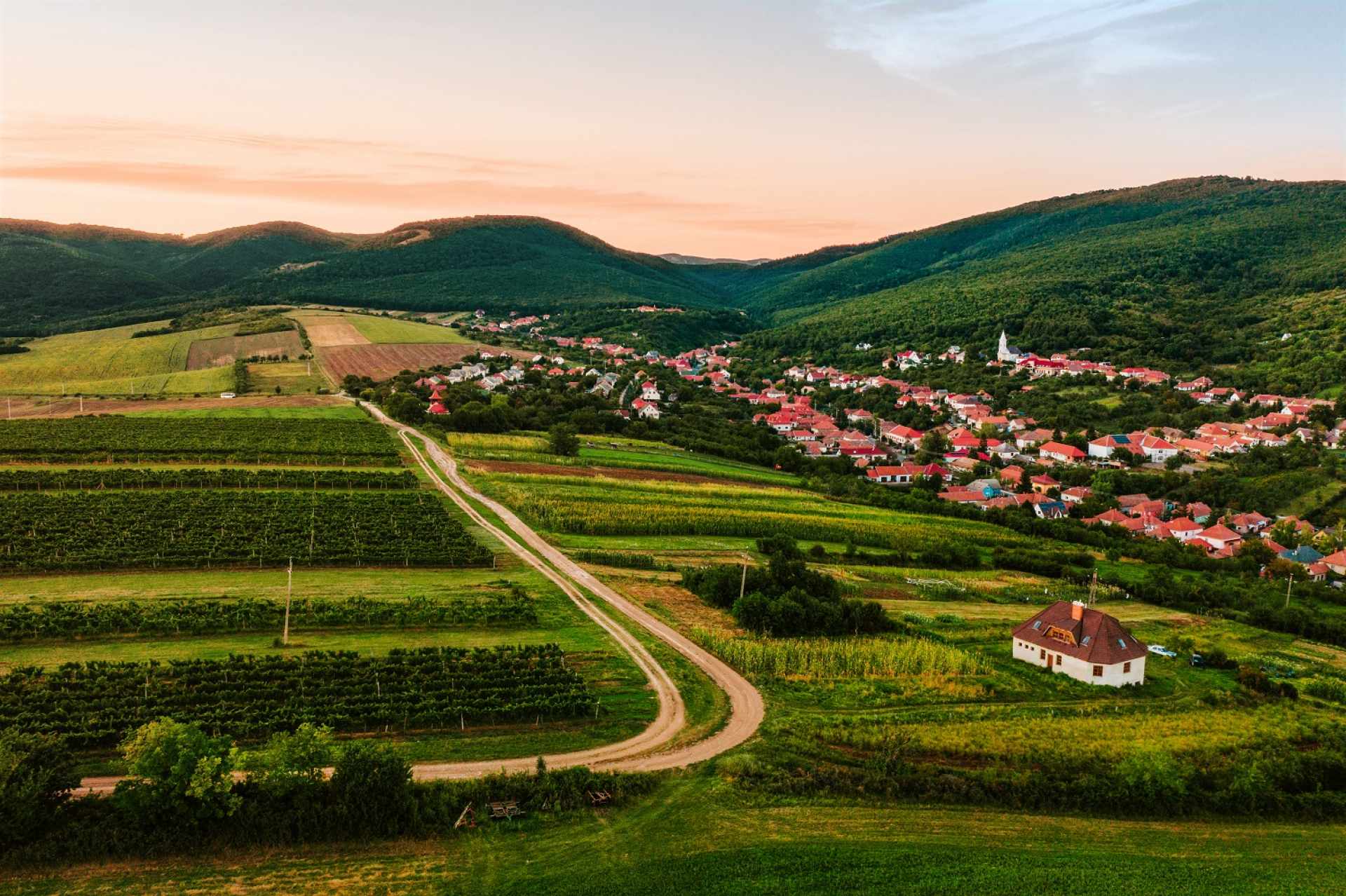
The Bükk wine district has a much longer history than its relatively new name suggests. The areas belonging to this district today previously belonged to the Miskolc wine district, then to the Eger wine district, and certain areas had close ties to Tokaj. The remaining parts never became part of any of Hungary’s historical wine regions, yet they play a significant role in Hungarian wine history.
Polish merchants established warehouses here on their way home, facilitating the lengthy transport process. Nowadays, Edelény, Szikszó and Megyaszó also belong to the wine district, although these areas are not even geographically connected to the Bükk Mountains. Viticulture here also has a history stretching back hundreds of years, but its wines have never achieved national recognition.
Elek Fényes wrote his work entitled Geographical Dictionary of Hungary in 1851, in which he mentions 186 acres of vineyards in Cserépfalu, 54 acres in Cserépváralja, 349 acres in Bogács, 638 acres in Tibold-Darócz, 1,300 acres (!) in Geszt and 1,366 acres in Sály.
The modern history of the wine district is closely linked to that of the Eger wine district, at least as far as the southern slopes of the Bükk Mountains are concerned. During socialism, and perhaps even before that, during the Horthy era, this region was the vineyard providing the grapes for Eger’s large wineries. Rumour has it that, even in the 1960s and 1970s, there were more grapes from Bükk in Egri Bikavér than from Eger.
However, rural areas were the clear losers of the 1990 regime change. Once Eger and the Eger wine district had established themselves, it became clear that the Bükk wine district’s most important role, that of supplier to Eger, had come to an end. The wine district was barely visible until the end of the 2000s, but then something seemed to awaken, a wine route was established, and new players began to emerge.
National Geography
The Bükk wine district boasts all the geographical characteristics necessary to be a good wine district. An 800-900-metre-high plateau protects it from cold winds to the north, and it gradually slopes down into the Great Plain. The mountain range is mainly composed of limestone, but a significant amount of tuff has been deposited on its southern edge due to volcanic activity. This process began roughly 12-16 million years ago, in the Middle Miocene, when volcanoes began to erupt beneath the waves of the sea that covered this area. The sea floor was covered with rhyolite tuff, which cemented together under high pressure, forming solid rock. This rock forms roughly the upper layers of the Bükkalja region stretching from the Tarna Valley to Miskolc. The sea then receded 8-10 million years ago, and further rocks were deposited on top of the volcanic tuff layer.
After the emergence of the Bükk Mountains, the surface of the wine district was shaped by tectonic movements and other surface-forming forces. Eocene terrestrial gravel, breccia and sandy variegated clay appear among the rock debris deposited on the bedrock, forming a continuous range from Eger to Bükkzsérc and to the north of Cserépfalu. Limestone, marl and clayey marl settled west of Bükkzsérc in the Kerek-domb area, while elsewhere, quartz gravel, sand and sandstone covered the surface after erosion. The stratification of volcanic origin is characterised by the presence of dacite tuff and some andesite in addition to rhyolite in the area. The soils that have settled on these areas also vary greatly, ranging from forest soils to grassland soils. Vineyards on the southern slopes enjoying more sunshine stand out from the damp, humid embrace of vineyards in the valleys. The late spring and cool average temperatures result in a fairly short growing season, often with low rainfall in summer, as precipitation tends to fall higher up in the mountains.
Vineyards
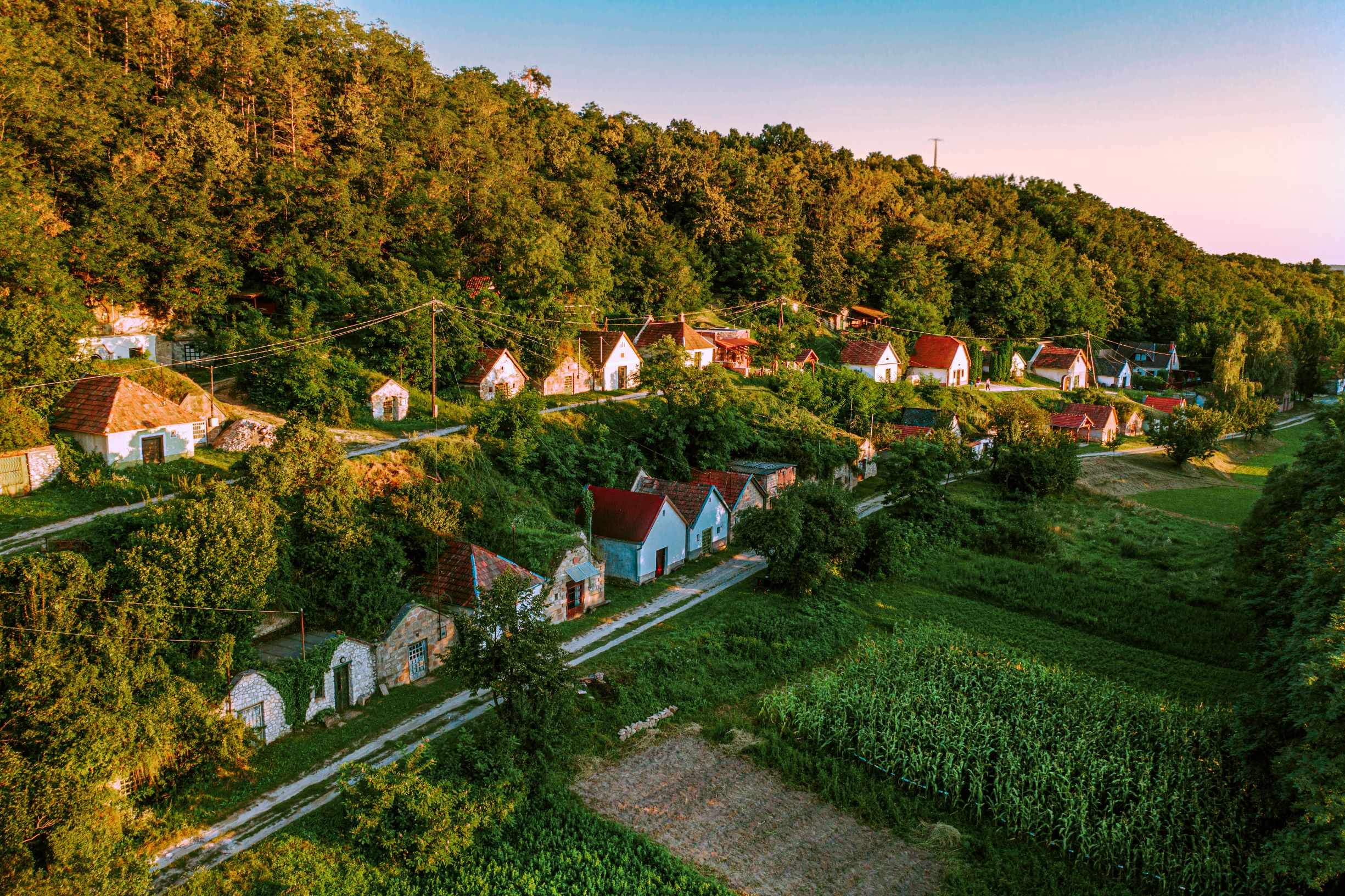
Many of the wine district’s best areas are lying fallow, and the number of vineyards planted with vines is relatively low. There are often even no vines cultivated in those vineyards considered the wine district’s best by the current generation’s grandparents and great-grandparents.
In Bogács, behind the rows of wine cellars mainly reserved for hospitality, there are already a few dedicated winemakers in Bogács putting quality at the fore. Winemakers north of Bogács, in Cserépfalu and the surrounding area, tend to focus on red wines. This area is home to Kékfrankos, Blauburger and Pinot Noir, which are improving in quality and in some cases have already caught up with producers in neighbouring wine regions. White varieties dominate in the vineyards of Bükkzsérc, with Leányka also worthy of mention. Tibolddaróc was once surrounded by vineyards, and fortunately, thanks to the former sparkling wine manufactory, some of them remain to this day. White wines are also noteworthy in the Edelény area, with Pinot Blanc (mainly in the Pittyén vineyard) in Nyékládháza and Cserszegi Fűszeres in Miskolc being the most interesting.
Origin protection
The Bükk wine district only adopted a minimal set of rules in its 2012 product specification, essentially using the provisions of the wine law as a basis and maintaining a broad range of varieties. The concepts of superior white and superior red were introduced in 2020. These categories have significantly lower average yields (60 hl/hectare) compared to basic wines. A minimum ageing period was also specified. The use of vineyard names is already permitted for superior wines, with a total of 18 vineyards designated for this purpose.





































































































































































































































































































































































































Events
Domestic and international wine programs