


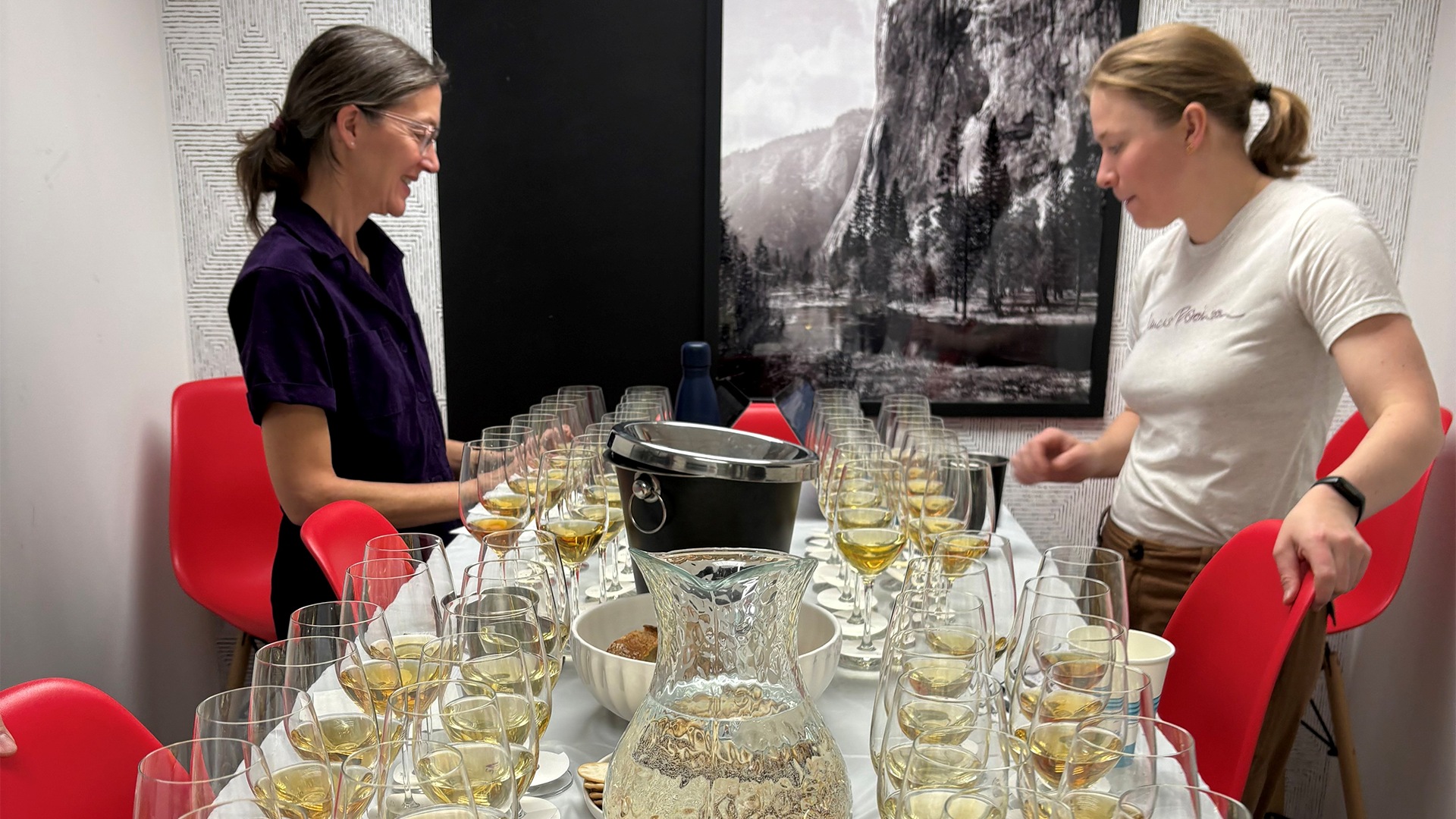


One of the key milestones of the Wines of Hungary USA campaign in 2026 is the Volcanic Wine Conference 2026, taking place in New York on June 10, 2026. The event brings together and evaluates some of the world’s finest volcanic wines, presented before a distinguished panel of international wine professionals and experts.
Based on a carefully curated selection by Péter Blazsovszky, a leading wine expert at Wines of Hungary, the Hungarian Wine Marketing Agency submitted a total of 50 wines to the Volcanic Wine Awards in December 2025. Among the many participating wine-producing countries, Hungarian wineries achieved particularly remarkable success this year. Wines from four Hungarian wineries received the prestigious Chairman Award, further strengthening the international recognition of Hungarian volcanic terroirs and wines. These wineries will therefore be presented to the international volcanic wine conference in New York on June 10, with the support of renowned guest speakers such as John Szabo. We previously covered these outstanding achievements in an earlier article.
At our request, Tara Q. Thomas — a leading expert on volcanic wines and a key managing editor to Jancis Robinson — shared her valuable insights with us on volcanic wines, minerality, the significance of the Volcanic Wine Awards, and several other topics shaping today’s international wine discourse.

How would you define volcanic wines?
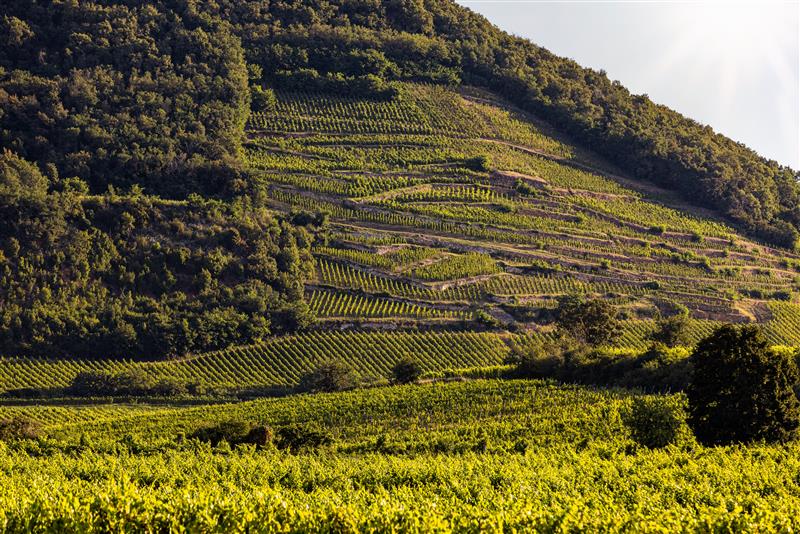
‘Volcanic wines’ is a bit of a misnomer; there aren’t volcanic wines so much as there are wines from volcanic terroirs. These are wines made from grapes grown in soils with a preponderance of volcanic material, whether it’s black chunks of basalt or white, powdery tufa; shiny, solid obsidian or light, porous pumice. The vineyards may sit directly on the slopes of a volcano, or they may be miles from the nearest volcano, but sit on a base of volcanic material that’s been carried there by a lava flow, lahar, river or other naturally occurring event. The category is as diverse as the places that produced them. In general, however, I’ve found that wines from volcanic terroirs are often more savoury than fruity, with a mouthwatering salinity, and have a particular concentration and power. As John Szabo MS – wine writer and founder of the Volcanic Wine Awards – put it in the title of his excellent book, Volcanic Wines: Salt, Grit and Power.
How would you define minerality, and how can it manifest in wines?
As we explain in the Oxford Companion to Wine, there is no precise definition for minerality, but to me, minerality is a sense of something that’s not fruity, herbal or woody but instead stony/flinty/chalky/clay-ey/salty. It’s something savoury, and when searching for a metaphor to describe it, what comes to mind is rocks, stones – perhaps the scent that comes off a hot rock after a rain, or the scent of a hillside of scree as you’re sliding down it, or just the scent of a stone scratched with a fingernail. It’s quite often saline, and sometimes appears in texture – gritty/hard/steely/electric.
And while technically most stones don’t have scents, anyone who has spent time rock climbing or hiking or gardening or skipping stones will understand that stones, when they are in their natural environment, give off scents, even if those scents also have to do with the environment around the stone, such as geosmin (from bacteria) and petrichor (sometimes referred to as the scent of rain – the scent released after rain falls on dry ground).
Let’s be clear though that there is no direct correlation between minerals in the earth and minerals in the wine – eg, the vines do not take up the geologic minerals directly. That said, the availability of some mineral nutrients affect the vine in very real ways. High potassium in soil can lead to grapes with less acidity, for instance; abundant calcium tends to give grapes with higher acidities. A lack of available nitrogen in the soils can lead to wine that gives off a flinty scent (due to fermentation issues, not direct mineral uptake.)
‘Minerality’ is a catchall metaphor for a sensation that’s earthy in a way that’s not about dirt (a term that tends to have negative connotations thanks to its relationship with ‘dirty’) and that doesn’t carry the same humid sense connoted by ‘earth’. It’s dry, firm, and of the earth.
What percentage of the world’s wines would you consider to be volcanic?
I don’t know of any statistics that describe the percentage of the world’s wines coming from volcanic soils. However, according to the USGS, more than 80% of the earth’s surface is of volcanic origin, but most of the earth’s volcanoes are under water. So I think it’s safe to say that a minority of the world’s wines come from volcanic soils.
At the Volcanic Wine Awards 2026, which countries were represented, and how would you assess the quality and volume of their volcanic wine entries?
We had wines from North America (California, Oregon and Washington State); South America (Chile); New Zealand plus wines from Armenia, Austria, France, Germany, Greece, Hungary, Italy, Portugal and Spain. (You can find all the results on JancisRobinson.com) The greatest number of entries came from Italy, but the number of submissions was not a reflection of the percentage of volcanic wines in any particular country; I’d say it’s more a reflection of the degree of pride in these volcanic regions. All those that did submit proved that they had good reason to be proud of their volcanic region and their wines; overall the wine quality was very high.
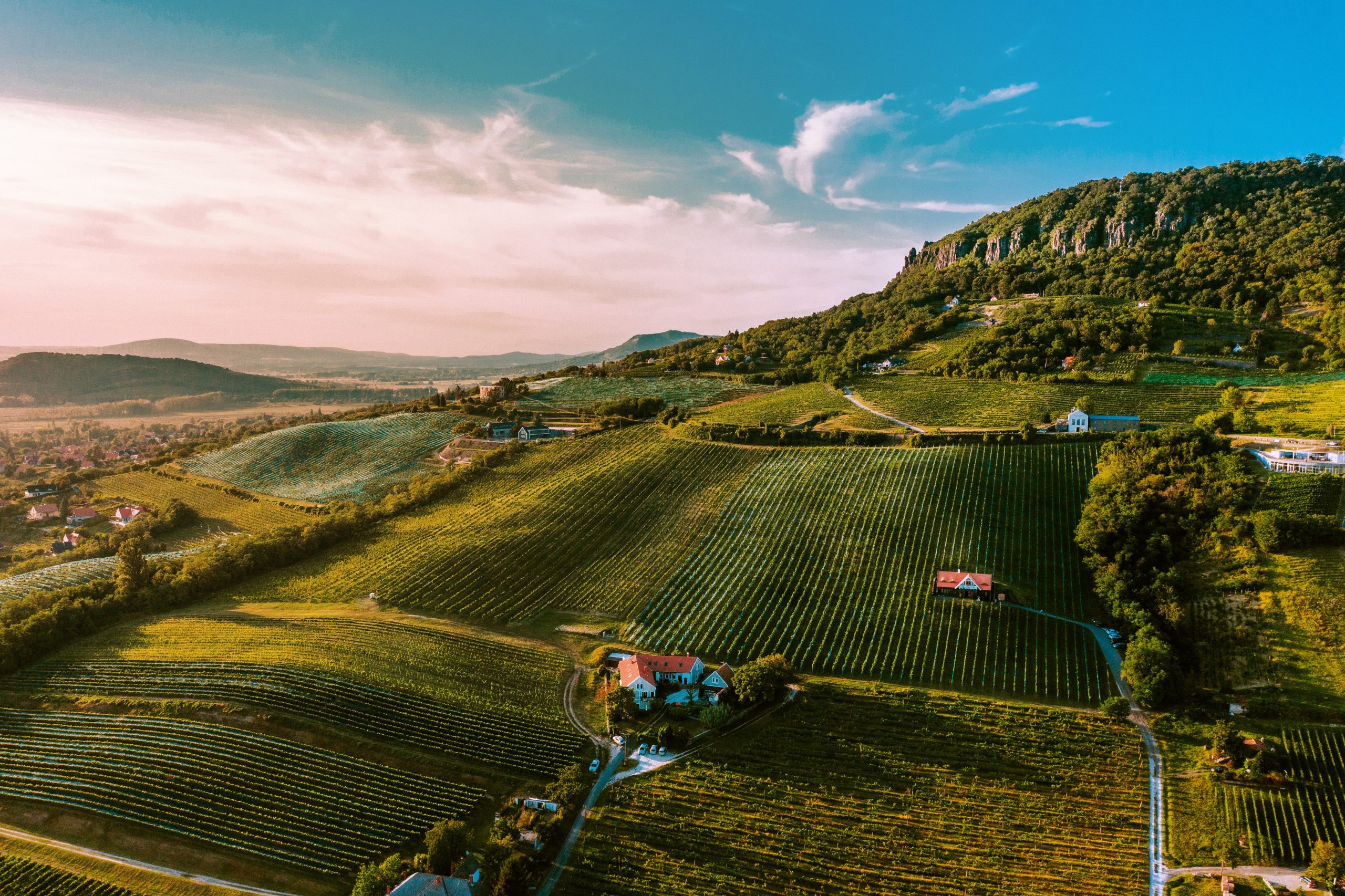
We were delighted to see that Hungarian wines achieved outstanding results at the Volcanic Wine Awards 2026. Do you think this is partly due to the fact that nearly 20% of Hungary’s vineyard areas are located on volcanic soils?
That’s an interesting thought but no; I think it has more to do with the level of winemaking overall. While you can’t make great wine from vines struggling to survive in unsuitable soils, there are plenty of non-volcanic soils that that support certain grape varieties very well. For examples within Hungary, just look at Sopron and its Kékfrankos, or Etyek-Buda and its sparkling wines. And bad wine can be made on volcanic soil just as easily as great wine can be grown on non-volcanic soil. It’s about finding the sweet spot for a vine – the right soil, elevation, exposure, climate, weather – and growing great fruit, and then the winemaker needs to be able to carry that into the bottle. The wines on display at the Volcanic Wine Awards showed that Hungary has many very talented winegrowers working on volcanic soils – but I know from previous tastings that Hungary also has many winegrowers making great wines from non-volcanic soils.
In your opinion, how large is the audience for volcanic wines, and how would you describe its profile?
The audience for volcanic wine is as large as the audience for great wine. Volcanic wine comes from all around the world, in all sorts of styles; it’s not a monolithic category. And therefore I also don’t think there’s a particular profile of a volcanic-wine drinker. It’s for anyone who appreciates a more savoury style of wine.
What can make a volcanic wine particularly appealing or exciting for younger wine consumers?
The same thing that makes it interesting and appealing to an older consumer. Nothing turns off a younger consumer more than being treated like a target audience that needs special marketing. That is condescending. If a consumer of any age has gotten to the point of being interested in what’s in their glass, then they are going to want to know the same thing we all want to know: Why is this wine so good? Where did it come from and what’s that place like, and who made it and how? The one difference I’ll allow is that many younger consumers are more concerned with sustainability than an older generation has been, as they’ve watched in real time the effects of climate change, winery business consolidations and mass-market consumerism.
What do you personally appreciate most about volcanic wines? What are your personal preferences?
I appreciate any wine that has the power to transport me through its taste and texture. And for me, wines from volcanic soils are often very vivid, even extreme, and as such are powerful transmitters of place.