English
  Magyar



The German wine market waits for no one. The shelves are full, the choice is endless, and the competition for attention is quiet but ruthless. Germany is the European Union’s largest wine-importing market by volume – and on top of that, German consumers are highly price-sensitive. The country’s own wine production is also significant. Competition is fierce, yet for those who can define a clear strategy and precise market goals, it offers excellent opportunities. In this environment, it is not enough for a country simply to introduce itself, it must prove that it deserves a place at the table. The Wines of Hungary 2025 campaign did not set out to be louder than the rest, but more relevant. Not merely present, but meaningful. The campaign took place in a market where capturing attention alone is no longer sufficient. The real question is whether a country’s wines can achieve genuine professional significance in a saturated, competitive market.
The 2025 Strategy: More Targeted Presence, More Focused Messaging
The thinking behind the campaign was straightforward but consistent: in the German market, what matters is not how many events a brand attends, but how effectively those occasions reach decision-makers.
Accordingly, Wines of Hungary focused in 2025 on the professional community – sommeliers, importers, traders and the gastronomic press. The emphasis shifted from “presence” to “precision”: carefully selected events, strong professional curation, a coherent narrative, and local partners with an intimate knowledge of the market.
The central messages were built around Hungary’s characterful indigenous varieties – particularly Furmint, Kékfrankos and Olaszrizling – as well as Tokaji Aszú and the volcanic wine regions, all of which align well with international trends and the shifting preferences of German consumers.
Munich, Hamburg, Nationwide Education – Targeted Presence at Multiple Levels
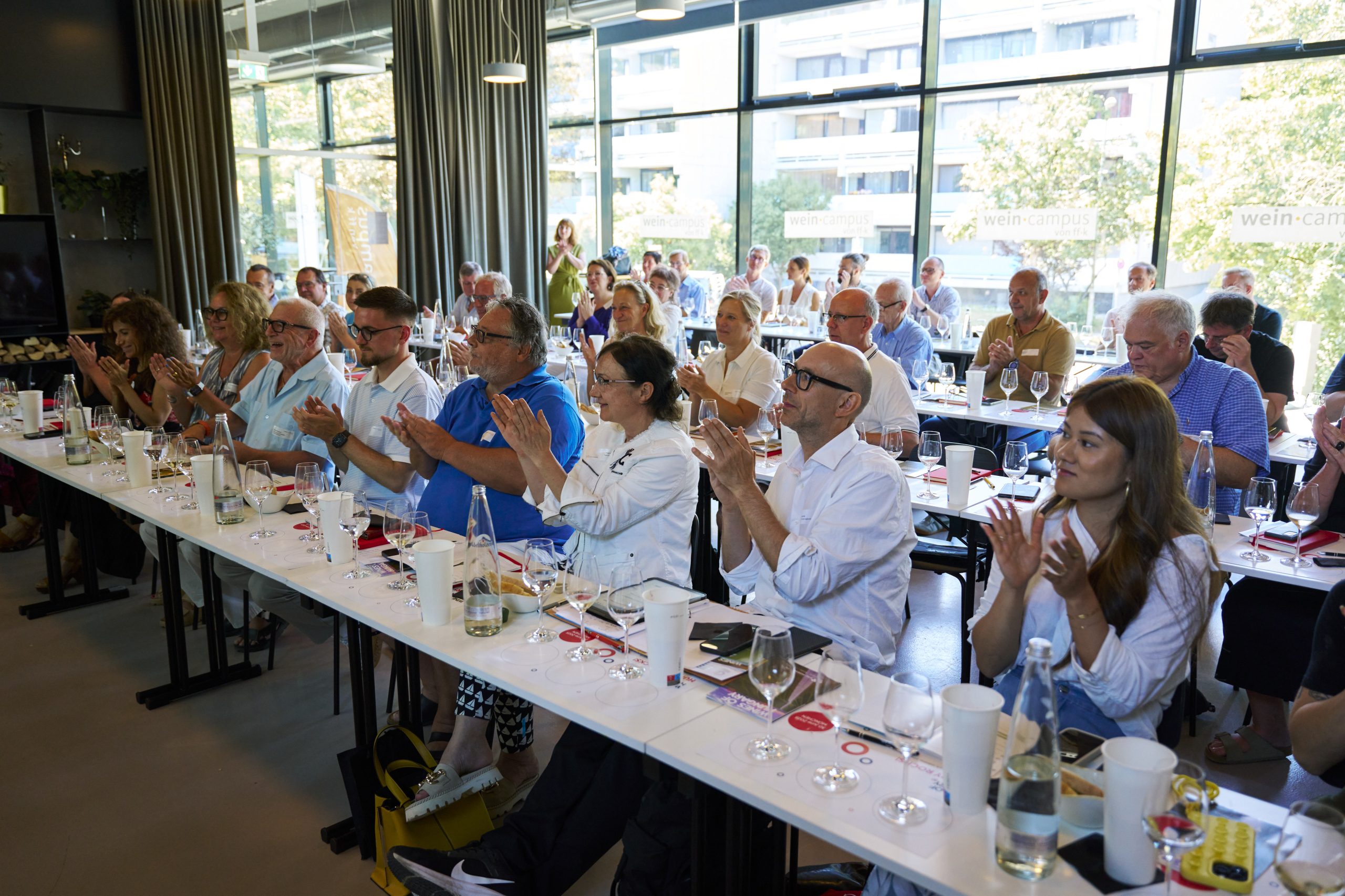
One of the campaign’s key elements was the WeinCampus in Munich in June 2025, attended by approximately 70 professionals like traders, importers and journalists. The 45-minute masterclass titled “Hungary Rocks! – A Journey Through Hungary’s Volcanic Vineyards” presented the concept through eight Hungarian wines, led by Yvonne Heistermann, President of the German Sommelier Union.
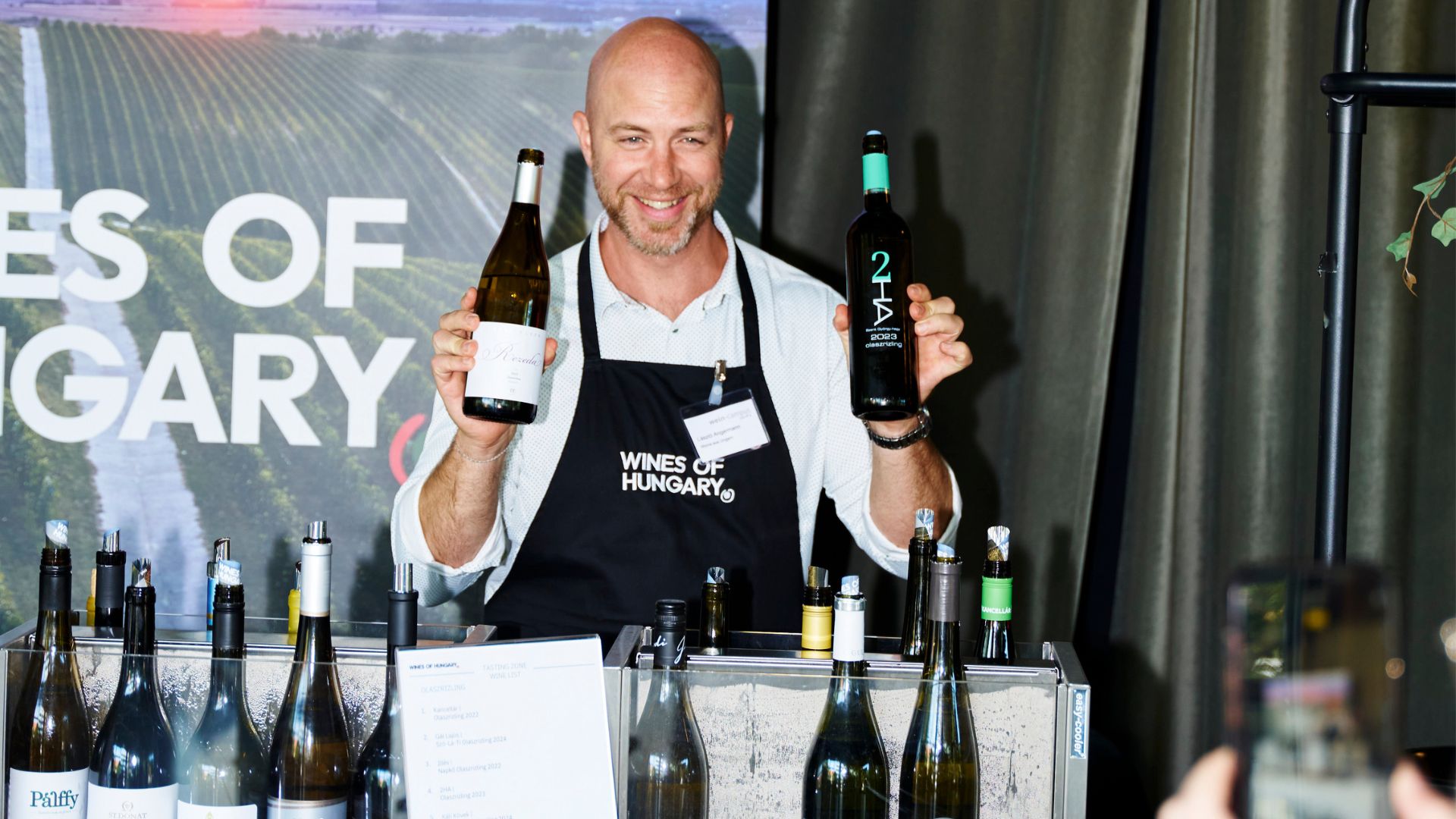
Alongside the masterclass, 24 Hungarian wines were available in the “Marketplace” tasting area, where visitors could explore the Hungarian range freely throughout the day. The programme was supported by a communications campaign reaching more than 60,000 professional contacts in Germany.
The masterclass held at the Sommelier Union’s Annual Camp reached an even broader professional audience: the Union’s 1,280 members received a personal invitation, while a further 1,700 professionals were reached via newsletter. The 60-minute session again centred on Hungary’s volcanic wine regions and distinctive wine styles.
The third pillar of the campaign was education. A professional seminar series were held at wine and hospitality schools across Germany. In eight cities, a total of 135 students took part in the educational programme, led by, among others, Yvonne Heistermann and Peter Dreykluft. The aim was not short-term sales, but the education of the next generation of sommeliers. Alongside this, the Wines of Hungary online course was launched on Konstantin Baum MW – one of the world’s most influential wine voices – Cellar Class website.
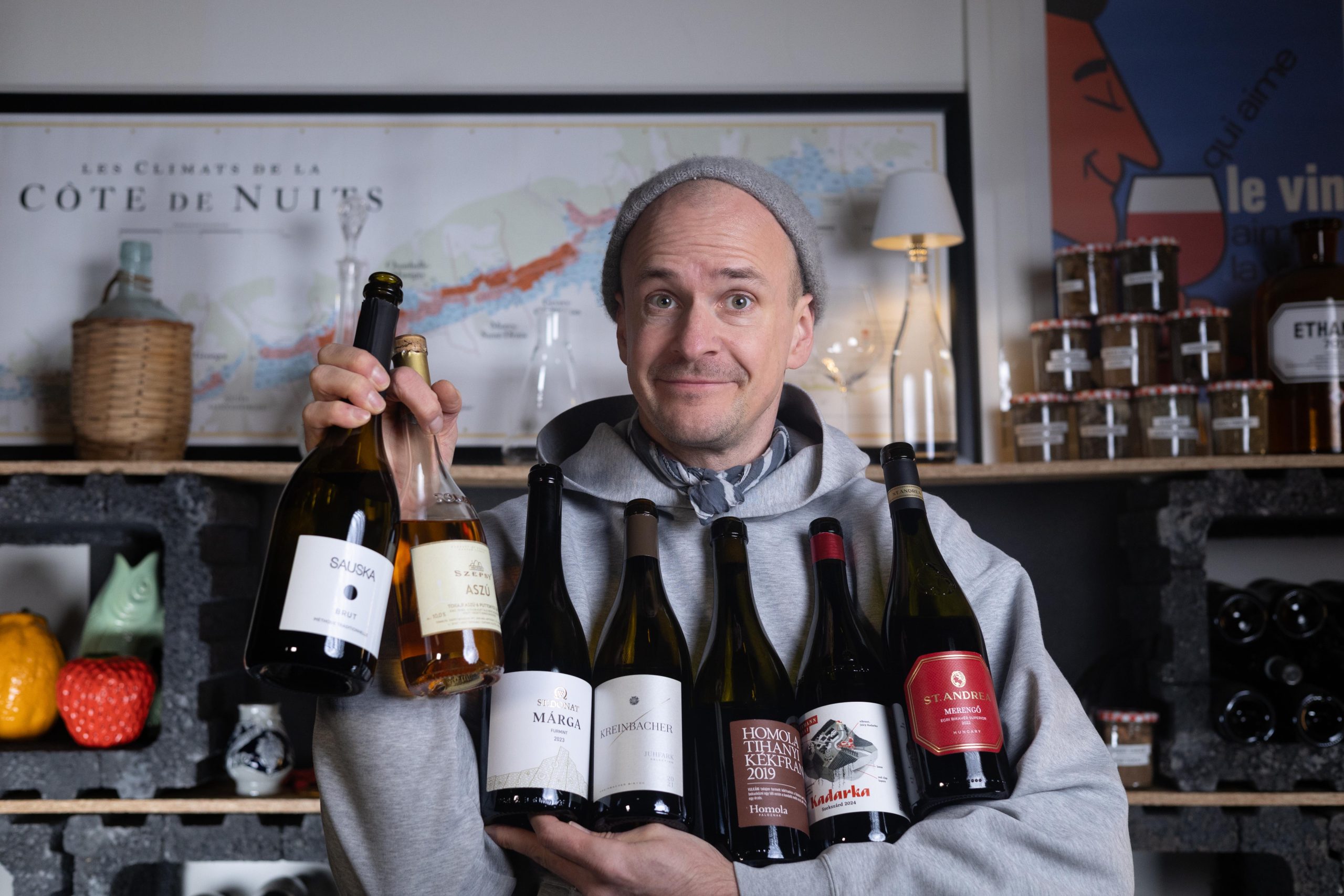
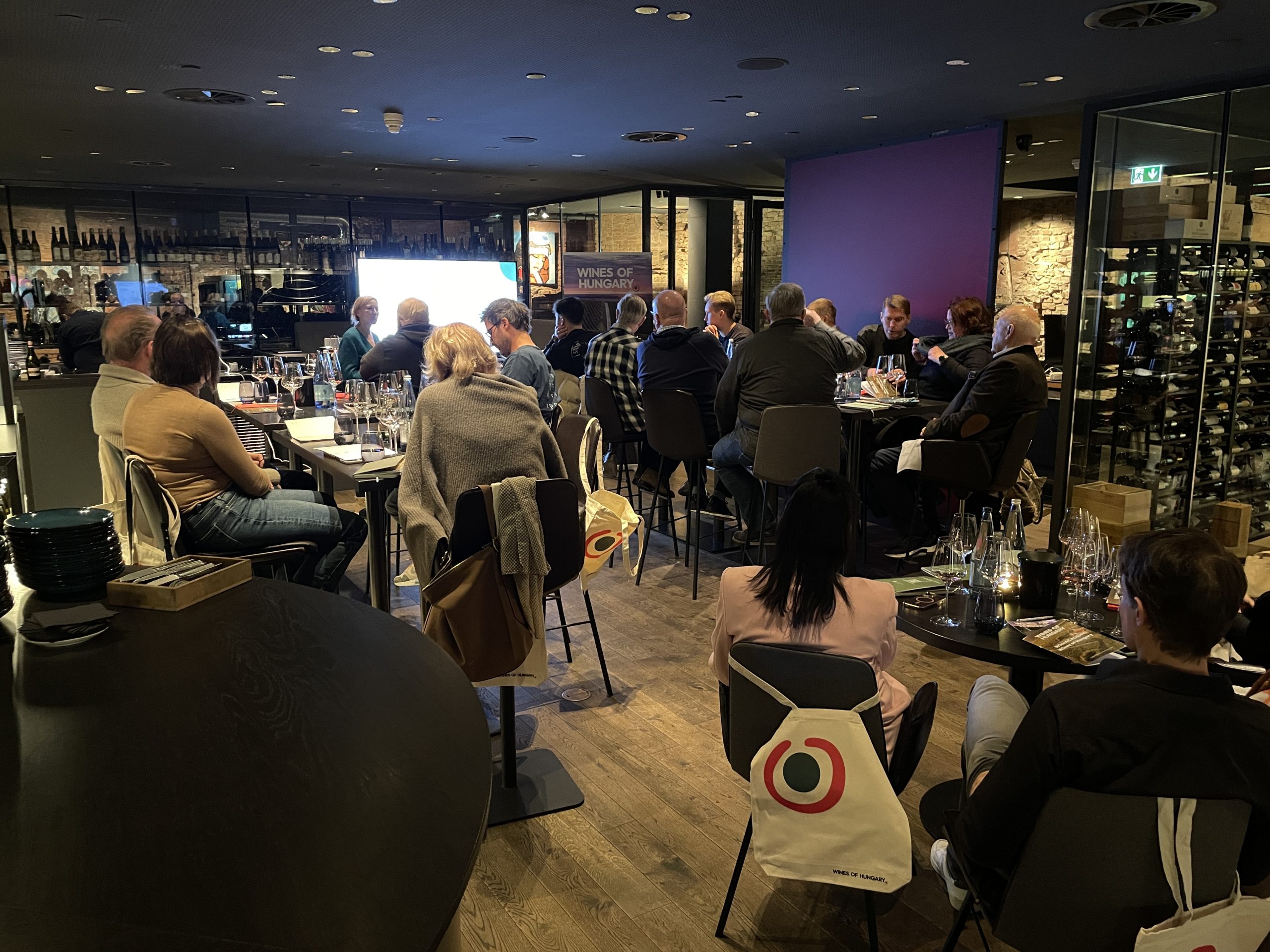
In Hamburg, at Kinfelts Kitchen & Wine, a culinary masterclass and tasting led by Konstantin Baum MW brought together 35 professional guests, supported by a communications campaign reaching 1,873 professional contacts. The focus here was on Hungarian wines presented within a gastronomic context.
Wines of Hungary’s targeted communications were further complemented by tasting events such as the one organised at the WineBANK in Hamburg, hosted by Yvonne Heistermann. WineBANK is a private, exclusive membership-based wine club. Venues like WineBANK do not target a broad audience; instead, they build a closed, status- and community-based network where wine is not merely a product but a cultural and professional connection point. This type of positioning allows Hungarian wines to appear directly in an environment where quality, rarity and prestige are genuine values. The consumer-facing focus of the campaign deliberately targeted a small but exceptionally valuable consumer segment: high-income wine collectors, business decision-makers and an internationally mobile professional class – not occasional wine drinkers, but knowledgeable insiders with their own collections and the opinion-forming influence to shape broader German consumer attitudes.
Collaboration with Leading German Trade Publications
A key element of the German campaign was professional validation, the most visible example of which was the Meininger Verlag publication that appeared on 6 February 2026. The comprehensive feature, published in Weinwirtschaft and Sommelier magazines, focused specifically on Hungarian dry white wines and was aimed at decision-makers in the German market. The accompanying digital newsletter reached more than 8,000 importers, traders and professionals – an exceptional opportunity for exposure.
The professional selection process itself carried a strong message: of more than 100 wines submitted, 58 achieved ratings above 87 points and were included in the publication. As part of the “Furmint & Friends” tasting, Weinwirtschaft experts evaluated Hungarian white wines submitted by producers in three categories: single-varietal Furmints, Furmint-based blends, and the “Friends” category, which encompasses other Hungarian white wines made predominantly from indigenous grape varieties.
In Wein+Markt’s print and online editions, the finest Hungarian Kékfrankos wines – selected by the magazine’s own professional jury – were placed firmly in the spotlight.
Focused Messaging at ProWein 2026
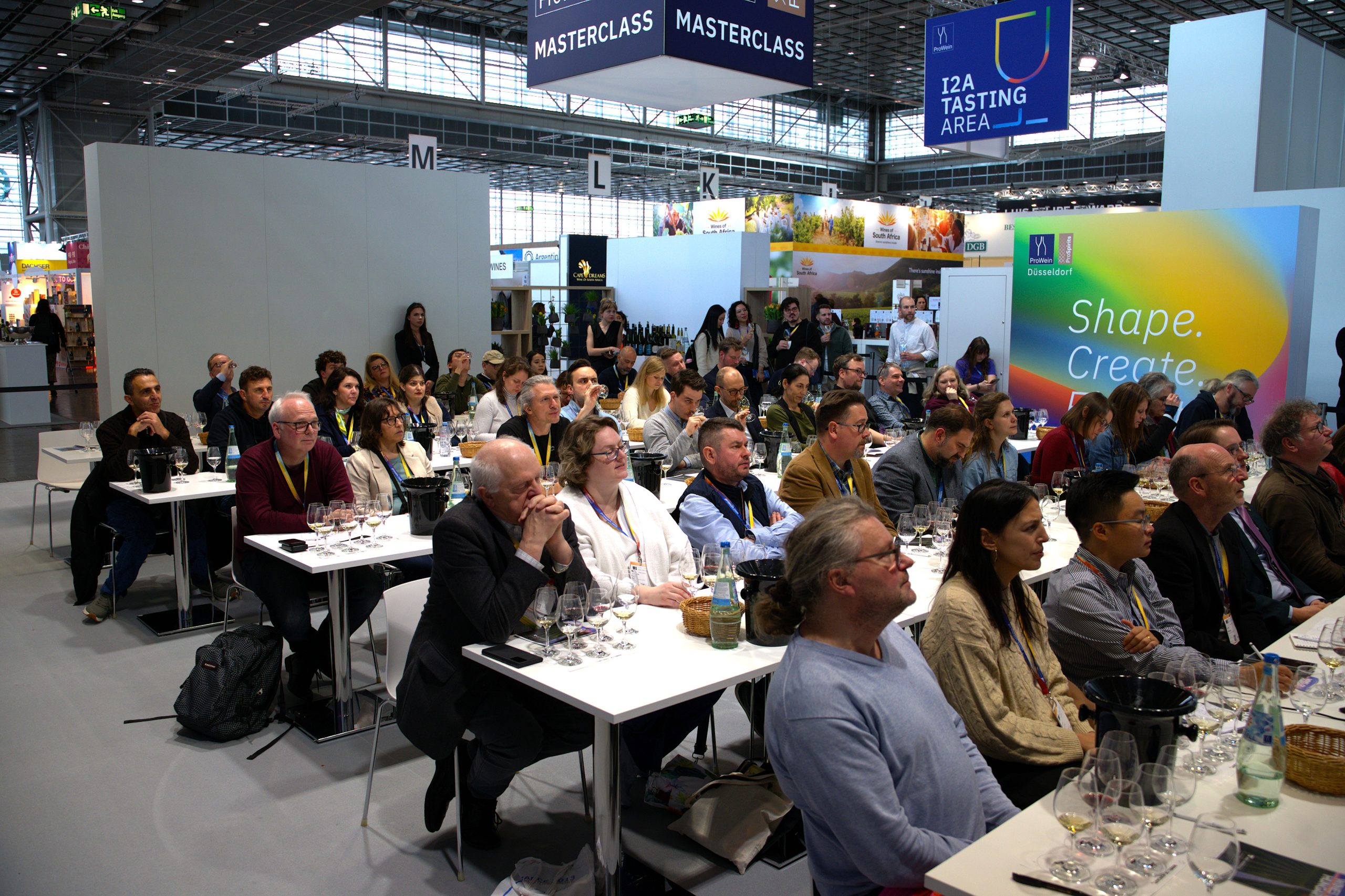
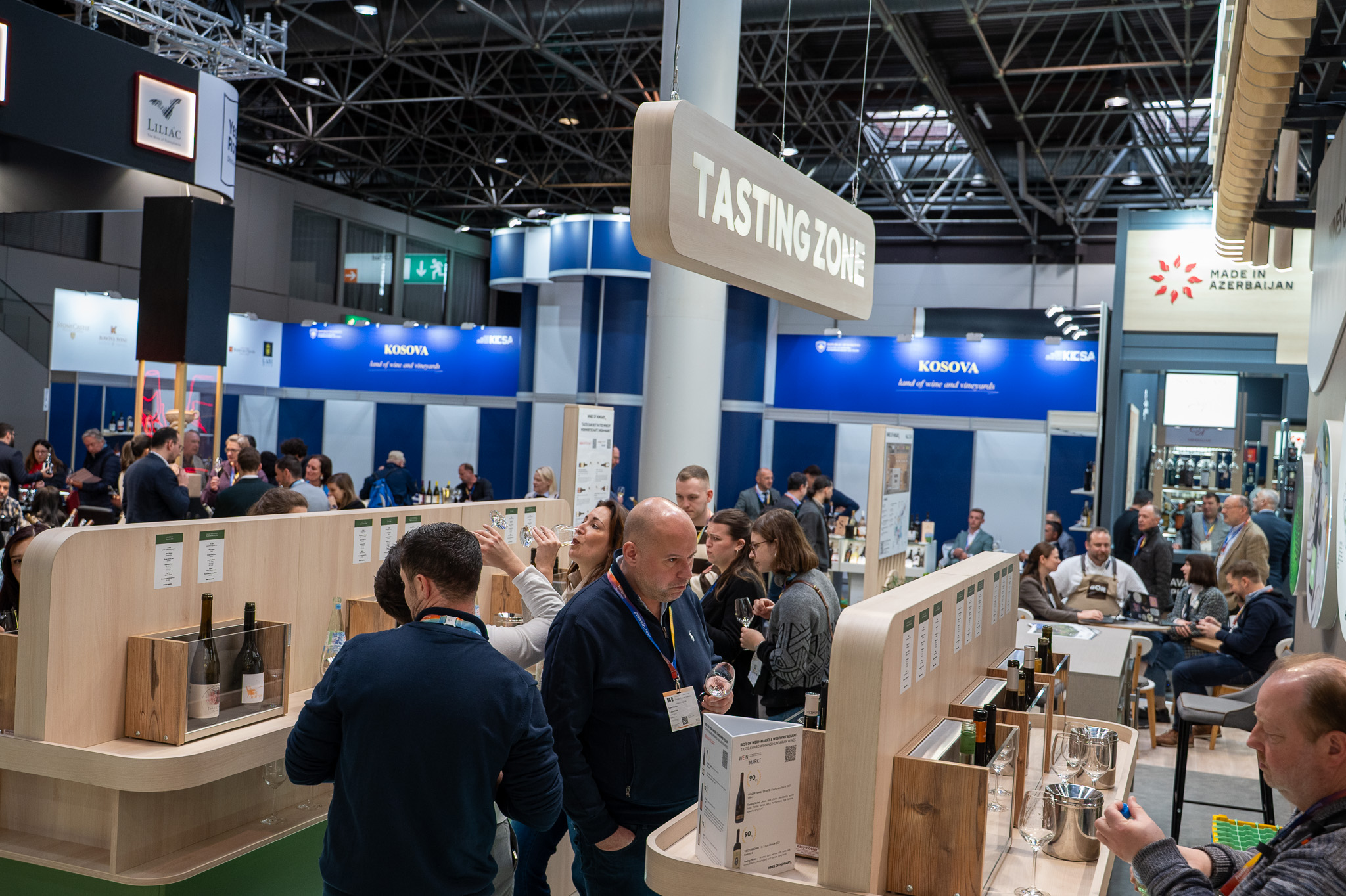
Hungary’s presence at the ProWein international wine trade fair also took a targeted form. The “Furmint & Friends” concept and the Kékfrankos-themed messages were developed in collaboration with the two German trade publications mentioned above, taking into account the specific needs of the German market. Visitors to the fair were able to taste, in the Wines of Hungary Tasting Zone, the high-scoring wines they had previously read about in those publications.
Following the positive experience of previous years, Konstantin Baum MW again hosted a sold-out masterclass at the ProWein Forum, further reinforcing the professional visibility of Hungarian wines.
Over the course of the campaign, the organisers held a total of 12 meetings with potential German trade, media and influencer partners who may play a key role in the 2026 campaign.
Furmint February: Where Strategy Meets the Consumer
One of the most tangible elements of the Wines of Hungary Germany campaign was the “Furmint February” activation timed for February 2026, which clearly targeted consumer reach and the strengthening of retail presence.
The concept was simple but effective: to give consumers across the country, through wine bars and specialist retailers, the opportunity to encounter Furmint in person – not just through tasting, but through experience and context. Participating partners stocked at least two Hungarian Furmints with prominent shelf or menu placement, while also actively supporting the campaign through free tastings and their own communications channels – newsletters and social media.
Fifteen partners ultimately joined the initiative nationwide, significantly exceeding the original target of eight to ten. Participants included specialist wine shops, online retailers and leading wine bars, including venues in Berlin and Hamburg.
A particular strength of the campaign was that it did not stop at the professional level: through the involvement of food and wine influencers, Furmint also gained visibility in the digital space. Recipes, food pairings and short video content helped consumers not only taste the variety but understand it.
The results clearly validated the concept. The campaign generated 3,805 direct tasting contacts – far exceeding the original target of 500. On social media, 15 pieces of content generated more than 50,600 impressions, while the overall campaign delivered close to 100,000 indirect reach.
The feedback was equally telling. Several partners noted that previous stereotypes about Hungarian wines were visibly softening, and consumer openness was growing – particularly in environments where there is already a stronger appetite for new, characterful wine styles. One important lesson also emerged, however: while interest was there, the physical availability of Furmint did not always keep pace with that demand. Many consumers encountered the wines online but could not always find them in shops.
This finding clearly points to the direction of the campaign’s next step: the attention is already there – now the distribution needs to catch up.
Furmint February was therefore not only a successful activation, but an important signal: given the right setting and approach, Hungarian wine is capable of generating genuine consumer interest in the German market.
2026: The Next Step – From Presence to Market Position
The 2026 German campaign targets a new phase. While 2025 was about positioning, 2026’s focus is on strengthening distribution.
The strategy rests on three main pillars:
- Trade promotion partnerships with key importers and retailers
- A targeted B2B PR campaign to deepen existing professional relationships
- Hosting trade buyers at the BOR 2026 Hungarian Wine Summit to strengthen direct relationship-building
The focus will remain on the international positioning of Furmint, Kékfrankos, Olaszrizling, Tokaji Aszú and the indigenous varieties of the Carpathian Basin – but with an increasingly strong commercial focus.
Conclusion
The Wines of Hungary presence in Germany in 2025 went beyond classic country promotion. The campaign was a deliberately constructed professional narrative that positioned Hungarian wines not as an exotic curiosity, but as a relevant, competitive and characterful European wine country.
The goal for 2026 is no longer simply to maintain that position, but to consolidate it at a commercial level.